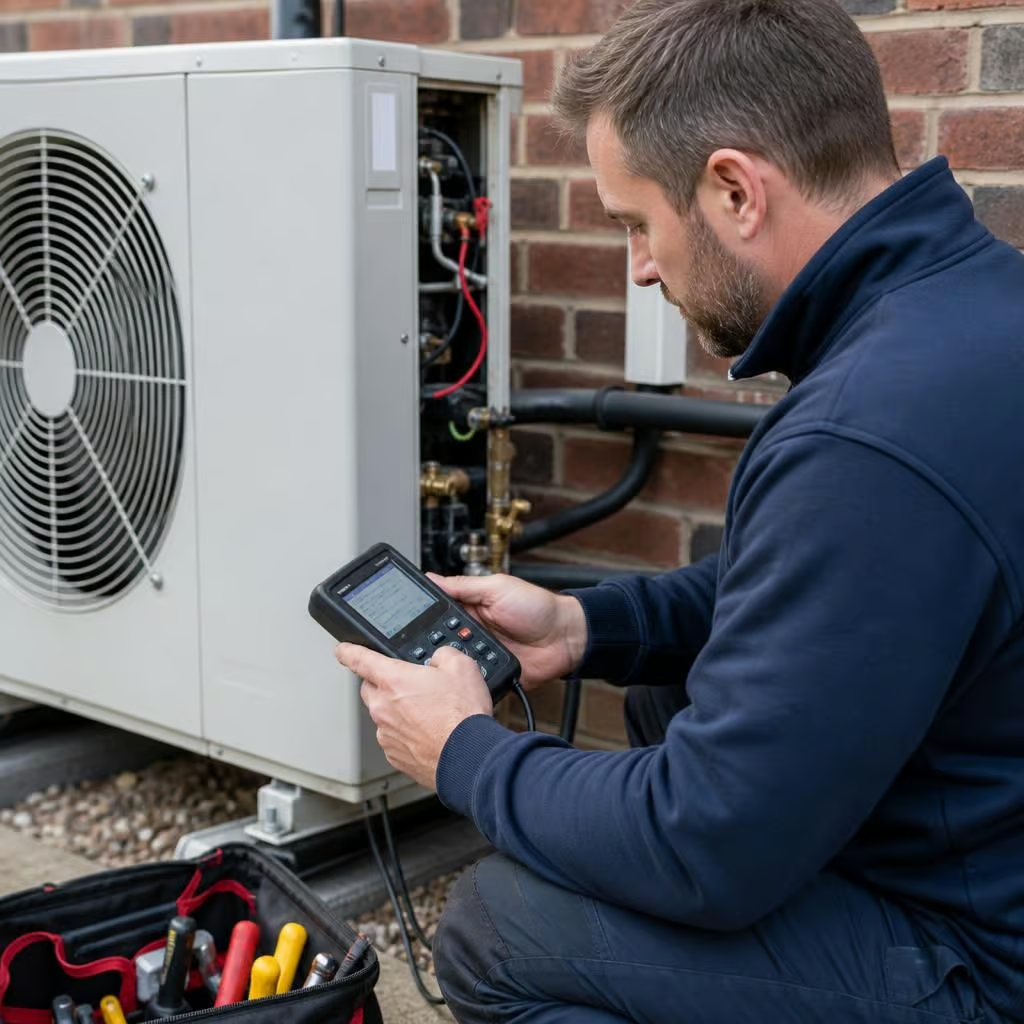
What information do you need to diagnose my air source heat pump?
We need the heat pump’s make and model, any fault codes, and a clear description of what has changed in its performance. Photos of the outdoor unit, controls and display can also help us prepare for an accurate diagnosis.
The most useful information is a clear history of the fault, how the system is arranged, and what happens when you try to use it. This lets us plan the right checks and bring suitable tools before attending.
Start with what the heat pump is doing now. Tell us whether the heating, hot water or both are affected. Note if the system stops completely, runs continuously, cycles on and off, or works only in certain conditions. A description such as “the radiators stay cool but the hot water works” is more useful than simply saying that the heat pump has failed.
- When did the problem first appear?
- Does it happen every time or only at particular times?
- Does the outdoor unit start, make unusual noises or stop shortly afterwards?
- Is the property colder than usual, or is the hot water cooler than expected?
- Have you noticed ice, water, a leak, burning smells or unusual electrical sounds?
If the problem is intermittent, a short video of the display, outdoor unit or unusual sound can be useful. A note of what was happening immediately before the fault can also help, such as a power cut, a change in weather, a defrost cycle or work carried out elsewhere in the property.
Tell us how the system is set up. We need to understand whether the heat pump serves radiators, underfloor heating, hot water, or a mixture of these. Details of the hot water cylinder, buffer tank, additional immersion heater, zoning and backup heating are relevant because a fault in one part can affect the performance of another.
If you have a schematic, commissioning sheet or installer handover pack, send it with the other information. A photo of the plant room or airing cupboard can show the arrangement of valves, pumps and safety components without anyone needing to remove a cover.
Explain what has already been tried. Include any reset, change to the programmer, adjustment to the thermostat, loss of power, topping-up of system pressure or previous repair. Tell us what happened afterwards. Repeated resets can hide useful evidence and may not be safe if the system has an electrical, refrigerant or overheating fault, so don’t remove covers or work inside the unit.
Where the system has a sealed wet circuit, the pressure shown on the gauge may help us assess the fault. Send the reading only if you can see it clearly and safely. Don’t add water or alter valves unless you already know that procedure for your installation.
Access details can affect the diagnosis. Tell us where the outdoor unit, indoor unit, cylinder and controls are located. We also need to know about locked gates, restricted access, loft ladders, narrow plant rooms or other conditions that affect inspection. If the outdoor unit is on a flat roof, high wall or other difficult-to-reach position, say so before the visit.
Let us know if the unit is partly enclosed by planting, fencing or a structure, or if snow, leaves or other debris have collected around it. The outdoor unit needs clear airflow, but don’t dismantle guards or attempt to clear ice from the fan or coil with tools.
Property and electrical information also matters. Tell us if the supply has tripped, if other circuits are affected, or if the heat pump is connected to an electricity meter, solar PV system, battery or generator. If the property is off the gas grid and has oil, LPG, solid fuel or another backup system, include that information so we understand how the heating is expected to operate when the heat pump is unavailable.
We may need to check the electrical supply, controls, circulation, water pressure, sensors and the heat pump’s operating sequence. The information you provide helps us separate a control setting from a hydraulic, electrical or equipment fault. It also helps us judge whether further testing or a replacement component may be needed.
If you don’t have every detail, send what you can. The system can still be assessed, but a complete history and clear photographs usually make the initial diagnosis more focused and reduce unnecessary investigation.
A fault code needs context. The same wording can point to different checks on different heat pump models, so send the exact message as it appears on the controller rather than a typed summary. A photo that includes the code, surrounding symbols and the controller screen helps us read it correctly.
If the label on the outdoor or indoor unit is visible, include that too. The model and serial details let us match the fault to the correct equipment and avoid preparing for the wrong component.