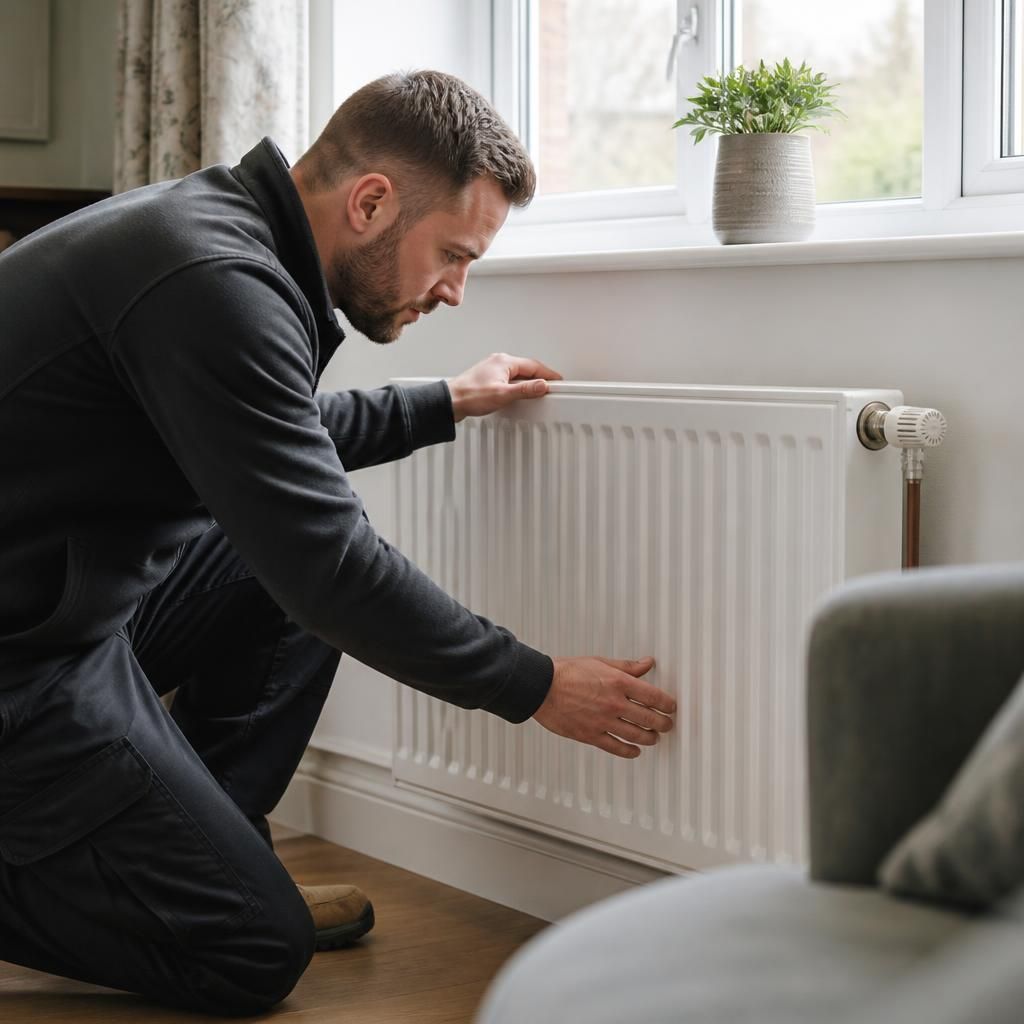
Can I keep my existing radiators when replacing a heat pump?
Often, yes, but it depends on whether your radiators can heat the rooms at a heat pump’s lower flow temperature. We check their size, condition and room heat losses, then identify any radiators or pipework that need upgrading for comfortable, efficient heating.
Existing radiators can remain if their output matches the heat your rooms need at the heat pump’s design temperature. A radiator that worked well with a hotter boiler system may not provide enough warmth when the heat pump runs at a lower temperature.
The radiator itself is only part of the assessment. We look at the room’s heat loss, the radiator’s size and type, the flow temperature needed on colder days, and how water moves through the system. This shows us whether each room will reach the required temperature without making the heat pump work harder than necessary.
Some radiators are more likely to be suitable than others. Large double-panel radiators often have useful output at lower temperatures. Small single-panel radiators, decorative models and compact radiators in rooms with high heat loss may need more capacity. A radiator can look substantial but still provide less heat than a modern replacement of the same width.
We compare the existing radiators with their output at the proposed operating temperature, rather than relying on their output from a boiler specification. Where a radiator falls short, we may recommend a larger model, an additional radiator or a different emitter. That does not automatically mean replacing every radiator in the house.
Pipework also matters. A heat pump may need a different water flow from the old heating system, particularly where long pipe runs or narrow pipework serve several radiators. We check the pipe sizes, connections, valves and system layout. If the pipework restricts flow, changing radiators alone will not solve the problem.
Controls can affect how well retained radiators perform. Heat pumps generally work most efficiently when they maintain a steady temperature instead of repeatedly switching on and off. Weather compensation can adjust the flow temperature to suit conditions outside, while correctly set thermostatic radiator valves help prevent individual rooms from overheating. We also check that the controls work with the replacement system.
An older property may need a more careful assessment. Solid walls, high ceilings, exposed rooms, extensions and rooms with large areas of glazing can all increase heat loss. Improvements such as draught reduction or roof insulation may reduce the radiator capacity required, but we do not assume that insulation work has been carried out unless it has.
Keeping the radiators can reduce the amount of work inside the house, but the changeover may still involve draining the system, altering connections, balancing the radiators and commissioning the controls. We protect working areas, explain which emitters need changing and provide a written quotation before work starts.
If the proposed design needs the radiators to run at an unusually high temperature, that is worth addressing before installation. A larger radiator or another suitable emitter may cost less and use less space than expected, while leaving an undersized radiator can result in cold rooms and higher running costs. We set out those choices so you can decide how far to upgrade.
The right answer comes from the room-by-room design, not from the age or appearance of the radiators. Once the system has been installed, we balance it and check that the rooms are receiving the intended heat. This gives you a clear basis for keeping suitable radiators and changing only the ones that limit the performance of the heat pump.
Radiators can have enough output but still need attention if they are corroded, leaking or clogged with sludge. Those problems can restrict circulation and affect the heat pump’s performance.
We check the radiator panels, valves and connections before deciding what can stay. If the system needs cleaning, balancing or a small number of new valves, we include that work in the replacement plan. You then keep sound radiators without carrying hidden faults into the new heating system.