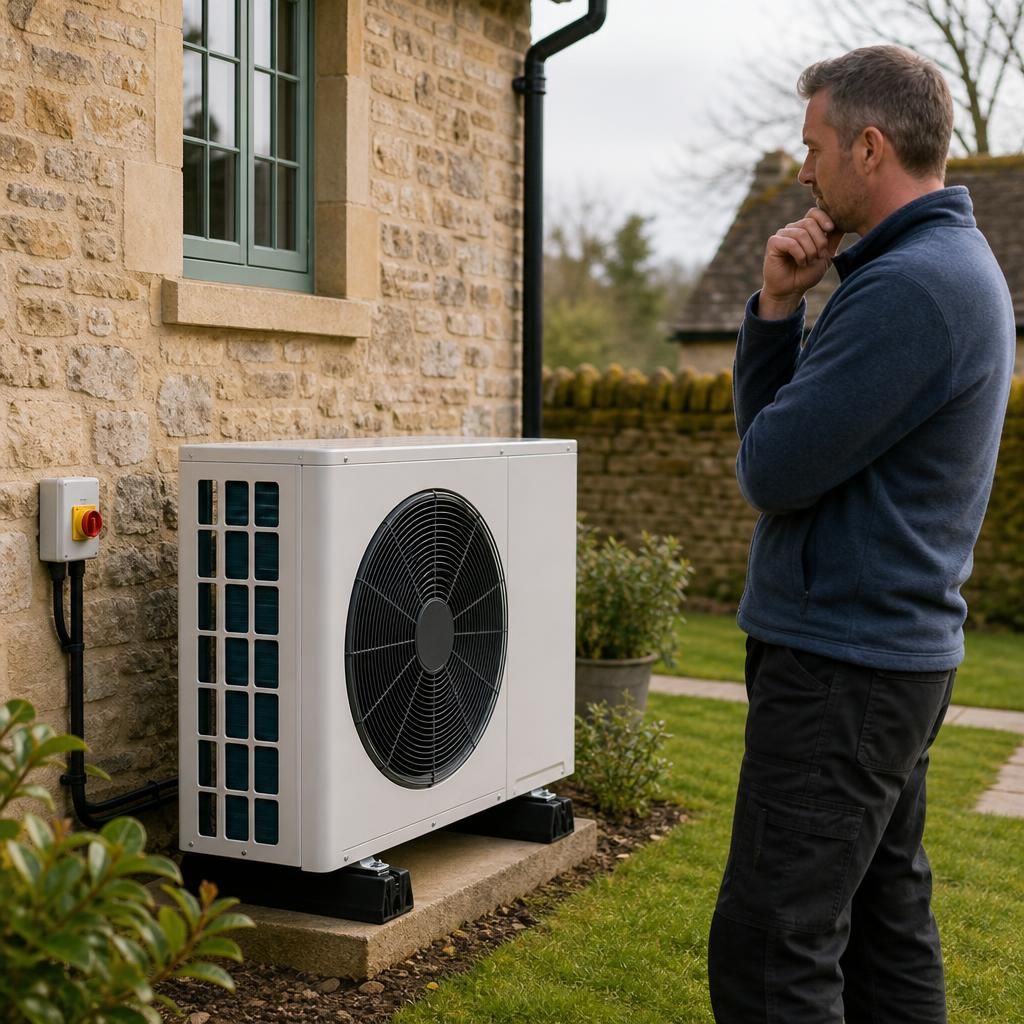
How noisy will a replacement heat pump be?
A modern replacement air source heat pump makes a low, steady sound from its outdoor fan and compressor, rather than the sudden noise of a boiler firing. We assess its position, nearby windows and property boundaries during the survey, then choose and install the system to keep sound from disturbing the home or neighbours.
A correctly selected replacement heat pump should not dominate normal household noise. Most of the sound comes from the outdoor fan and compressor, while the indoor unit and circulation pump are usually much quieter. The result should be noticeable near the equipment, but not intrusive in the rooms where you live.
The sound changes as the system works. The outdoor fan may run faster when the heating demand rises, then slow down once the system is maintaining the temperature. During a defrost cycle, the operating sound can change briefly as the unit clears ice from its coil. That does not usually indicate a fault.
Several parts of the installation affect what you hear:
- The heat pump model: fans, compressors and casing designs produce different sound characteristics. We use the manufacturer’s sound data when comparing suitable units.
- Output and control settings: an incorrectly sized system may run harder than necessary. Careful heat-loss calculations help avoid selecting equipment that is larger or louder than the property needs.
- Location: a unit beside a bedroom window, seating area or neighbouring boundary will be more noticeable than one placed away from those points.
- Reflections: walls, corners and hard surfaces can reflect sound back towards the house. A seemingly quiet unit can therefore appear louder in a confined space.
- Vibration: poor mounting can transfer vibration into a wall, platform or roof structure. That creates a humming sound indoors, even when the outdoor unit itself is operating normally.
- Airflow: the fan needs clear space to draw in and discharge air. Restricting that airflow can increase noise and reduce performance.
A replacement is not automatically quieter simply because it is newer. If the existing system is noisy because of a worn fan, loose casing or failing compressor, a new unit may make a clear improvement. If the problem comes from its position or from vibration through the building, replacing the equipment without correcting the installation may leave the nuisance unresolved.
That is why we look at the proposed position as part of the replacement assessment. We consider bedroom and neighbouring windows, walls, fences, access for servicing and the direction of the discharged air. On an older house, we also look for lightweight floors, timber structures and attached walls that could carry vibration further than expected.
Anti-vibration mounts can reduce the transfer of mechanical movement into the base. They need to be suitable for the unit and installed on a stable support. A soft surface or improvised enclosure is not a reliable answer. Enclosing the heat pump can restrict airflow, interfere with servicing and make the fan work harder.
Controls can help with sound at sensitive times. A properly designed system may reduce output when the house needs less heat, rather than repeatedly starting and stopping at full power. We set the controls around the home’s heat loss, insulation, radiators and occupants’ heating pattern. Any quiet period or reduced-output setting must still allow the system to heat the property effectively.
Sound data needs careful interpretation. Manufacturers may quote sound power and sound pressure, which describe noise in different ways. The number on a brochure does not tell you exactly what someone will hear from a bedroom or boundary. Distance, reflections, background noise and the building’s construction all affect the result. We use the published information alongside the actual layout rather than treating one figure as a guarantee.
Maintenance also matters after the replacement. Leaves, dust or ice can restrict the coil and make the fan work harder. A loose panel, obstructed airflow or worn bearing can introduce rattling, buzzing or a change in pitch. If the sound changes suddenly, switch off the system if it appears unsafe and arrange an inspection rather than assuming the noise is normal.
For a rural or semi-rural property, there may be fewer background sounds to mask the equipment. That does not make a heat pump unsuitable, but it makes the position and mounting more important. Listed buildings, barn conversions and solid-wall homes can also have unusual wall and floor structures, so we take the construction into account before deciding where the equipment should sit.
During a replacement survey, we can explain which sounds will come from the outdoor unit, which will come from the indoor heating equipment and where each will be heard. If the proposed position risks affecting a bedroom, living space or neighbouring property, we can review another location before installation work begins. The written quotation can then reflect the mounting, pipework and access work needed for that position, rather than leaving the noise question until the equipment is running.
The sound you notice indoors may not come directly through an open window. Vibration can travel through a wall, roof structure or mounting base, then appear as a low hum in another room. This is more likely in lightweight extensions, timber floors and attached barn conversions.
During a replacement assessment, we trace the route between the outdoor unit and the rooms where you sleep or spend time. That helps us distinguish airborne sound from vibration through the building, so the mounting and pipework can be considered before the quotation is written.