
What information do heat pump troubleshooters need before diagnosing a fault?
Before diagnosing a heat pump fault, we need the exact error code, what changed in the heating performance and any recent work on the system. Pressure readings, system history and clear photos of the indoor and outdoor units can then help us identify the likely cause and bring the right equipment.
The most useful information is a clear record of how the heating system was operating before the fault appeared. We also need to understand the complete installation, not just the outdoor unit. An air source heat pump works alongside controls, circulation pumps, radiators or underfloor heating, a hot water cylinder and electrical protection. A fault in one part can look like a problem elsewhere.
Tell us which parts of the system are affected. For example, the heating may work while hot water does not, or the cylinder may heat only when the immersion heater runs. Note whether the problem affects every room or only one heating zone. This helps us decide whether to investigate the heat pump itself, the controls, the circulation system or the electrical supply.
Explain what was happening when the problem started. Useful details include:
- Whether the fault appeared during a heating or hot water cycle.
- Whether it began after a power cut, electrical work, plumbing work or a change to the controls.
- Whether it occurs only during cold weather, after a defrost cycle or when several demands run together.
- Whether the system has stopped completely or is still providing some heat.
- Whether the issue is constant or comes and goes.
These details are more useful than a general description such as “the heat pump isn’t working”. If someone else has already tried a reset or changed a setting, tell us what they did and what happened afterwards. Repeated resets can remove useful evidence and may hide a separate electrical or control fault.
We need to know what equipment is connected to the heat pump. Please mention whether the property has a hot water cylinder, buffer vessel, low-loss header, underfloor heating, radiators, zone valves, a smart thermostat or a separate immersion heater. If there is supplementary heating, such as an existing boiler or electric heaters, tell us when that equipment takes over. A simple layout or commissioning schematic is particularly helpful where several zones or cylinders are installed.
Photographs can make the first assessment more accurate. Useful images include the outdoor unit, the cylinder and surrounding pipework, the main heating controls, the consumer unit, and any warning lights or tripped switches. Take the photographs from a safe position without removing covers. A wider image shows how the components connect, while a closer image can show labels and valve positions. Do not photograph live electrical parts with covers removed.
Keep any installation and maintenance paperwork available. The commissioning record, wiring diagram, previous service reports and details of replaced parts can show how the system was designed to operate. If the system has changed hands with the property, even an incomplete set of documents is worth sharing. It may identify the original control strategy and prevent unnecessary changes to settings that were selected for the house.
Access information matters as well. Tell us where the outdoor unit, cylinder, controls, consumer unit and heating zones are located. Mention locked gates, narrow access, loft or cellar access, parked vehicles and any areas that need a keyholder. We can then plan the investigation around the whole system rather than arriving prepared to inspect only one component.
Some initial checks are safe for a homeowner, such as confirming that the controls have power and noting the position of an accessible heating switch. Do not remove electrical covers, open the refrigerant circuit or alter wiring. If there is a burning smell, water near electrical equipment, a damaged cable or repeated tripping, leave the equipment isolated if it is safe to do so and tell us exactly what you found.
Remote information cannot confirm every heat pump fault. Sensors, valves, pumps and electrical components may need testing at the installation, and a displayed warning may be the result rather than the cause. We use the information provided to prepare for that inspection, bring appropriate test equipment and avoid replacing parts simply because they are associated with the warning.
Before arranging an investigation, send the system details, photographs, paperwork and a short timeline of events. Include anything that changed shortly before the fault. That gives us a practical starting point and helps keep the diagnosis focused on the part of the system that is actually causing the problem.
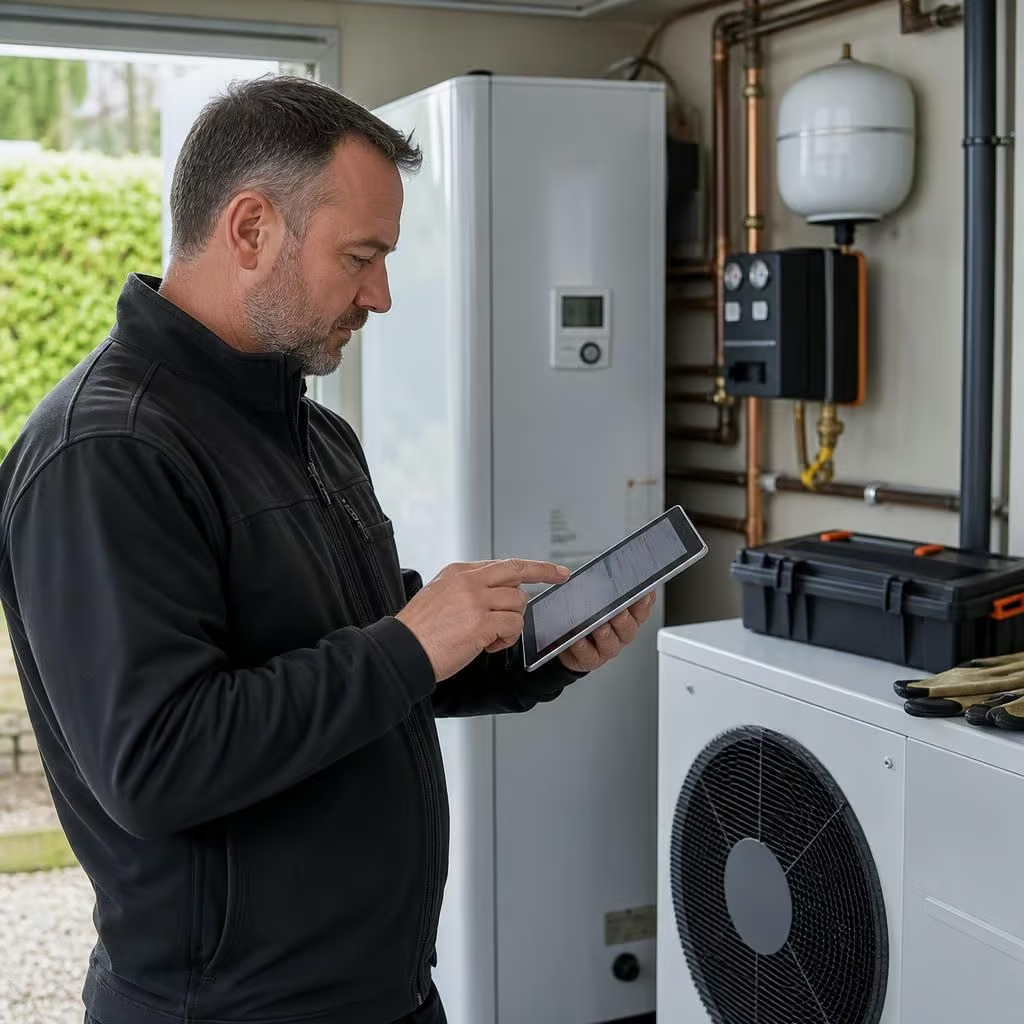
A heat pump may still be running even when the home is no longer heating properly. Tell us which rooms feel different, how long they take to warm up and whether the hot water reaches its usual temperature. A comparison with normal operation is often more useful than simply reporting that the system is on.
If the controls show target and actual temperatures, record both without changing the settings. Note the time of each reading and what the system was trying to heat. This helps us distinguish a control decision from a fault that is stopping the heating circuit delivering enough heat.