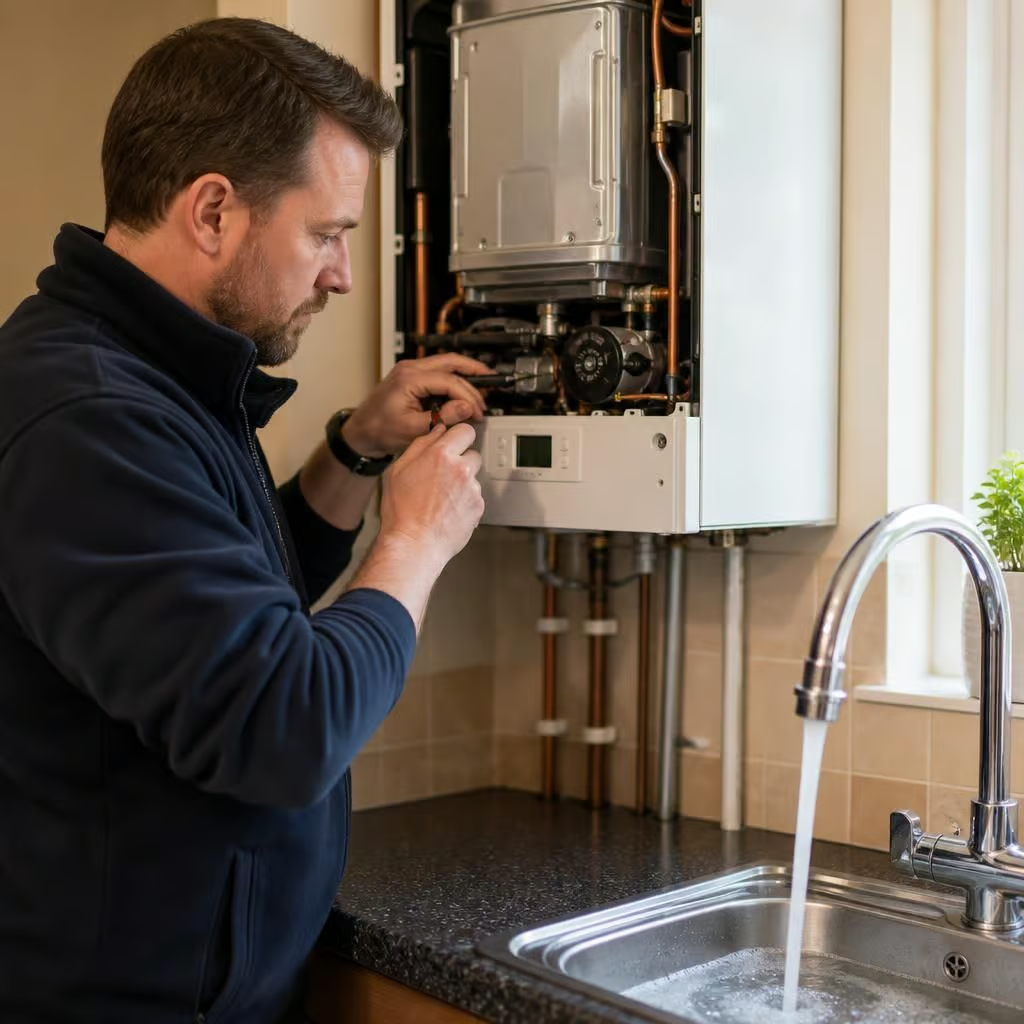
Can you fix a boiler that is not heating water?
Often, yes. We diagnose the fault first, checking the controls, sensors, valves and water pressure before repairing the boiler or recommending replacement if the repair is not practical.
The fault may be repairable, especially if the heating still works. When hot water fails on its own, the cause is often a control, sensor, valve or water-flow problem rather than a complete boiler failure.
The first step is identifying the type of heating system in the property. A combi boiler heats mains water as it passes through the boiler. A system or conventional boiler heats water held in a cylinder, so the fault may be in the cylinder controls or pipework instead.
On a combi boiler, common causes include:
- A diverter valve that is stuck or worn. This valve directs heat towards the radiators or hot-water circuit.
- A faulty flow sensor that does not detect when a hot tap is opened.
- A blocked or scaled plate heat exchanger, which restricts the transfer of heat into the mains water.
- A failed temperature sensor, thermostat or electrical control.
- Low system pressure, an ignition fault or an issue with the gas supply.
If the radiators heat normally but the taps stay cold, the diverter valve, flow sensor or plate heat exchanger becomes more likely. If the boiler does not fire for heating or hot water, we look at the controls, pressure, ignition and safety devices instead.
On a system or conventional boiler, the fault may be elsewhere. A programmer may not be calling for hot water, a cylinder thermostat may have failed, or a motorised valve may not be opening. A wiring fault, circulation pump problem or faulty immersion heater can also leave the cylinder cold. The boiler itself may be working correctly while the stored hot-water system is not.
You can check a few external points before arranging an inspection. Make sure the hot-water setting is selected on the programmer and check whether the boiler shows a fault code. Look at the pressure gauge if you have a sealed system, and follow the manufacturer’s instructions if the boiler needs one reset. Check whether the problem affects every hot tap or only one outlet.
Do not remove the boiler casing or attempt to repair a gas valve, burner, electrical component or safety device. If you smell gas, see signs of scorching, or suspect carbon monoxide, leave the property if necessary and contact the appropriate emergency service. A Gas Safe registered engineer must carry out work on the gas boiler.
We begin by checking the controls, fault history, pressure, electrical supply and system temperatures. We then test the relevant sensors, valves, pumps and heat exchangers rather than replacing parts without confirming the cause. On a stored-water system, we also check the cylinder thermostat, motorised valves and programmer.
The repair may involve freeing or replacing a valve, changing a sensor, restoring the correct pressure, cleaning a restricted component or repairing a control fault. If a part is no longer available, the boiler has repeated safety faults, or the repair cost is difficult to justify against the boiler’s condition, we explain that clearly before further work is agreed.
An older boiler is not automatically beyond repair. Its age, service history, parts availability, efficiency and the condition of the wider heating system all matter. A repair can be sensible when the main heat exchanger and safety systems remain sound. Replacement may be more practical when several major components are failing or the boiler cannot be repaired safely.
For an oil-fired boiler, we also check the oil supply, burner and associated controls. This matters on properties that are not connected to the gas grid, where a hot-water fault can sit within the oil system rather than the cylinder or radiators. The work is covered by an OFTEC-registered engineer.
Before work starts, we explain what has failed, which repair is suitable and whether any further work may be needed. You receive a clear quotation rather than an unexpected charge, so you can decide whether to repair the existing boiler or consider replacement.
A hot-water repair should be tested at the taps, not just at the boiler. We run the system through its controls and check the temperature and flow at the affected outlets once the work is complete.
If only one tap remains affected, the fault may be local to that outlet rather than the boiler. We explain what the test shows, so you are not paying for boiler parts when the problem lies elsewhere.