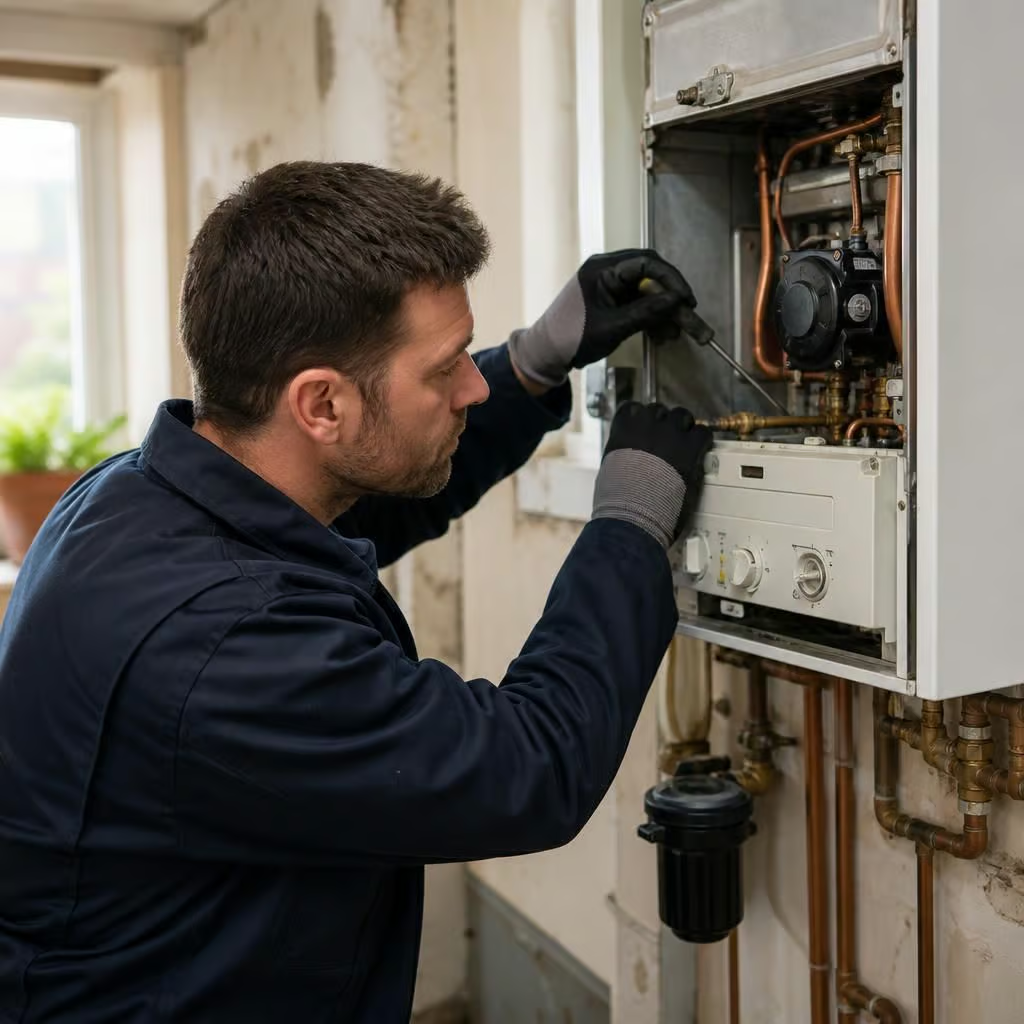
Can you repair an older boiler without replacing it?
Yes, an older boiler can often be repaired if its main components remain safe and replacement parts are available. We assess the fault, the boiler’s condition and the likely repair cost before recommending repair; replacement may be more sensible if the boiler is unsafe, obsolete or likely to develop further faults.
The sensible test is not simply how old the boiler is. We look at the fault, the condition of the main components, the availability of parts and the cost of putting the appliance back into safe working order. A straightforward fault on an otherwise sound boiler can make repair worthwhile. Several faults, serious corrosion or an unsafe combustion problem can make replacement the more responsible choice.
What we check before recommending repair
- The symptom and fault code: a boiler that will not fire has different possible causes from one that loses pressure or shuts down repeatedly. We test the fault rather than replacing parts by guesswork.
- Safety: we check combustion, ventilation, the flue and signs of carbon monoxide risk. A gas boiler must be assessed and worked on by a Gas Safe registered engineer. An oil-fired boiler needs an OFTEC-registered engineer.
- The main components: we inspect items such as the heat exchanger, burner, pump, fan, expansion vessel and controls. A failure in one replaceable component is different from widespread deterioration.
- Parts availability: some older boilers still have sensible repair routes, while parts for discontinued models can be difficult or uneconomic to source. We explain this before work is authorised.
- The wider heating system: dirty system water, poor circulation, leaking radiators or unsuitable controls can cause repeat boiler faults. Repairing the appliance alone will not solve a problem elsewhere in the system.
When a repair is usually sensible
A repair is often reasonable when the fault is isolated, the boiler passes its safety checks and the remaining components are in sound condition. This can apply to older combi, system and conventional boilers. Replacing a pump, valve, sensor, control or other serviceable part may restore heating without the disruption of changing the whole system.
The boiler’s service history also matters. A machine that has worked reliably and now has one identifiable fault is a different proposition from one that has needed several repairs in succession. We ask what has failed before, not just what has stopped working today.
When replacement may be the better option
Replacement deserves serious consideration when the boiler has repeated faults, extensive corrosion, an unsafe flue arrangement or a failed component that is costly and difficult to replace. An appliance can sometimes be made to run again while still being a poor long-term choice. We will tell you if a repair is likely to postpone, rather than solve, the underlying problem.
Efficiency is another part of the decision, but it should be considered alongside repair cost and system condition. A newer boiler may need changes to controls, condensate drainage, the flue or pipework. We include those requirements in the assessment rather than comparing the appliance prices alone.
Properties off the gas grid need a slightly different assessment. An oil or LPG boiler may be repairable even when it is older, but the burner, fuel supply, flue and storage arrangements all affect safety and reliability. Our OFTEC-registered engineers can assess an oil-fired system as a whole instead of treating the boiler in isolation.
How the repair decision is made
We begin by discussing the symptoms and any previous work. At the property, we inspect the appliance and heating system, carry out relevant safety checks and identify the failed part or likely cause. If further testing is needed, we explain why before proceeding.
Once the condition is clear, we set out the repair and replacement options. A written quotation explains the expected work and costs before work starts, so you can compare the immediate repair with the longer-term alternative. If the boiler is safe to leave untouched while you decide, we will say so. If it should not be used, we will explain the reason and the next practical step.
A repair is normally less disruptive than a full boiler change, but it still needs to be completed properly. We test the appliance after the work, check that the controls and heating system respond correctly, and explain any maintenance issue that could cause the fault to return. If replacement is the safer route, you receive an assessment based on the boiler, property and heating system rather than its age alone.
An intermittent fault can make an older boiler look more seriously damaged than it is. Keep a note of when it stops, what the display shows and whether resetting it changes anything. That pattern helps us separate a failed component from a problem with controls, circulation or the electrical supply.
It also helps to have the boiler model, serial number and recent service records available. Older appliances can have similar symptoms but very different repair routes. With those details, we can identify the appliance correctly, inspect the installation and explain what the repair involves before any work is authorised.