How long does an annual landlord gas safety check take?
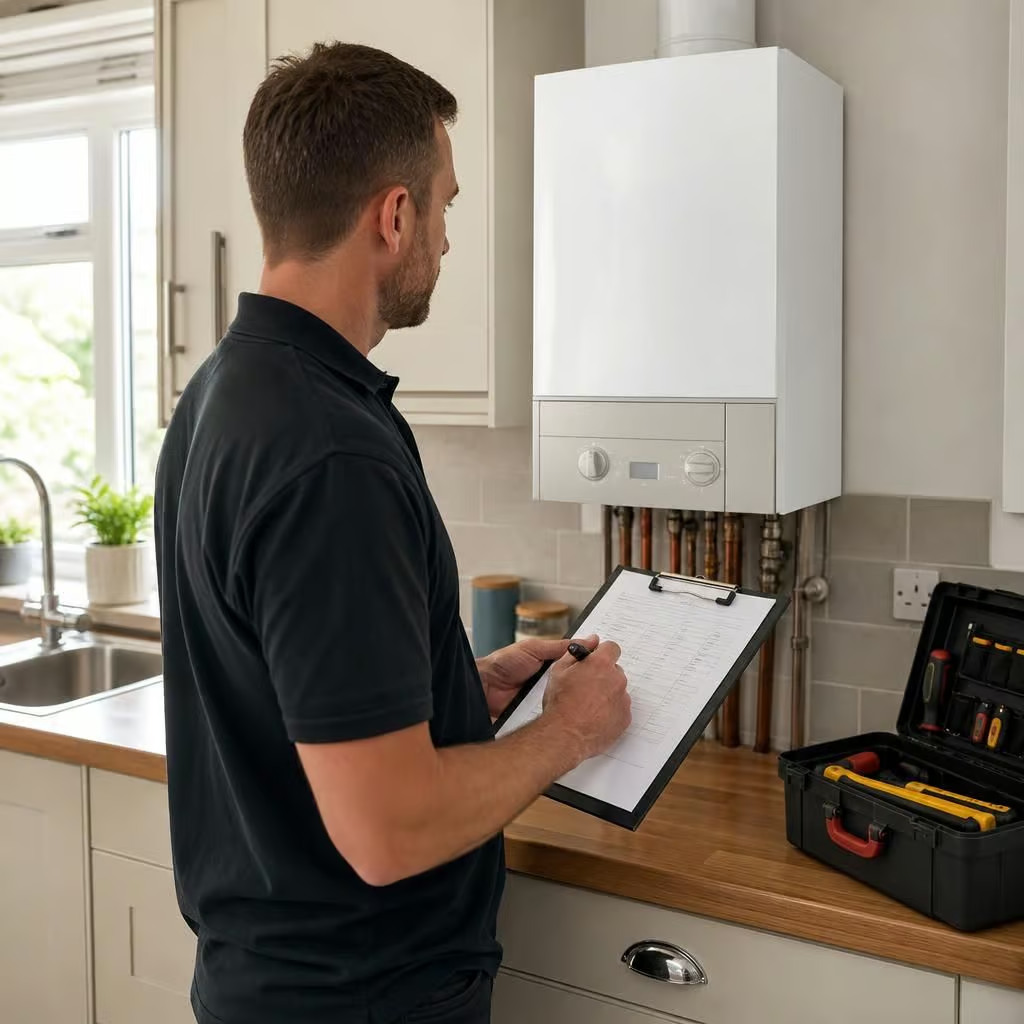
An annual landlord gas safety check is normally completed during one visit. The time depends on how many gas appliances we need to inspect, how easily we can access them and whether we find a problem requiring further checks.
The time needed depends mainly on how many gas appliances we need to inspect and how easily we can reach them. A property with one accessible boiler usually takes less time than a house with several appliances, concealed pipework or difficult flue access.
What the engineer checks
For each appliance covered by the tenancy, we check that it is safe to use and that it is operating within the manufacturer’s requirements. This normally includes:
- examining the appliance and accessible gas pipework
- checking the boiler or appliance is operating correctly
- checking the flue route and terminal where accessible
- checking ventilation and air supply
- testing relevant safety devices
- checking for signs of unsafe combustion or gas escape
We also record the appliance details, location, test results and any safety concerns for the landlord gas safety record.
What can make the visit take longer?
If the boiler is behind stored items, inside a cupboard or in a loft, we may need extra time to reach it safely. A flue that runs through a ceiling or roof space can also require further inspection, particularly if its route is not visible.
Several appliances add inspection time. These might include a gas hob, fire, cooker, water heater or secondary boiler. We need access to every landlord-owned gas appliance and its associated flue that falls within the check.
Tenants can help by clearing the area around each appliance and making sure rooms containing gas appliances are accessible. If a tenant has an animal, arranging for it to be kept away from the work area also helps the visit run smoothly.
A gas safety check is not the same as a service
The check confirms whether the gas appliances and installation are safe to use. It is not a full boiler service, deep clean or performance assessment. We do not automatically replace parts or carry out repairs as part of the check.
If the boiler needs servicing as well, tell us when arranging the appointment. We can explain what needs inspecting separately, so the landlord knows what the quoted work includes.
If we find a problem
A defect does not always mean the whole heating system needs replacing. We explain what we have found, how serious it is and whether the appliance can remain in use. Where work is needed, we provide the relevant information before carrying out chargeable repairs.
Some faults require an appliance to be turned off until it is safe. We record the issue on the gas safety paperwork and explain any action needed to the landlord or managing agent. A landlord should not assume that passing a previous check means an appliance will pass the next one; condition can change between inspections.
The paperwork landlords receive
Once the inspection is complete, the landlord receives a gas safety record showing the property and appliances checked, the results and any remedial action identified. The landlord must provide the record to existing tenants within the required period and give it to new tenants before they move in. The record should also be retained for the required period.
A Gas Safe registered engineer must carry out the check. That legal requirement matters because the certificate relates to the safety of the gas installation, not simply to whether the boiler produces heat.
For a straightforward property, the inspection is usually a focused appointment. Allow more time where there are several appliances, restricted access or a flue that needs closer examination. We can confirm what the visit includes when we know the appliance list and property layout.
The appointment should leave enough room for the engineer to explain the result, not just carry out the tests. If everything is satisfactory, the landlord receives the completed gas safety record after the inspection. If the record identifies a concern, we explain its significance and the next step before leaving.
For a portfolio, avoid booking appointments back-to-back without allowing for differences between properties. A familiar layout may be straightforward, while another address may need more discussion about access, appliance ownership or follow-up work. We can confirm the likely scope when the landlord or managing agent provides the property details.