
What happens if the boiler fails the gas safety check?
If your boiler fails the gas safety check, we’ll explain the defect and whether it must be taken out of service immediately. You’ll need to arrange the required repair, then have the boiler checked again so the landlord has accurate gas safety paperwork.
A failed gas safety check does not automatically mean the boiler needs replacing. The engineer will identify the fault, assess the level of risk and explain what must happen before the appliance can be used safely. The property should not be treated as fully compliant while a safety defect remains unresolved.
Gas safety records do not work like a simple pass or fail certificate. The record lists the appliances checked, the results and any defects found. An issue may be minor, or it may mean that the boiler must be taken out of use until repairs are completed.
The engineer may classify the defect as one of the following:
- Immediately dangerous: the appliance or installation presents a serious and immediate risk. The engineer will take action to prevent use and explain the danger.
- At risk: the appliance could become dangerous if it continues to operate in its current condition. The engineer will explain whether it must be left disconnected or not used until repaired.
- Not to current standards: the installation may not meet present guidance, but this does not automatically mean it is unsafe. The engineer will explain the concern and any work recommended.
The exact classification depends on what the engineer finds. A cracked flue, unsafe combustion readings, a failed safety device, poor ventilation or a gas leak can require a different response from a worn component that can be replaced during a planned repair.
If the boiler is unsafe, do not reset it, relight it or ask a tenant to keep trying it. Follow the instructions given at the inspection and keep the boiler out of use until the fault has been dealt with. A tenant should also report any smell of gas immediately through the appropriate emergency gas service and avoid operating electrical switches near the suspected leak.
For the landlord, the next step is to obtain a clear repair recommendation. That should explain:
- what has failed;
- why it affects safe operation;
- whether the boiler has been isolated;
- which parts or installation changes are required;
- whether the repair can be completed safely and economically; and
- which checks will be carried out afterwards.
Some faults are straightforward to repair. A failed sensor, damaged seal, blocked condensate route or defective control may be resolved without replacing the whole boiler. Other findings point to a wider problem, such as a damaged heat exchanger, unsafe flue arrangement or repeated combustion failure. In those cases, replacement may be more sensible than repairing an unreliable appliance, but that decision should follow an inspection rather than the failed record alone.
Older rental properties need particular care because the boiler may be part of a wider installation. The engineer may need to consider the flue, ventilation, pipework, controls and the way the appliance is connected to the rest of the heating system. Replacing the boiler without addressing an unsafe flue or inadequate ventilation would not resolve the underlying issue.
Once the repair or replacement is complete, the engineer carries out the relevant safety checks again. These can include checking gas tightness, combustion, flue performance, ventilation and the operation of safety controls. The landlord should keep the resulting gas safety record with the property documents and provide the tenant with the required copy.
If the original inspection identified defects on other gas appliances, repairing the boiler alone may not complete the work. The hob, fire, water heater and any other gas appliance in the property must be considered separately. Each item needs its own result on the record, so ask for every outstanding defect to be explained rather than assuming that a boiler repair covers the whole property.
A failed check can also affect the tenant’s heating and hot water, so the landlord should explain what has happened and what temporary arrangements are being made while the work is assessed. Do not allow a tenant or contractor without the right gas competence to reconnect an appliance that has been disconnected for safety reasons.
We can inspect the reported fault, explain whether repair or replacement is appropriate and provide a written quotation before work starts. Where a boiler replacement is needed, we can also assess the flue, controls, radiators and associated pipework so the new installation addresses the reason the original check failed. The required safety checks and updated paperwork then form part of the completed work.
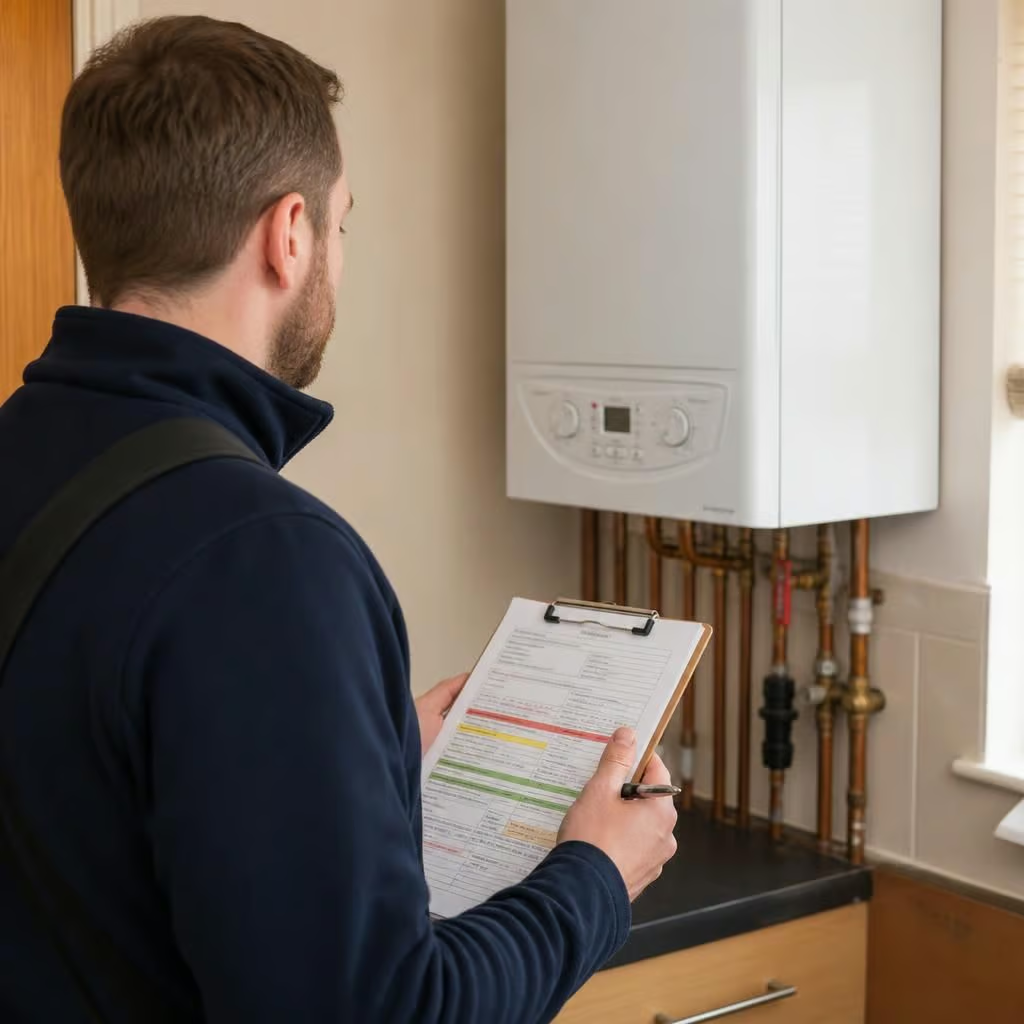
If the boiler fails while the property is between tenancies, keep the failed gas safety record with the repair quotation and completion paperwork. That creates a clear record of what the engineer found, what was done and when the appliance was checked again.
When an agent, tenant or contractor later asks about the defect, they can see the original finding rather than relying on a verbal explanation. Keep records for the boiler and any other appliance separately, because repairing one item does not close an outstanding issue elsewhere in the property.