
Which gas appliances need checking for a landlord gas safety certificate?
A landlord gas safety check covers every gas appliance and relevant flue provided for tenants, including boilers, cookers, fires and gas heaters. We test each appliance, check the flue and ventilation, and record the results on the gas safety certificate.
The deciding factor is who provides the appliance and which parts of the gas installation serve it. A landlord gas safety record should identify each relevant appliance separately, along with its location and the result of the checks carried out.
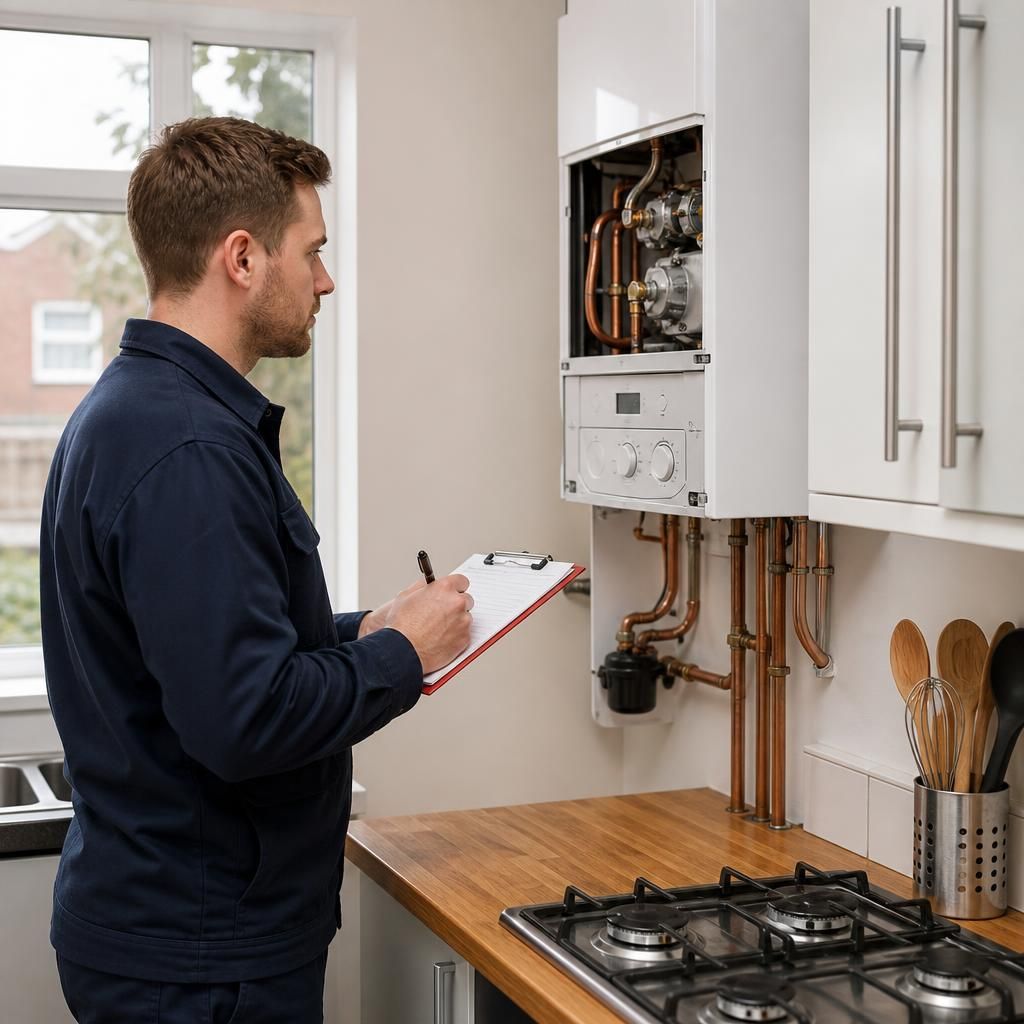
Boilers receive the most detailed attention because they usually provide heating and hot water. We check the boiler’s operating condition, safety devices, ventilation, gas connection and flue arrangement. Where the boiler has a condensate pipe or other visible external components, we also look for obvious installation or condition issues that could affect safe operation.
Gas fires are checked according to their design. A room-sealed fire has different requirements from an open-flued fire, but both need the correct flue arrangement and safe operation. We examine the fire, its visible connection and the route by which combustion gases leave the property. Where the fire uses a chimney, the condition and suitability of that flue form an important part of the assessment.
Gas cookers and hobs are included when the landlord supplies them. We check the appliance connection, controls and operation, along with the surrounding ventilation and the condition of any accessible gas hose or pipework. A cooker that belongs to the tenant is treated differently from a cooker provided with the tenancy.
Gas water heaters also need checking when they form part of the landlord’s installation. This includes instantaneous water heaters and other gas-fired appliances that heat water separately from the main boiler. We consider the burner, safety controls, ventilation and flue, as well as whether the appliance is operating as intended.
Gas tumble dryers are less common in homes, but they still fall within the inspection if the landlord supplies one. We check the appliance connection, ventilation and safe discharge of combustion products. The appliance’s location matters, particularly where the room has limited ventilation or the dryer sits close to other equipment.
Other fixed gas appliances may also need to be recorded. Examples can include older gas heaters, back boilers or appliances installed in an outbuilding. The important point is not the room in which the appliance sits. It is whether the landlord provides it and whether it forms part of the rented property’s gas installation.
Gas pipework and flues are considered alongside the appliance. We inspect accessible pipework serving the appliance and check for issues such as poor support, damage or an unsuitable connection. The flue receives attention where the appliance has one, including its visible condition, termination and safe removal of combustion gases. We do not treat the appliance as safe in isolation from the installation around it.
Ventilation is part of the safety assessment. An open-flued appliance may rely on air from the room, while a room-sealed appliance draws combustion air differently. We take the appliance type and room arrangement into account rather than applying the same check to every appliance. Air vents must not be blocked or removed because a room’s ventilation can affect safe combustion.
Appliances owned by the tenant are normally outside the landlord’s inspection. A tenant may have brought their own cooker, fire or other gas appliance into the property. The landlord should make the responsibility clear in the tenancy arrangements and avoid presenting a tenant-owned appliance as part of the landlord’s installation. We can discuss whether it should be inspected separately, but it should not be included automatically on the landlord’s record.
Appliances in shared areas may still be the landlord’s responsibility. For example, a gas appliance serving a communal room or another part of a managed property should be considered separately from appliances inside an individual dwelling. The person arranging the inspection needs to tell us about all landlord-provided gas equipment, including anything outside the main living accommodation.
We record the appliances and flues we have checked, their locations and any safety issues identified. A Gas Safe registered engineer must carry out the landlord gas safety check. That matters because gas work has legal safety requirements, and the completed record gives the landlord and tenant a clear account of what was inspected.
If an appliance is hidden, inaccessible or not disclosed, it may not be possible to complete the relevant checks. Before the appointment, the landlord or managing agent should provide access to boiler cupboards, utility rooms, fireplaces, kitchens, outbuildings and any other location containing gas equipment. That helps ensure the record covers the whole installation rather than only the most visible appliance.
If you manage more than one property, each home needs its own appliance list and gas safety record. A record for one address does not cover gas appliances at another property, even if the boilers or cookers are the same models.
Before the inspection, compare the inventory with the gas equipment installed at the property. That helps us identify appliances in less obvious locations, such as a separate utility room, annex or landlord-provided outbuilding, and record the correct appliance and location.