
How do I get a landlord gas safety certificate?
Arrange an inspection with a Gas Safe registered engineer, who checks the property’s gas appliances, flues and ventilation before recording the results on a landlord gas safety certificate. We provide the completed certificate after the inspection, including any faults that need attention.
The process is straightforward: gather the property details, arrange access for a qualified engineer, and keep the completed landlord gas safety record with the tenancy paperwork.
1. Confirm which gas appliances are covered
Start with a list of every gas appliance and flue the landlord provides for the tenant. This may include a boiler, gas fire, cooker, water heater or central-heating appliance. The landlord is responsible for the relevant gas appliances, pipework and flues provided for use in the property.
A tenant-owned appliance may fall outside the landlord’s direct responsibility. The position can differ where a flue is shared or concealed, so tell the engineer about any appliance that connects to the property’s gas system.
2. Arrange access to the property
The engineer needs access to the appliances, flues, controls, meter and relevant ventilation. Clear storage from around the boiler and any gas fire, and make sure the engineer can reach inspection hatches or cupboards.
If the property is occupied, give the tenant reasonable notice and agree a suitable appointment. Keep a record of attempted visits if access is refused or nobody is present. A landlord must not simply assume that an inspection can be completed without entering the property.
3. Choose an engineer who is legally permitted to do the work
Gas work must be carried out by an engineer listed on the Gas Safe Register. Check that the engineer is qualified for the particular appliances involved, rather than relying only on a general registration.
We can arrange the inspection for a rented property and explain what the findings mean in practical terms. If the property uses oil instead of gas, a gas safety record is not the relevant document; an oil-fired system requires an engineer with the appropriate oil-heating registration.
4. Allow time for the inspection
The engineer may need to run each appliance, examine combustion, check the gas pressure and inspect the condition and route of the flues. Ventilation, isolation controls and visible gas pipework also need attention.
Older homes can have flues hidden in extensions, boxed-in sections or roof spaces. Make the engineer aware of alterations, replacement boilers, chimneys and rooms that have changed use. Missing access or uncertain flue routes may prevent a complete inspection.
5. Receive and review the completed record
Once the inspection is complete, the record identifies the property, appliances checked, test results and any safety issues found. Check that the address and appliance details are correct before filing it.
The record should be kept with the property’s compliance documents. Give the relevant copy to the tenant within the required timescale, and provide it to a new tenant before they move in. Keep records of any follow-up work alongside the inspection record.
6. Deal with faults separately
A safety inspection does not automatically include repair or replacement work. If the engineer finds a fault, they should explain the risk and what needs to happen next. An appliance may need repair, adjustment, further investigation or replacement.
Do not use an appliance that the engineer has identified as unsafe. Where remedial work is needed, we explain the proposed repair first and provide a written quotation before work starts, so the landlord can make an informed decision about the cost and scope.
7. Plan the next inspection
A landlord must arrange a further gas safety check within twelve months of the previous check. The inspection date should be recorded clearly, because the responsibility remains with the landlord even when a managing agent handles the property.
Booking before the due date gives time to resolve defects without delaying a tenancy or leaving compliance paperwork incomplete.
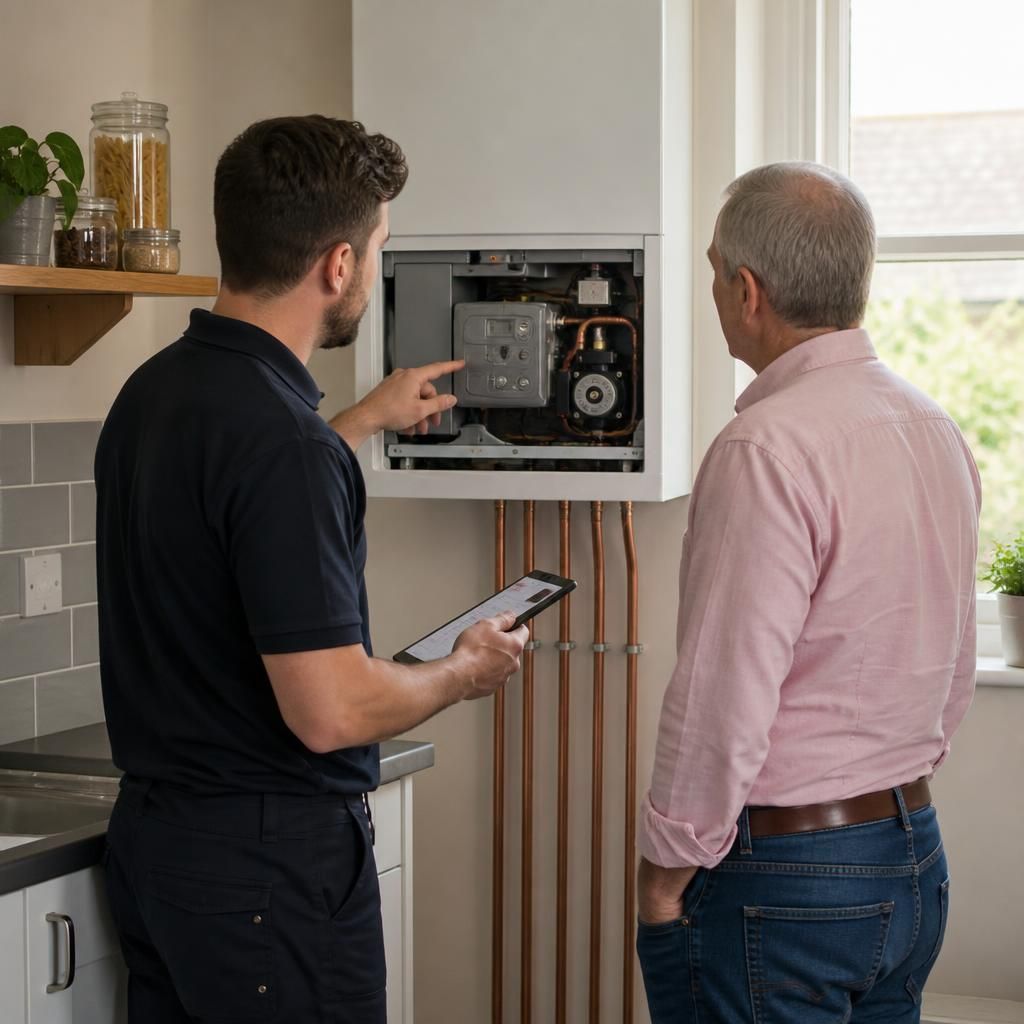
When booking, ask specifically for a landlord gas safety check rather than a boiler service. A service focuses on the boiler’s condition and operation; the landlord gas safety record covers the gas installation provided for the tenancy, including relevant appliances, flues and ventilation.
Tell us about any appliance replacements or alterations before we attend. We can then match the inspection and paperwork to the installation that is actually in the property.