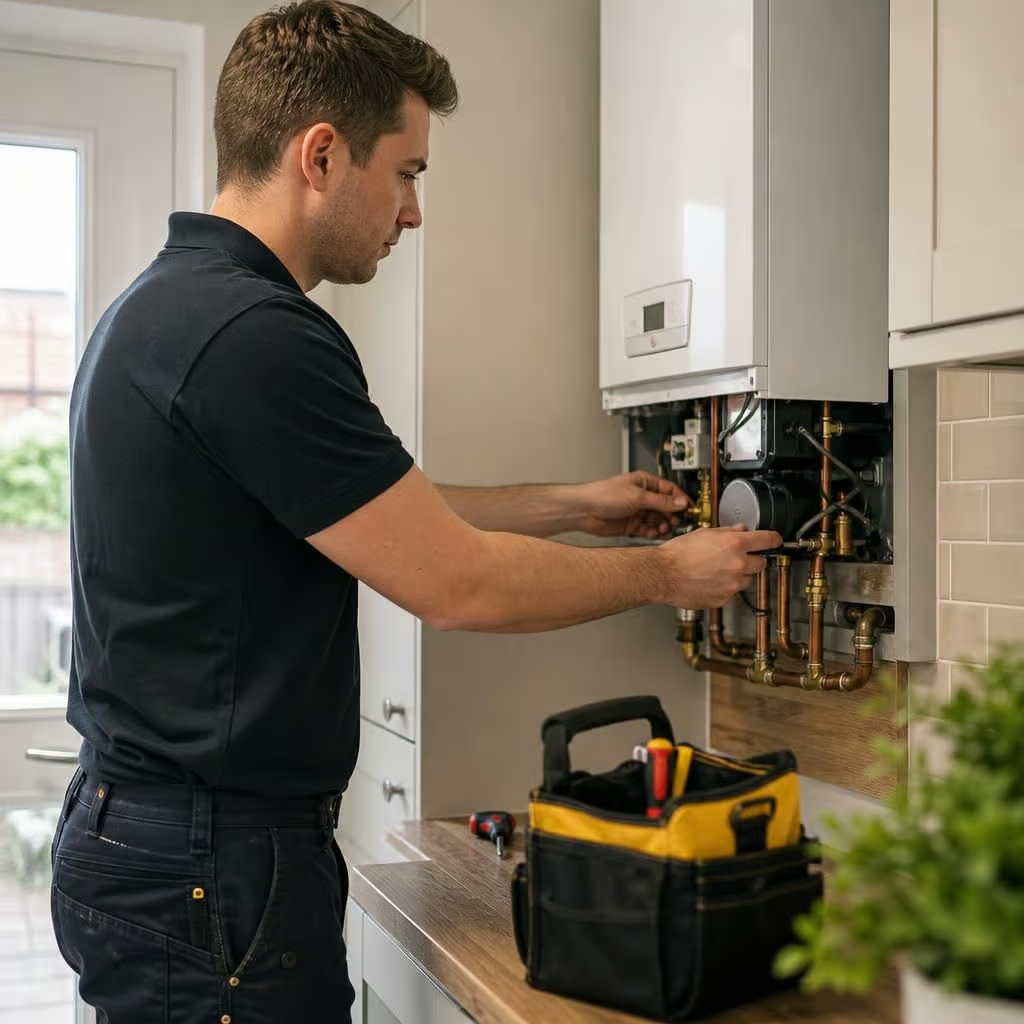
When should a landlord arrange an annual gas safety check?
Arrange the gas safety check so it’s completed before a new tenancy begins and no more than 12 months after the previous check. For an ongoing tenancy, booking it between 10 and 12 months after the last check can help keep the original annual date.
The annual gas safety check should be booked before the current record expires. For an existing tenancy, the check can be completed during the two months before the expiry date without changing the annual deadline. A first check must be completed before a tenant moves in.
This means the date on the current gas safety record is the key date to work from. Booking several weeks ahead gives time to arrange access, deal with a failed appliance and complete any remedial work before the record runs out.
The two-month scheduling rule
Landlords can arrange the next check up to two months before the current record expires. The new record should still show the original deadline, so the annual cycle does not gradually move earlier each year.
For example, if the current record expires on 30 September, the next check can be carried out from 1 August. The following record should still run to 30 September the next year. A check carried out more than two months early will normally create a new annual deadline from the date of that check.
That distinction matters when a property manager is arranging several properties together. Grouping appointments can be practical, but bringing checks forward too far may alter the renewal date and create a different schedule for future years.
When a property is between tenancies
A new tenant must not move into the property until the required gas safety check has been completed and any unsafe issue has been dealt with. This applies even if the previous tenant left shortly before the new tenancy begins.
If the existing record is still valid, a new check is not normally needed solely because the tenant has changed. The incoming tenant must receive the current gas safety record before moving in. The landlord should still check that the record covers the gas appliances and flues provided at the property.
A new check may be needed if the record has expired, gas appliances have been installed or altered, or work has affected the gas installation or flue. We can confirm what needs checking when the property or its heating system has changed.
What the annual check covers
The check applies to gas appliances, flues and relevant gas installation pipework that the landlord provides. A registered engineer examines whether the equipment is safe to use and records the result for the property.
- Gas appliances such as boilers, fires, cookers or water heaters supplied with the tenancy are considered.
- Flues are checked for safe operation, adequate ventilation and signs that combustion products could enter the property.
- The engineer checks the gas installation and carries out the required safety tests.
- Any unsafe appliance or defect is explained, with the necessary action recorded.
An annual gas safety check is not the same as a full boiler service. The safety check confirms that the gas installation and covered appliances are safe to use at the time of inspection. A boiler service also assesses the boiler’s condition and operation in more detail. A landlord may need both.
What landlords must do with the record
The landlord must keep the gas safety record for at least two years. A copy must be given to existing tenants within 28 days of the check, and to a new tenant before they move into the property. Keeping the record with the tenancy paperwork makes the compliance history easier to follow.
If the property is managed by a letting agent, the landlord should agree who books the check, who gives the tenant the record and who follows up any remedial work. Responsibility can be delegated, but the landlord remains responsible for making sure the legal duty is met.
If the tenant cannot provide access
The landlord should arrange the appointment with reasonable notice and keep a clear record of attempts to gain access. If an appointment is missed, contact the tenant and rearrange it. Written evidence of contact, proposed dates and any refusal may be important if access remains an issue.
Do not treat an expired record as a minor administration problem. If the check cannot be completed, take reasonable steps to arrange access and obtain appropriate advice about the next action. A tenant must not be put at risk, and the property must not be treated as compliant without a current valid record.
We carry out landlord gas safety checks with Gas Safe registered engineers. That is the legal requirement for anyone working on a gas boiler or other gas appliance. The result is recorded for the property, and any issue that needs attention is explained before further work is agreed.
For a rental property, the simplest system is to diarise the expiry date as soon as the record is issued, then arrange the next check within the permitted two-month window. That leaves time to resolve problems before the tenant’s safety record needs renewing.
A rental property may contain appliances owned by the landlord and others brought in by the tenant. Tell us which gas appliances and flues the tenancy provides, so we assess the equipment covered by the landlord’s duty rather than making assumptions.
If an appliance falls outside that duty but appears unsafe, we’ll explain the concern clearly. That gives the landlord a defined action to take instead of treating an incomplete inspection as a clean safety record.