
Can an off-grid home qualify for a boiler upgrade grant?
Yes. An off-grid home can qualify for a Boiler Upgrade Scheme grant when an eligible oil, LPG or other fossil-fuel heating system is replaced with an air source or ground source heat pump, provided the property meets the scheme rules.
An off-grid property is not excluded simply because it has no mains gas. In fact, replacing an oil or LPG heating system with an eligible heat pump is one of the situations the Boiler Upgrade Scheme is intended to support. The property and proposed installation must still meet the scheme rules.
The grant is for changing the way the home is heated. It is not a grant towards replacing an old oil or LPG boiler with another boiler using the same fuel. The proposed system must be an eligible heat pump installation, designed to heat the home and hot water safely and effectively.
What determines eligibility?
For an off-grid home, we look at several points before confirming that an application can proceed:
- The existing heating system: the property normally needs to have an existing fossil-fuel or eligible electric heating system that the heat pump will replace.
- The property type: the scheme has rules covering new-build homes and self-build properties, so the home’s history matters.
- The EPC: the property needs a valid Energy Performance Certificate. Outstanding recommendations for cavity wall or loft insulation can affect eligibility and may need to be dealt with first.
- The proposed heat pump: the equipment and design must meet the scheme’s technical requirements.
- The installer: the installation must be completed through an MCS-certified installer, who can make the grant application as part of the process.
Having an oil tank, LPG bottles or another off-grid fuel arrangement does not prevent an application. It does mean we need to understand how the current system works, what equipment can remain, and what needs removing or disconnecting.
Older rural homes need a proper survey
An off-grid home may have solid walls, limited insulation, large rooms or radiators installed for a high-temperature boiler. These features do not automatically rule out a heat pump. They do affect the design and the work needed before the system can run properly.
Your existing radiators may have been sized for an oil or LPG boiler running at a higher temperature, so we calculate the heat loss from each room rather than assuming they can all stay. Some may need replacing with larger radiators. Pipework, valves, insulation and the hot-water cylinder may also need attention.
If the home has a barn-conversion layout, thick stone walls or a listed-building restriction, we take those practical limits into account. A heat pump can still be suitable, but the best equipment position, pipe routes and emitter choices may differ from a modern insulated house.
We also check the electrical supply, outdoor unit position, condensate route, access and noise requirements. Where planning restrictions apply, particularly on a listed property or in a sensitive location, those need to be understood before work is agreed.
What the grant does not necessarily pay for
The grant contributes towards the eligible heat pump installation. It may not cover every part of preparing an older off-grid property. For example, the final cost can include radiator changes, pipework alterations, insulation improvements, electrical work, cylinder replacement, oil tank removal or building repairs.
That is why a survey and written quotation matter. We separate the eligible installation from associated work, explain why each item is needed, and show what remains for you to pay after the grant has been allowed for. You should not have to make a decision based on a headline grant figure that excludes necessary work.
How the application works
- We assess the existing heating: we record the current fuel, boiler or heating equipment, controls and hot-water arrangement.
- We assess the property: we review insulation, room heat loss, radiators, pipework, electrical capacity and suitable locations for the heat pump and cylinder.
- We confirm the design: the quotation sets out the proposed system, any enabling work and the expected disruption.
- We handle the scheme paperwork: as an MCS-certified installer, we can apply for the Boiler Upgrade Scheme grant on your behalf when the installation qualifies.
- We complete and certify the installation: the system is commissioned and the required evidence is submitted through the scheme process.
The grant application is tied to the proposed installation, so the property should not be treated as eligible until the relevant checks have been completed. We also explain what happens to the old oil or LPG equipment. In some homes it may be removed; in others, an existing system may need to be isolated or dealt with in a particular way.
Off-grid does not always mean heat-pump ready
A property can qualify in principle and still need work before a heat pump is sensible. If the heat loss is high or the distribution system is unsuitable, installing the unit without addressing those issues can lead to poor comfort and higher running costs.
We therefore work out the likely running cost from the home’s heat demand, electricity tariff and proposed system rather than promising a standard saving. If the numbers or building constraints do not make sense, we explain that before you commit. A grant should reduce the cost of a suitable installation, not persuade you to fit the wrong system.
For an off-grid homeowner, the useful first step is to have the EPC, details of the current oil or LPG system, recent fuel use and any planned building work available for the assessment. That gives us a clearer basis for checking eligibility and deciding whether a heat pump is a practical replacement for the existing heating.
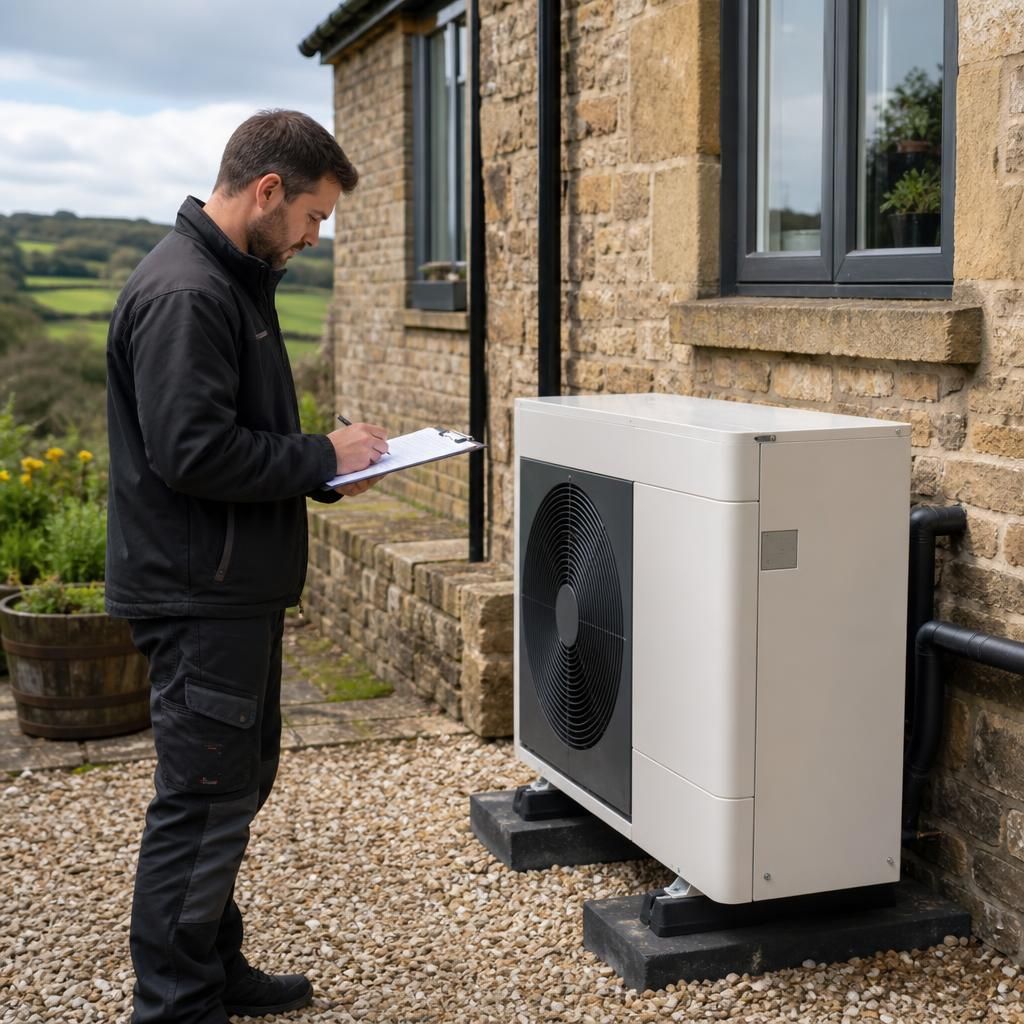
Grant eligibility and heat-pump suitability are separate decisions. An off-grid property may meet the scheme rules, but the heating system still needs to match the way the home loses heat.
We use the assessment to separate those two points clearly. You’ll know whether the grant application can proceed and what preparation the house needs before the new system is commissioned.