
What does a boiler upgrade grant cover?
The Boiler Upgrade Scheme contributes towards the upfront cost of an eligible heat pump or biomass boiler and its installation. It does not fund a like-for-like replacement of a gas, LPG or oil boiler, and we confirm the current grant amount and eligible work for your property before quoting.
A Boiler Upgrade Scheme grant covers part of the eligible cost of a qualifying low-carbon heating installation. That normally means the heat pump, the labour to install it, and the equipment needed to connect and commission the system. The grant is not a general home-improvement payment, so some work remains outside its scope.
What the grant contributes towards
For an air source heat pump, the funded installation can include the outdoor unit, the indoor cylinder or hydraulic components, controls, pipework and the labour needed to install and commission them. The exact items depend on the design of your system and the condition of the property.
Ground source heat pump installations may also qualify where the scheme rules are met. These systems need ground collectors or boreholes, so the quotation must separate the eligible heating installation from any work that the grant does not cover. Other scheme-approved technologies may be available under the current rules, but the system must meet the scheme’s technical requirements.
We prepare the design around the heat loss of each room rather than sizing the heat pump from the existing boiler. That gives you a clear breakdown of the equipment, installation work and any additional upgrades needed for the system to operate properly.
What it usually does not cover
- Replacing an existing gas, oil or LPG boiler with another boiler.
- Solar panels, battery storage or an electric vehicle charger.
- General insulation, roof repairs, window replacement or other improvements to the building fabric.
- Unrelated electrical repairs, plumbing repairs or remedial work that the property already needs.
- Decorating, making good or structural work beyond what is reasonably required for the installation.
- Extra work caused by access problems, asbestos, damaged pipework or other site conditions identified during the survey.
That does not mean these items can never form part of the project. It means they normally appear as separate costs in the quotation rather than being paid for by the grant. We explain those costs before work starts, so you can decide whether to proceed with the full installation, prepare the property first or reconsider the design.
Radiators, pipework and electrical work
An older heating system may need changes before it can work well with a heat pump. Heat pumps generally run at lower flow temperatures than conventional boilers. Some rooms may therefore need larger radiators, improved pipework or changes to the controls.
Those upgrades may be necessary for the system to deliver the required heat, but they are not automatically an extra benefit paid by the scheme. We identify them during the heat-loss assessment and show them separately in the quotation. The same applies to consumer unit changes, additional circuits or other electrical work.
This matters in older rural homes, barn conversions and properties that have been altered over several decades. Existing pipe routes, solid walls, low-flow radiators and limited electrical capacity can all affect the installation. Finding those issues before the grant application is more useful than discovering them after the equipment arrives.
How the grant is applied
You do not normally receive the grant as cash to spend on different work. We apply through the scheme as an MCS-certified installer, subject to the property and installation meeting the current requirements. Once the application and installation process is complete, the grant is deducted from the agreed project cost.
That means the quotation should show the full installation price, the grant contribution and the remaining amount for you to pay. If the design changes because of survey findings, we explain the revised cost rather than treating the grant as an allowance that can cover anything added to the job.
MCS certification also matters after installation. It provides the certification needed for the grant application and supports eligibility for the Smart Export Guarantee where the installation includes eligible electricity generation. Export payments are separate from the Boiler Upgrade Scheme and are not part of the grant itself.
Work that must be completed first
The scheme does not make an unsuitable property suitable by itself. If the heat-loss calculation shows that insulation, radiator changes or electrical improvements are needed, those decisions should be made before the installation is booked. Some preparatory work may reduce the size of the heat pump or improve its running conditions, but the cost is normally yours unless another form of funding applies.
Planning requirements, listed-building restrictions and access for lifting equipment can also affect the total project cost. We consider the outdoor unit position, noise, condensate drainage, cylinder location and pipe routes during the survey. A property does not have to be new to use a heat pump, but its construction and existing heating system affect what the grant-funded installation can realistically involve.
What to check in a quotation
- The proposed heat pump and the rooms included in the heat-loss calculation.
- The equipment and installation work covered by the grant.
- Radiator, pipework, cylinder, controls and electrical upgrades shown as separate items.
- Any work excluded because of access, planning, repairs or the building’s condition.
- The full price, the grant deduction and the balance remaining to pay.
- Who will handle the grant application and what certification you will receive after commissioning.
We provide a written quotation before work starts and explain which parts are grant-eligible and which are not. That lets you judge the complete cost of the heating change, rather than assuming the grant will pay for every alteration around it.
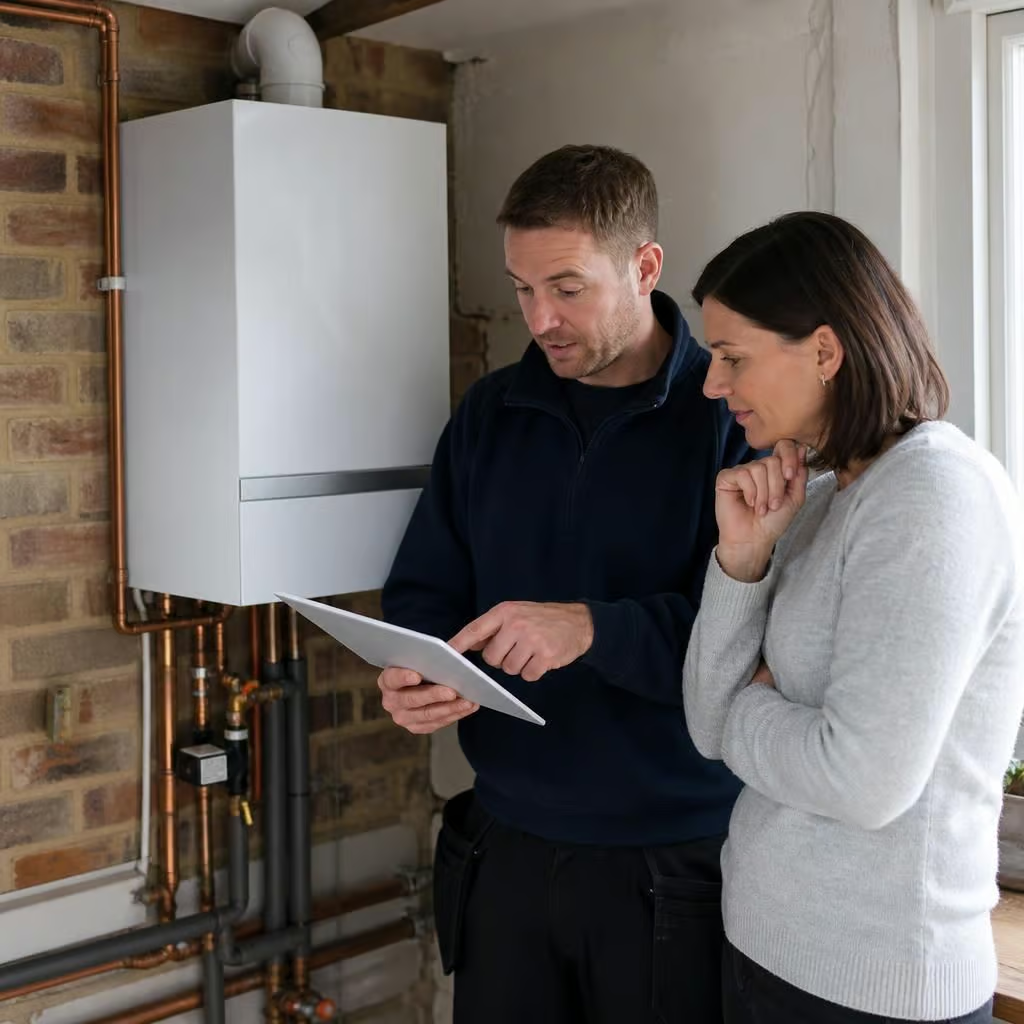
The grant is attached to the qualifying heating installation, not to every improvement carried out at the same time. That distinction matters when an older home needs work before the heat pump can run properly.
We separate the grant-funded system from preparation such as radiator changes, electrical work or repairs. You can then see the cost of the heating installation itself and decide which additional work should happen alongside it.