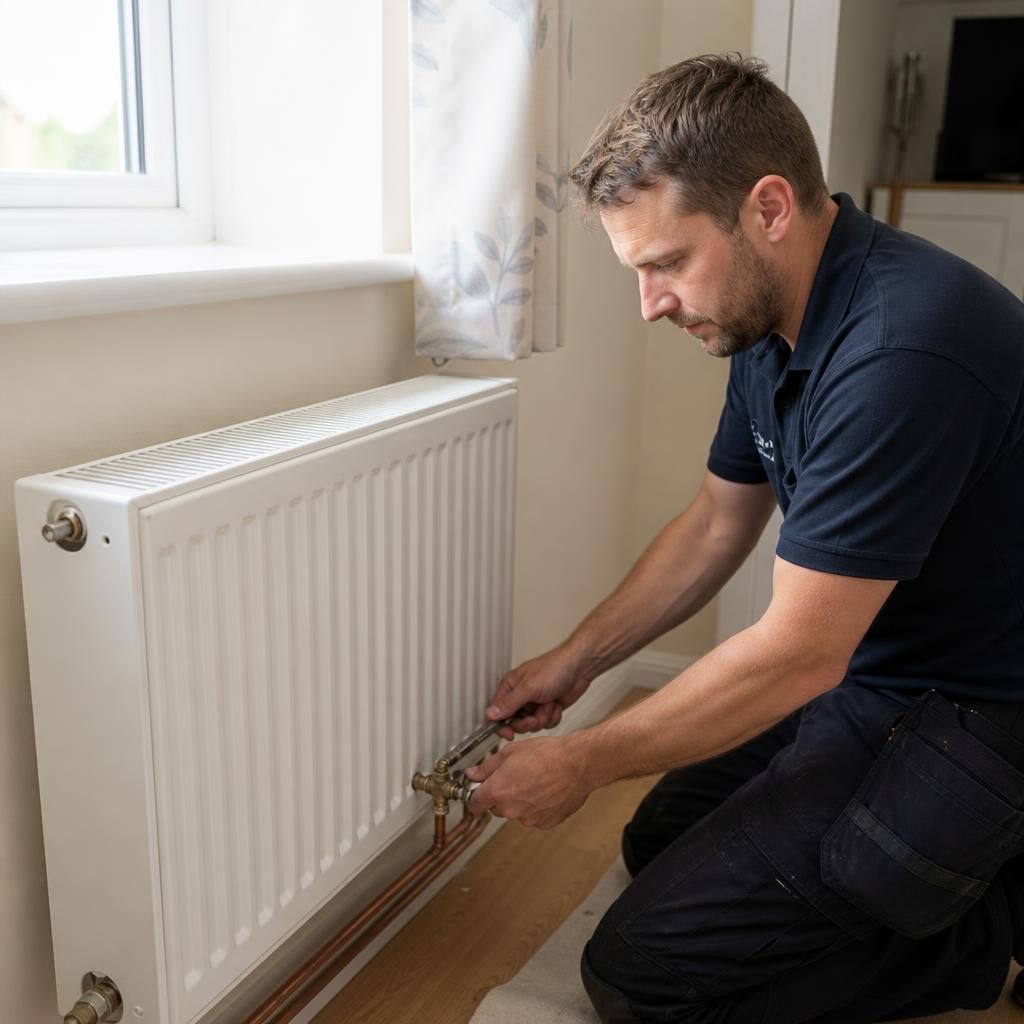
Will a combi boiler work with my existing radiators?
In most homes, a combi boiler can work with existing radiators if they are correctly sized, sound and balanced. We check their condition and heat output during the survey, then identify any radiators or pipework that need upgrading before installation.
A combi boiler does not require a special type of radiator. The important question is whether each radiator can deliver enough heat for the room once the home’s heat loss and the new boiler’s controls have been assessed.
A large, older radiator may work very well. In some rooms, it may have more capacity than the room needs. In others, a small radiator fitted when the house had different insulation or heating requirements may leave the room cold, even with a new boiler.
We assess the heating demand room by room rather than sizing the boiler from the existing radiator layout. This shows us where the current radiators are suitable and where a larger or additional radiator would improve comfort. It also helps avoid choosing an unnecessarily large boiler for the heating circuit.
- Radiator size: we compare the available radiator output with the heat needed in each room.
- Condition: rust, leaks, cold patches and damaged panels can indicate that replacement is more sensible than reconnecting the radiator.
- Valves: old or sticking thermostatic radiator valves may prevent proper temperature control.
- Pipework: restricted, corroded or poorly arranged pipes can limit circulation, even when the radiators themselves are adequate.
- System water: sludge and magnetite can reduce flow through radiators and affect the new boiler’s performance.
A radiator that stays cold at the top may contain air. One that is cold at the bottom may have sludge restricting the water flow. If only one end warms up, the system may need balancing or the valve may have a fault. We investigate these symptoms before deciding that every radiator needs replacing.
Radiator output also depends on the water temperature. A modern condensing combi works most efficiently when the return water is cool enough for the boiler to recover heat from its flue gases. Correct controls and balanced radiators help the boiler achieve this without leaving rooms underheated.
Your existing radiators may therefore continue to work after the installation, but the operating settings still need to suit the property. We check the circulation, set the radiator valves and balance the system so heat reaches the rooms in the right proportion.
Older properties need particular care. Solid walls, high ceilings, exposed positions and extensions can produce very different heat losses from room to room. A barn conversion may need more radiator capacity in one space, while a smaller insulated room may need less. We take those differences into account rather than applying the same assumption throughout the house.
If you currently have a system or regular boiler with a hot-water cylinder and storage tanks, changing to a combi involves more than swapping the boiler. We may need to alter the heating and water pipework, remove redundant components and check that the radiator circuit remains correctly configured. The presence of a cylinder does not, by itself, mean that the radiators need replacing.
There is also a practical limit to what a combi can do. Its heating output and hot-water output are considered separately, so we select a boiler that can heat the property while providing the required hot-water flow. Oversizing the boiler simply to accommodate a few radiators can lead to less efficient cycling and higher installation costs.
Where a radiator upgrade is useful, we explain which room needs it and why. That might mean changing one undersized radiator, fitting thermostatic valves, cleaning the system or correcting a section of pipework. We do not treat a complete radiator replacement as automatic.
Before work starts, we provide a written quotation covering the recommended boiler, any radiator or pipework changes, controls and associated installation work. Gas work is carried out by Gas Safe registered engineers, so the boiler and its connection are installed in line with the legal requirements.
The result should be a heating system in which the boiler, radiators, controls and pipework work together. If the existing radiators are sound and correctly sized, they can remain in place. If they are not, identifying the problem before installation prevents a new combi from being blamed for a weakness elsewhere in the system.
Existing radiators can remain in place while the boiler changes, but their connections still need checking. Pipe entry points, valve positions and wall fixings must suit the radiator and the new pipework arrangement. If a replacement is needed, we identify these details before work starts, so the quotation includes any necessary alterations rather than leaving them as an unexpected extra.