
Will my heating controls need replacing with a new boiler?
Not always. We check whether your existing thermostat, programmer and wiring are compatible with the new boiler; if they are outdated or limiting comfort and efficiency, we’ll recommend replacing them as part of the installation.
A boiler and its heating controls are separate parts of the system. Replacing the boiler does not automatically require a new thermostat or programmer. If the existing controls operate reliably and suit the replacement boiler, keeping them may be the sensible choice.
Your controls may be suitable when they can still set heating times, maintain room temperature and control hot water where applicable. We also look at the wiring, valves and boiler connection rather than judging the controls by age alone. A simple control system can continue to work well when it is correctly set up.
Replacement becomes more likely when the controls are faulty, missing, poorly positioned or unable to communicate properly with the new boiler. An old thermostat may only switch the boiler fully on or off. A compatible modern control can allow the boiler to adjust its output more effectively, which can improve comfort and reduce unnecessary cycling.
We normally consider the following parts during the assessment:
- Room thermostat: This measures the temperature in one area of the home. We check its position, accuracy and wiring. A thermostat beside a radiator, in direct sunlight or in a draught may not represent the rest of the house properly.
- Programmer or timer: This sets when heating and hot water operate. We check whether it can control the new boiler and whether the settings match how the home is used.
- Thermostatic radiator valves: These regulate individual rooms. They can usually remain in place, but we check that the overall control arrangement does not cause conflicting instructions.
- Cylinder and zone controls: A system or regular boiler may have a hot water cylinder, motorised valves and separate thermostats. These parts need to work together, so a boiler change can expose worn valves or unsuitable wiring.
A combi boiler usually needs a room thermostat and time control. A system or regular boiler has more components because it may heat stored hot water as well as the radiators. If the property has separate heating zones, we check each zone rather than treating the controls as one interchangeable unit.
Some newer boilers can work with load-compensating or weather-compensating controls. These adjust the boiler’s output or flow temperature instead of repeatedly switching it on and off at full output. The benefit depends on the boiler, the control equipment and the way the system is designed. We only recommend this type of upgrade when the parts are compatible and the change has a practical benefit for the home.
A smart thermostat may be useful if remote adjustment, timed routines or room-by-room control would suit the household. It still needs the correct receiver, wiring and boiler connection. An internet connection may also be needed for app-based features. We explain which functions will work before anything is fitted, rather than treating a smart control as an automatic improvement.
Older homes need a little more care. Thick walls, long pipe runs and several heating zones can make control placement and wiring more important. In a property with an existing oil or LPG boiler, we check the control system used by that appliance and the associated valves and thermostats. The same principles apply, but not every gas-boiler control can be transferred to an oil or LPG installation.
If a control is in a difficult position, moving it may improve temperature control but can involve new cable routes and making good afterwards. Wireless options can reduce visible wiring, although the receiver still needs a suitable electrical connection. Where wiring is old or damaged, we explain the work required before the installation starts.
The quotation can separate the boiler work from any control replacement or rewiring. That means you can see whether the existing controls are being retained, which parts are being changed and why. If the controls are suitable, we set them up with the new boiler and show you how to use the settings. If they are not, we recommend only the changes needed for the system to operate properly.
Before installation, we also discuss how the heating is used, which rooms tend to be warmer or colder and whether hot water is stored or produced on demand. This helps us choose a control arrangement that matches the property instead of adding features that will not be used.
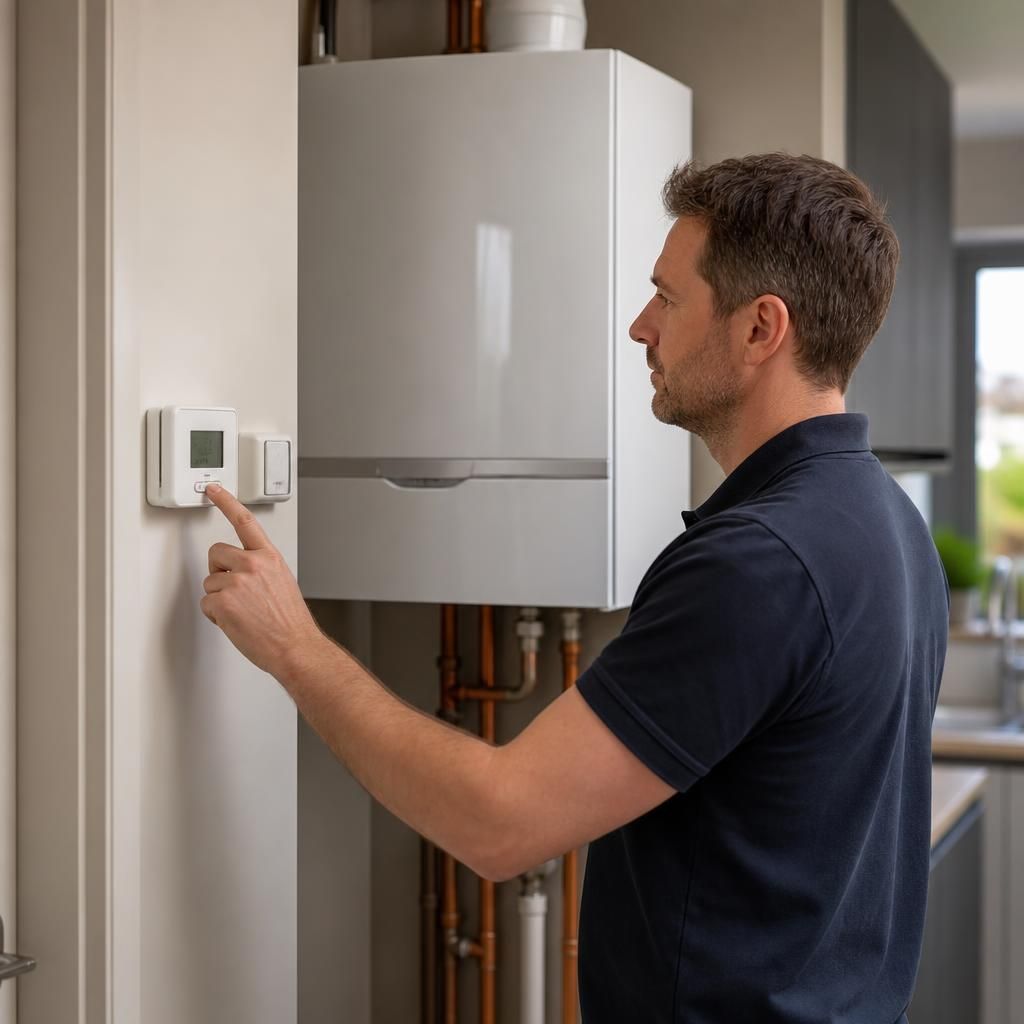
A boiler change can reveal a weakness elsewhere in the control system. A motorised valve may stick, a relay may fail to switch, or a thermostat may lose its connection during testing.
We run the heating and hot water through their full operating cycles before we finish. If a control fault appears, we explain whether it needs repair, replacement or no action. This leaves you with a clear record of what the new boiler controls and which older parts remain in service.