
Can you deliver heating oil to an older or restricted-access property?
Yes. We assess the approach, turning space, delivery distance and any restrictions before arranging heating oil delivery to an older or difficult-access property. If access is limited, we’ll discuss the practical options with you before delivery so there are no surprises on the day.
An older house or awkward approach does not automatically rule out a heating oil delivery. The key issue is whether the tanker can reach a safe unloading position and connect to a suitable, accessible filling point without putting people, buildings or equipment at risk.
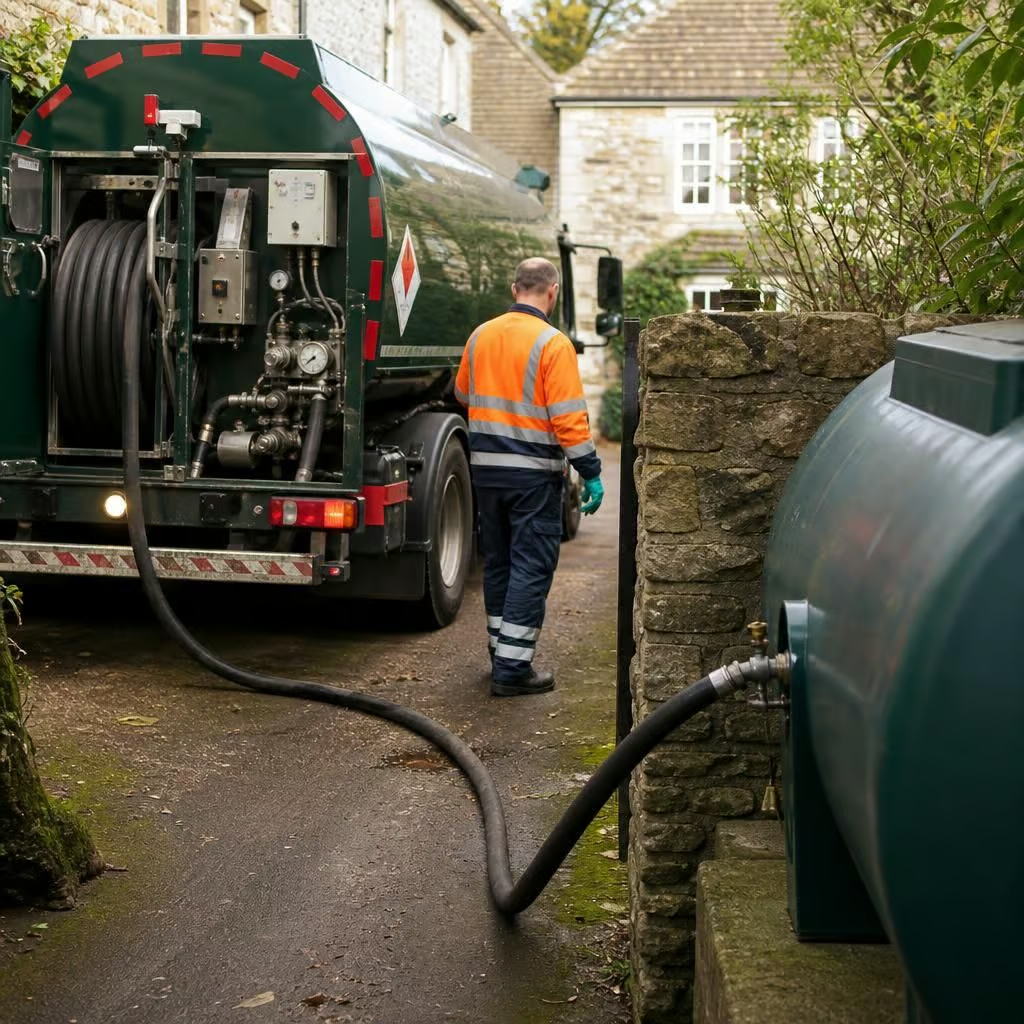
Older properties often have tanks in places that made sense when they were installed but are difficult to use now. The tank may sit behind a wall, beyond a gate, beside an outbuilding or at the end of a long private drive. A delivery can still be practical, but the arrangement needs checking before fuel is booked.
The filling point matters as much as the tank. The driver needs to identify the correct connection and reach it without dragging the hose across fragile surfaces, public areas or places where it could be damaged. If the fill pipe is hidden, poorly marked or obstructed by stored items, we may need to agree how it will be made accessible.
Some older installations have the fill and vent pipes positioned awkwardly, or use fittings that are worn or difficult to identify. We can point out what needs attention before delivery. That may involve clearing the area, labelling the pipework or arranging remedial work to the tank installation. We will not treat a risky connection as suitable simply because a tanker has arrived.
Restricted access can affect the delivery vehicle, not just the property. A narrow private road, weak bridge, steep approach or limited clearance may prevent the vehicle from reaching the house safely. Shared drives and private lanes can also require permission from a landowner or residents’ association. You may need to confirm that the route can be used and that parked vehicles, gates or temporary obstructions will not prevent access.
Low branches, overhanging walls and tight bends are easy to overlook from inside the house. Photographs taken from the entrance, along the approach and around the tank can help us understand the arrangement before we advise you. A simple site visit may be more useful where the route changes at different points or cannot be described clearly.
The tank itself must be suitable to receive fuel. Signs of corrosion, cracked bunding, damaged pipework, a loose cap or oil staining should be dealt with before ordering. A delivery is not the right time to discover that the tank is leaking or that the surrounding area cannot contain a spill. If the tank is at the end of its serviceable life, replacing it may be safer and more practical than continuing to arrange deliveries to it.
Where the existing position causes repeated access problems, possible alternatives include improving the route to the tank, moving the tank to a more suitable location or installing a compliant remote filling arrangement. Each option depends on the tank type, pipework, ground conditions, property layout and any planning or environmental restrictions. We would explain the work involved before you commit to it.
If the tanker cannot safely complete the delivery, the driver may have to leave the fuel undelivered. That can happen if the approach is blocked, the filling point cannot be identified, the tank appears unsafe or the hose route creates an unacceptable risk. Booking a delivery does not override those safety checks. Reviewing the arrangement beforehand gives you the chance to correct the problem rather than discovering it on the day.
For an older or restricted-access property, send us the delivery address, a description of the approach and clear photographs of the tank, fill point and surrounding area. We can then tell you what information is still needed, identify practical obstacles and advise whether the current arrangement is suitable to proceed.
Access can be a property-rights issue as well as a physical one. If the tank sits beyond a shared track, across a neighbour’s land or on rented ground, the delivery route may need permission before fuel is ordered. Tell us about any shared access arrangements so we can include them in the delivery plan.
That matters especially where a gate, track or turning area is controlled by someone else. A tanker may be able to reach the property but still be unable to use the route without the owner’s agreement. Sorting this out beforehand helps avoid an unsuccessful delivery and makes any changes to the access arrangement clear.