
How long does a boiler replacement take?
A straightforward like-for-like boiler replacement is usually completed within a single working day. It takes longer if we need to alter pipework, move the boiler, upgrade controls or replace radiators, so we confirm the timescale after assessing the installation.
The installation time depends on how much of the existing heating system can stay in place. A direct boiler swap is relatively contained. Moving the boiler, changing the flue route, replacing radiators or altering pipework adds work and may extend the installation beyond the original estimate.
We give the expected duration after surveying the property, rather than estimating from the boiler model alone. The survey shows what the installation involves and helps prevent unexpected work on the day.
What we assess before installation
- Boiler position: A boiler in the same position usually needs less work than one moving to a different wall, floor or room.
- Flue route: The position of the existing flue and the route for the replacement affect access, external work and the installation sequence.
- Condensate drainage: A modern condensing boiler needs a suitable drain connection. If there is no practical nearby connection, we may need to alter the pipework or fit a condensate pump.
- Heating pipework: Older pipework may need changing if it is corroded, undersized or unsuitable for the replacement system.
- Radiators: A new boiler may expose poor radiator performance. If radiators are being replaced or repositioned, we include that work in the programme.
- Controls and electrics: New controls, wiring changes or an updated electrical supply add tasks beyond removing and connecting the boiler.
- Access: Tight loft spaces, built-in cupboards, limited parking or difficult routes through the house can affect how the work is organised.
These checks matter particularly in older houses. A boiler may have been installed in stages, with pipework passing through floors, cupboards or extensions. We trace the system before disconnecting it, so the replacement does not rely on assumptions about hidden connections.
What happens before the installation day
We discuss the heating problem, hot water requirements and preferred boiler position before recommending equipment. The quotation sets out the work included, including any radiator, pipework, flue, control or electrical changes. This gives you a clear basis for planning the disruption and comparing the total work, rather than just the boiler price.
If the property has oil heating, the existing oil system needs a different installation approach from a gas boiler. Our OFTEC-registered engineers assess the oil tank, supply pipework, flue and appliance position. For a gas system, work on the boiler and gas connection is carried out by Gas Safe-registered engineers.
What happens on the day
- We protect the working area and isolate the existing heating and electrical supplies safely.
- We drain the heating system where necessary and disconnect the old boiler.
- We prepare the wall, floor, flue route, pipework and connections for the replacement.
- We fit the boiler, controls and any agreed changes to radiators or heating pipework.
- We fill and vent the system, check pressure and test the heating and hot water.
- We check the flue, combustion and safety controls before putting the appliance into service.
- We explain the controls and leave the work area tidy.
The final testing stage is part of the installation, not an optional extra. A boiler that is physically connected but has not been properly commissioned should not be treated as ready to use. We record the relevant installation information and explain the paperwork that follows.
Why some replacements take longer
A boiler replacement can expand into a larger heating upgrade when the existing system has leaks, sludge, poor circulation or unsuitable pipework. Replacing a radiator, moving a boiler upstairs or routing a new flue through a different wall can involve several trades within the same installation.
Older or off-gas-grid homes can also contain oil, LPG or mixed heating arrangements that need more careful planning. Solid walls, exposed beams, listed interiors and barn-conversion layouts may limit where equipment, flues and pipes can go. We take those restrictions into account before agreeing the installation plan.
How to plan for the work
- Clear access to the boiler, controls, radiators and the route into the property.
- Remove items from cupboards around the boiler, but do not disconnect any gas, oil, water or electrical equipment.
- Keep the quotation available so any agreed changes can be checked during the work.
- Allow for the heating and hot water to be unavailable while the system is isolated and tested.
- Tell us about tenants, vulnerable occupants, pets or rooms that need particular protection before the work starts.
If the survey identifies a need for additional work, we explain what has changed and why before proceeding. That may affect the completion time, but it avoids rushing a connection or leaving part of the heating system untested. Once commissioning is complete, we show you how to use the boiler and controls so the replacement is ready for normal heating and hot water use.
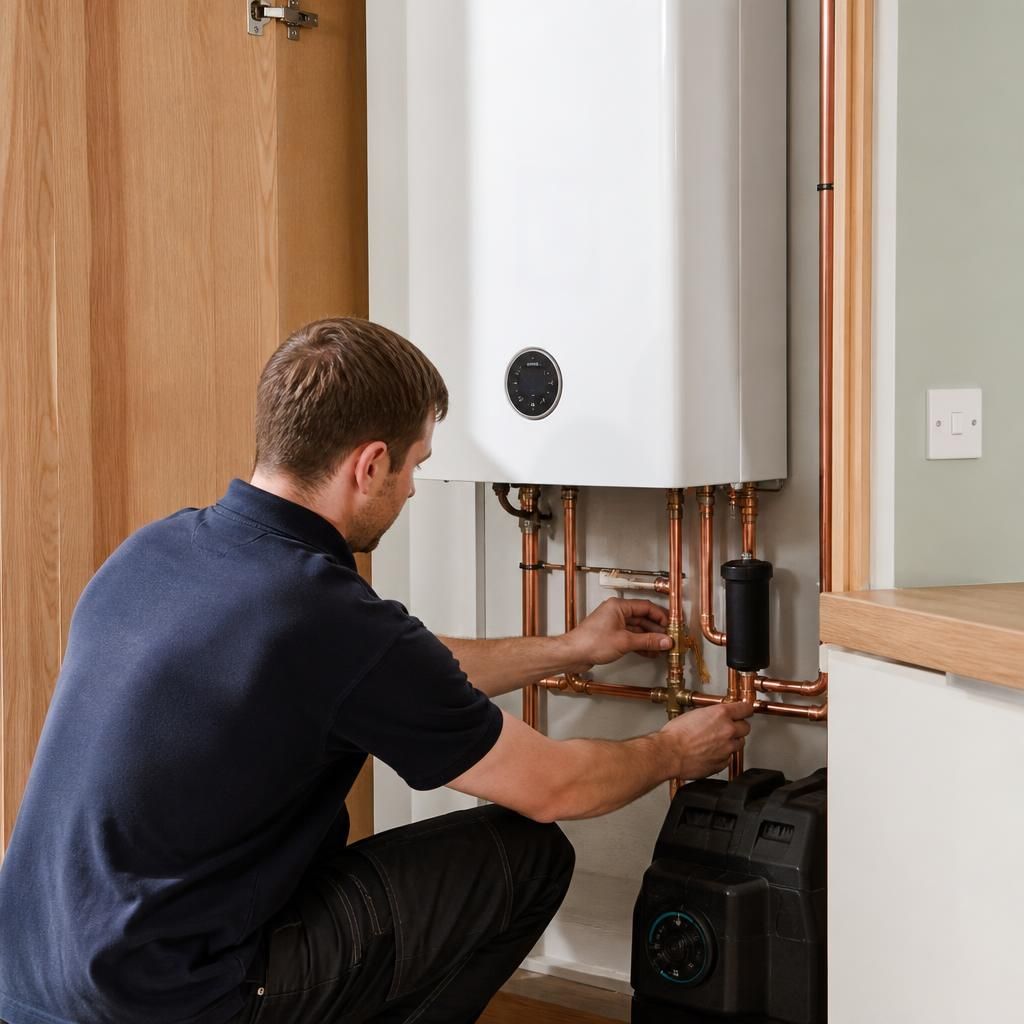
The boiler type affects the installation programme. Replacing a combi with another combi can be relatively contained, but changing from a regular or system boiler to a combi involves more than swapping the appliance.
That change may require work around the hot-water cylinder, tanks, controls and connecting pipework. We explain which parts can be removed, which need to remain and how the change affects the planned installation time before you choose the new system.