
How is the right boiler size determined for my home?
The right boiler size is determined by your home’s heat loss and hot water demand, not simply its floor area. We assess the building fabric, rooms, windows, radiators and heating system before recommending an output that meets demand without unnecessary energy use.
The right boiler is usually the smallest model that can meet the home’s calculated heat loss while providing enough hot water for the way the property is used. The heating output and hot-water output are considered separately, so a larger number on the boiler does not automatically mean better heating.
We work through the calculation room by room rather than applying a standard output to the property. Each room’s heat loss depends on the construction around it, the size and type of external surfaces, air movement and the temperature you want to maintain. This shows how much heat each radiator needs and whether the existing radiators can deliver it.
The calculation also considers the property’s design temperature. A boiler must cope with colder outdoor conditions, not just the average temperature on a mild winter day. This prevents the system from struggling when the weather changes, while avoiding the waste and cycling that can come from installing far more capacity than the home needs.
Insulation and building fabric affect the result. A solid-wall house, barn conversion or older property with exposed floors can lose heat differently from a modern, well-insulated home. We look at the construction rather than assuming that every room performs in the same way. If insulation work is planned, we can discuss whether the boiler should be sized for the home as it is now or after that work has been completed.
Windows, doors, roof spaces and ventilation routes all affect the calculation. A draughty entrance hall, large glazed extension or room with an open chimney can alter the heating requirement even when the overall floor area is modest. This is why a floor-area rule can produce the wrong answer.
The boiler type changes how output is selected. With a combi boiler, hot-water performance can require a higher rated output than space heating alone. That does not mean the radiators need all of that power. With a system or regular boiler, the hot-water cylinder has its own recovery requirement, so we consider the cylinder size, heating coil and the household’s pattern of use.
Your number of bathrooms, usual showering pattern and preference for running several outlets together all matter. A home with one bathroom may have very different hot-water requirements from a larger household using multiple bathrooms. We use that information alongside the heating calculation instead of choosing the largest available boiler.
The existing heating system is part of the decision. We check radiator sizes, pipework, circulation and the condition of the controls. A boiler can be correctly sized but still perform poorly if radiators are too small, valves are faulty or the system cannot circulate water properly. If changes are needed, the quotation should distinguish between the boiler work and any radiator, pipework or control upgrades.
Modern condensing boilers work most efficiently when the return water temperature is low enough for condensation to take place. Radiator sizing, flow temperatures, weather conditions and control settings all influence this. We set the system up so the boiler can reduce its output as the home warms, rather than repeatedly firing at full capacity for short periods.
An oversized boiler can cost more to install and may cycle on and off unnecessarily. That can make temperatures less steady and reduce efficient operation. An undersized boiler may run continuously in cold weather and fail to heat the home or recover the hot-water cylinder properly. The aim is not the biggest boiler that will fit, but an output supported by the calculation.
During the survey, we also check practical details that can affect the installation. These include the flue route, condensate drainage, boiler position, cylinder location and access for servicing. On an oil-fired property, the existing tank, oil line and flue arrangements need reviewing as part of the replacement. Our OFTEC-registered engineers can assess those parts of the system. Gas boiler work is carried out by Gas Safe-registered engineers, which is the legal requirement for working on a gas boiler.
The calculation should lead to a clear recommendation, not just a boiler model and an output. Your quotation should explain:
- the calculated space-heating requirement;
- the proposed boiler output and why it suits the heating system;
- how the boiler will provide hot water, including any cylinder or combi considerations;
- which radiators, controls, pipework or other components need changing;
- any assumptions about insulation or planned building work; and
- how the system will be commissioned and controlled after installation.
If two quotations recommend noticeably different outputs, ask what calculation supports each one. A higher output is not automatically safer, and a lower output is not automatically more economical. The useful comparison is the method behind the recommendation, the equipment included and whether the proposed system matches the way your household heats the home and uses hot water.
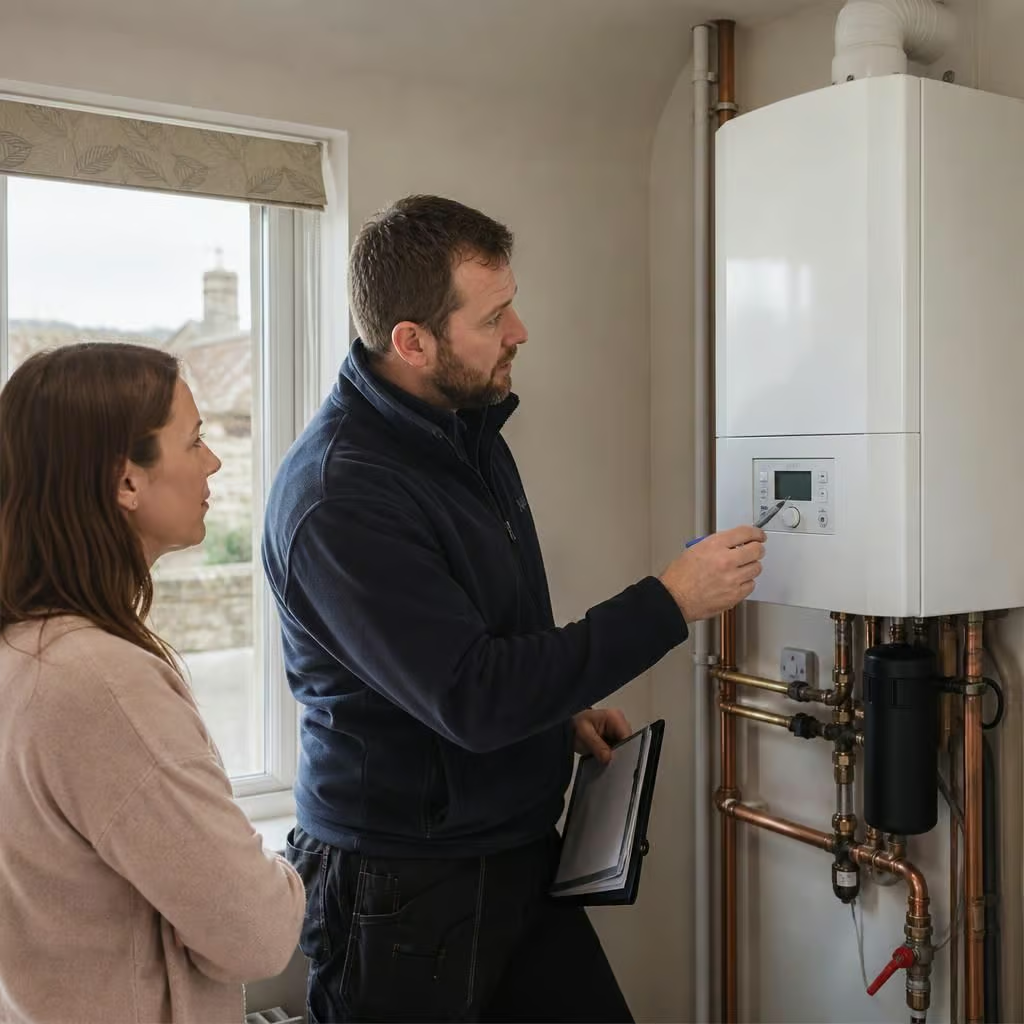
The output of your existing boiler is not proof that the same size is right for the replacement. Older boilers were often selected from broad rules of thumb, and may have heated the home with more capacity than it needed.
We use the property’s current heat-loss calculation instead of copying the old rating. If the home has improved insulation, changed windows or rooms that are no longer heated, the suitable output may be different. That gives you a recommendation based on the house as it is now, not on the boiler that is being removed.