
Should I repair or replace my boiler?
Repair is usually sensible when the fault is clear, the boiler is otherwise reliable and suitable parts are available. Replacement becomes more practical when breakdowns keep returning, the boiler is unsafe or inefficient, or a major repair would cost too much for its remaining service life.
Repair is normally the better choice when the boiler has a clear, contained fault and the rest of the heating system is sound. Replacement deserves serious consideration when the boiler is becoming unreliable, inefficient, unsafe or difficult to support, especially if other parts are also reaching the end of their useful life.
The right decision depends on more than the repair price. We look at the boiler’s condition, its age and type, the availability of suitable parts, the state of the controls and heating system, and the likely cost of keeping it running. These are seven signs that replacement may be the more sensible option.
- The boiler is approaching the end of its serviceable life. Older boilers can remain operational but become less economical to maintain. Age alone does not make a replacement essential, so we assess its condition rather than applying an arbitrary cut-off. A well-maintained boiler with a straightforward fault may still be worth repairing.
- Fuel use has increased without a clear change in heating habits. A boiler that no longer transfers heat efficiently may run for longer to achieve the same room temperature. The bill could also reflect controls, insulation, radiator performance or heat loss elsewhere in the property. We investigate those factors before attributing the problem to the boiler.
- The boiler shows signs of corrosion, leaking or water damage. A small leak may come from a replaceable component, but corrosion around the main heat exchanger, casing or connections needs closer attention. Water and combustion appliances are a poor combination, so we identify the source before recommending repair or replacement.
- The heating output no longer suits the property. An extension, converted room or changes to insulation may have altered the home’s heating requirements. A boiler that is too small may struggle to heat the property, while one that is too large can cycle inefficiently. We assess the heat demand and hot-water requirements rather than simply replacing the existing output.
- The controls no longer give useful control over heating and hot water. Faulty programmers, thermostats and valves can often be replaced without changing the boiler. If several controls are failing or the boiler cannot work properly with modern control arrangements, replacement may provide a more coherent system.
- The boiler regularly locks out or produces unusual smells, noises or error messages. These symptoms do not automatically mean the boiler needs replacing. They can point to problems with ignition, circulation, sensors, pressure or combustion. A qualified engineer should diagnose the fault instead of repeatedly resetting the appliance.
- The heating system needs several major repairs at once. A boiler repair may not solve wider problems with pumps, valves, cylinders, controls, radiators or pipework. When several components need attention, we compare the combined work with the cost and disruption of a new installation.
When repair is usually sensible
Repair is often appropriate when the boiler has been dependable, the fault has a clear cause and the appliance remains in reasonable condition. A failed sensor, pump, valve, thermostat or ignition component may be a contained repair. We also check why the part failed, because replacing it without addressing poor circulation, sludge, pressure loss or another underlying issue can lead to the same problem returning.
A repair should restore safe operation, not simply get the boiler running temporarily. For a gas boiler, Gas Safe registration matters because the law requires gas work to be carried out by someone qualified to do it. If the property uses an oil-fired boiler, OFTEC registration covers the relevant appliance and fuel system.
When replacement may be better value
Replacement becomes more attractive when the existing appliance has several faults, when its performance has deteriorated, or when the heating system needs upgrading around it. A new boiler may also make sense if the current arrangement wastes space, provides poor hot-water performance or cannot work effectively with improved controls.
The installation is not limited to lifting out one appliance and putting another in its place. We check the flue route, condensate drainage, gas or oil supply, system pressure, expansion vessel, controls and the condition of connected pipework. Some older systems need cleaning, a new pump, upgraded valves or changes to the hot-water cylinder. Identifying this beforehand reduces the risk of discovering extra work after installation has started.
What replacement means in an older or rural home
Older houses can have unusual flue routes, restricted access, solid-wall construction, a converted outbuilding or radiators sized around a previous heating system. Off-gas-grid properties may use oil or LPG instead of mains gas. Those details affect the appliance choice, siting, pipework and installation method.
We consider the building and the fuel source together. An oil boiler replacement needs an assessment of the tank, oil line and flue as well as the boiler itself. A replacement in a barn conversion or listed building may need careful planning around the existing structure and appearance. We explain any necessary changes before work begins.
How we reach a recommendation
We start with the symptoms and the history of the appliance. We inspect the boiler and accessible system components, check relevant safety conditions and consider the heating and hot-water demands of the property. If repair is practical, we explain what has failed and what the repair addresses. If replacement is the stronger option, we explain why and identify any related work the system needs.
You receive a written quotation before replacement work starts, so the scope and price are clear. The quotation separates the boiler installation from additional work such as controls, system cleaning, pipework alterations or changes to the flue. We do not treat replacement as the automatic answer to every fault.
What happens if the boiler fails completely?
Switch the appliance off if it is leaking, producing an unusual smell or showing signs of unsafe operation. Do not keep resetting it or remove the casing. If you smell gas, follow the national gas emergency guidance and avoid operating electrical switches near the smell. For an oil or LPG appliance, follow the relevant fuel supplier’s safety guidance.
Once the immediate safety issue is dealt with, a fault diagnosis can establish whether repair is viable. If the boiler cannot be repaired sensibly, we discuss replacement options, the work involved and any changes needed to the rest of the heating system. The aim is a decision based on the condition of the whole installation, not just the first fault code.
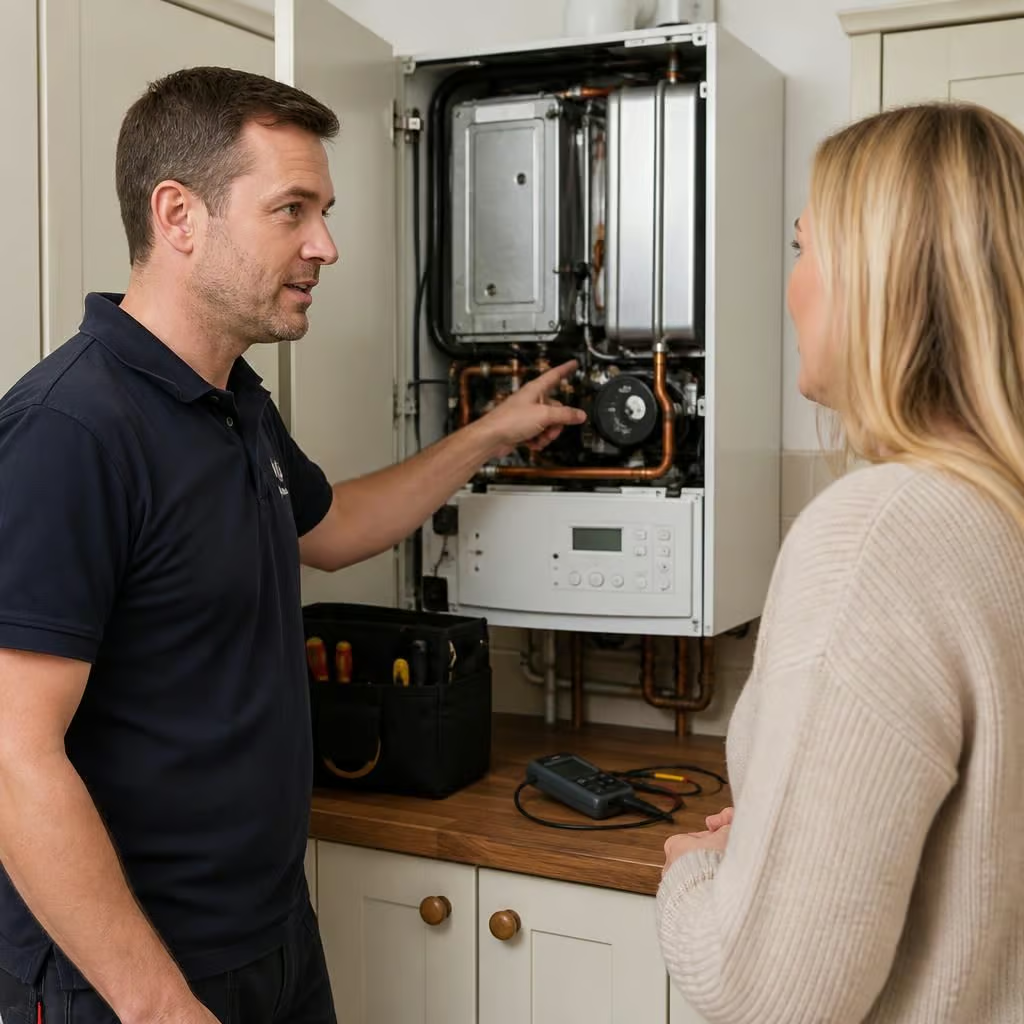
When you compare repair and replacement, check what the quoted price actually covers. A repair estimate should identify the failed component, labour and any diagnostic work still needed. A replacement quotation should set out the appliance, controls, flue work, system alterations and removal of the old boiler.
That distinction helps you compare like with like. It also shows which costs are certain and which depend on what we find once the system is opened up. You can then choose based on the condition of the whole installation, rather than choosing the cheapest figure on the page.