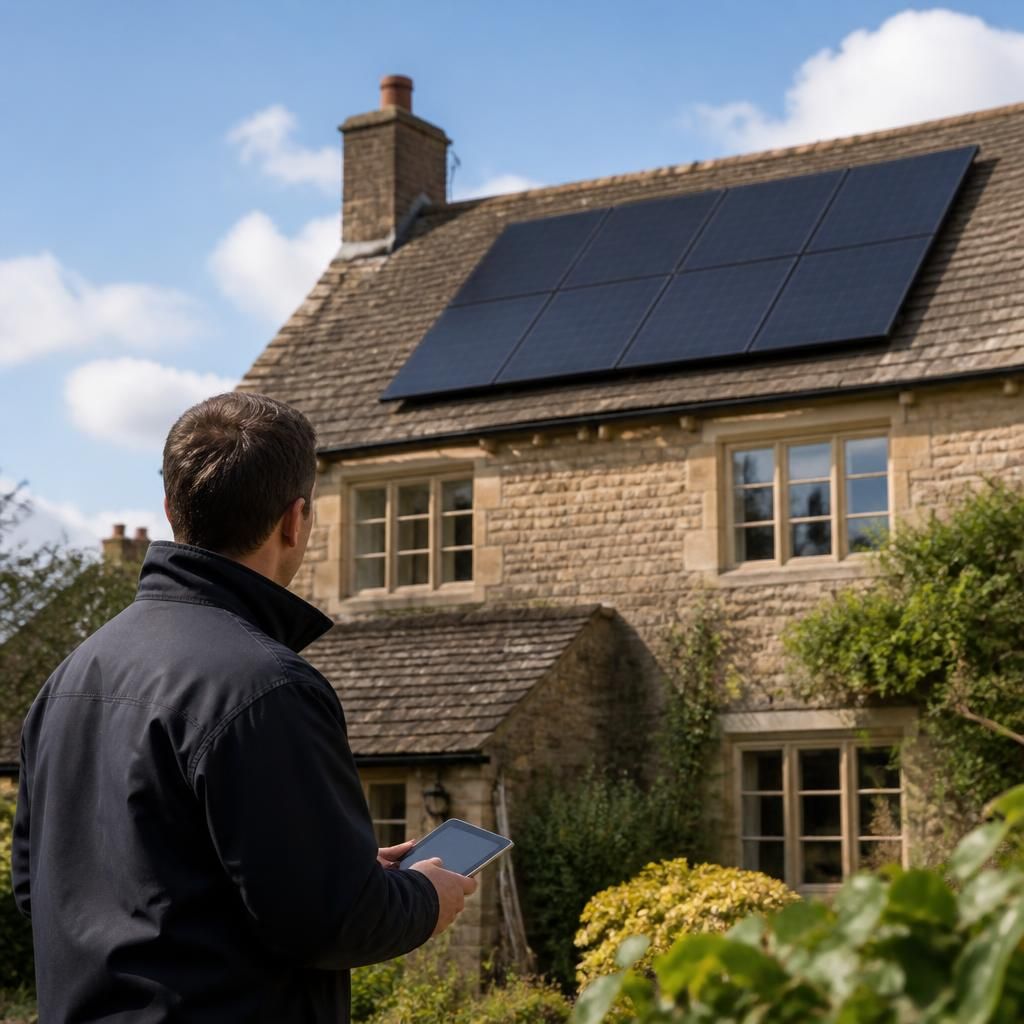
Can solar panels work on an older property?
Yes. Solar panels can work well on many older properties, provided we check the roof condition, available sunlight, planning position and existing electrical installation first.
Age alone doesn’t rule out solar panels. The main question is whether the roof and the building can accommodate the equipment without creating avoidable repair, planning or access problems.
Older homes need a more careful approach than a standard modern house. Roofs may have uneven lines, handmade tiles, natural slate or historic timbers. We plan the fixing method around those details rather than assuming that every roof can take the same brackets and rails.
The roof covering matters
Slate and clay tiles can usually work with solar panels, but they need careful handling. We remove only the tiles needed for the fixings and replace damaged ones rather than forcing a rail into a weak area. Handmade or fragile tiles may need extra care and occasional replacement before installation can begin.
Thatched roofs are often unsuitable for roof-mounted panels because of fire safety, fixing and insurance concerns. Asbestos cement sheets also need separate consideration. We won’t drill into a suspect covering; the material may need specialist assessment before anyone can plan the installation.
An older roof may still be sound, but nearing the end of its useful life. Installing panels before major re-roofing can mean paying to remove and refit them later. If repairs or renewal are likely, carrying out that work first may be the more sensible route.
Listed buildings and conservation areas
A listed building does not automatically exclude solar panels, but the visual effect and method of fixing need closer attention. The local planning authority may require listed building consent or a planning application, particularly where panels would be visible from public viewpoints.
We identify these issues before preparing the installation rather than leaving them for you to discover during the application process. Panel placement may need to move to a less visible roof slope, or the design may need to keep equipment away from important historic features. The final decision rests with the relevant planning authority.
Older properties can also have restrictions imposed through covenants, estate rules or insurance conditions. Those documents are worth checking alongside the planning position.
Roof shape, orientation and shade
Many older homes have small roof sections, dormers, chimneys and adjoining extensions. These can reduce the usable panel area or cast shade across part of the roof. A south-facing roof is not essential, and east- or west-facing roofs can still produce useful electricity, but the layout affects how much power the system generates and when it generates it.
Tall trees, neighbouring buildings and chimney shadows also matter. We use the roof layout and shading pattern to work out which panels can operate effectively. Sometimes a smaller array on a clearer roof slope performs more usefully than a larger array spread across several shaded sections.
The electrical installation may need preparation
Older homes can have limited space near the meter, dated protective equipment or long cable routes between the roof and the consumer unit. The panels are only one part of the installation. The inverter, isolators, generation meter and protection equipment also need suitable positions.
We explain any required electrical preparation before work starts. That might involve improving the consumer unit, creating a compliant cable route or agreeing an unobtrusive position for the inverter. The aim is to leave the system accessible for inspection without running cables carelessly through historic rooms or finished walls.
What installation involves
Most roof-mounted systems need temporary access equipment. On the installation day, we protect the working area, fit the roof fixings and rails, place the panels, and route the cables to the inverter. We then test the system, connect it to the property’s electrical installation and explain the controls.
Older buildings often have unusual floor levels, thick walls or limited roof access. We discuss the cable route and equipment positions before the work begins, so the practical details do not become a last-minute decision. The work may involve lifting tiles and drilling for fixings, but we keep that disruption focused on the agreed areas and leave the property tidy.
Solar panels do not need to heat the whole house
Solar panels generate electricity rather than directly heating rooms. They can reduce the electricity bought from the grid by powering appliances during daylight. A battery can store some generation for later use, but it is not automatically the right addition for every older home.
If the property uses oil or LPG, solar can still reduce daytime electricity demand. It won’t replace the boiler or make an unsuitable heating system suitable. We look at the way the home uses electricity before recommending panels alone or panels with storage.
Certification and ongoing requirements
Our MCS-certified renewable energy installers provide the certification needed for the Smart Export Guarantee when the installation meets the scheme’s requirements. Your electricity supplier sets the available export tariff, and rates can change, so we treat that income as part of a property-specific calculation rather than a guaranteed return.
Older properties often need a little more planning, but they can make good candidates when the roof, permissions and electrical arrangements work together. We set out the practical constraints, likely preparation and installation cost in a written quotation before work starts, so you can decide with the full picture in front of you.
A roof can be strong enough for panels but still be the wrong place for them. If the usable section is small, heavily shaded or difficult to access, the installation may produce less electricity than the roof area suggests.
We assess the roof as part of the whole property, including nearby outbuildings where relevant. That helps us compare the practical options before any fixings are ordered. If the arrangement would require avoidable roof work or create difficult access for future maintenance, we explain that clearly rather than recommending panels simply because there is space for them.