Can commercial battery storage provide backup power during an outage?
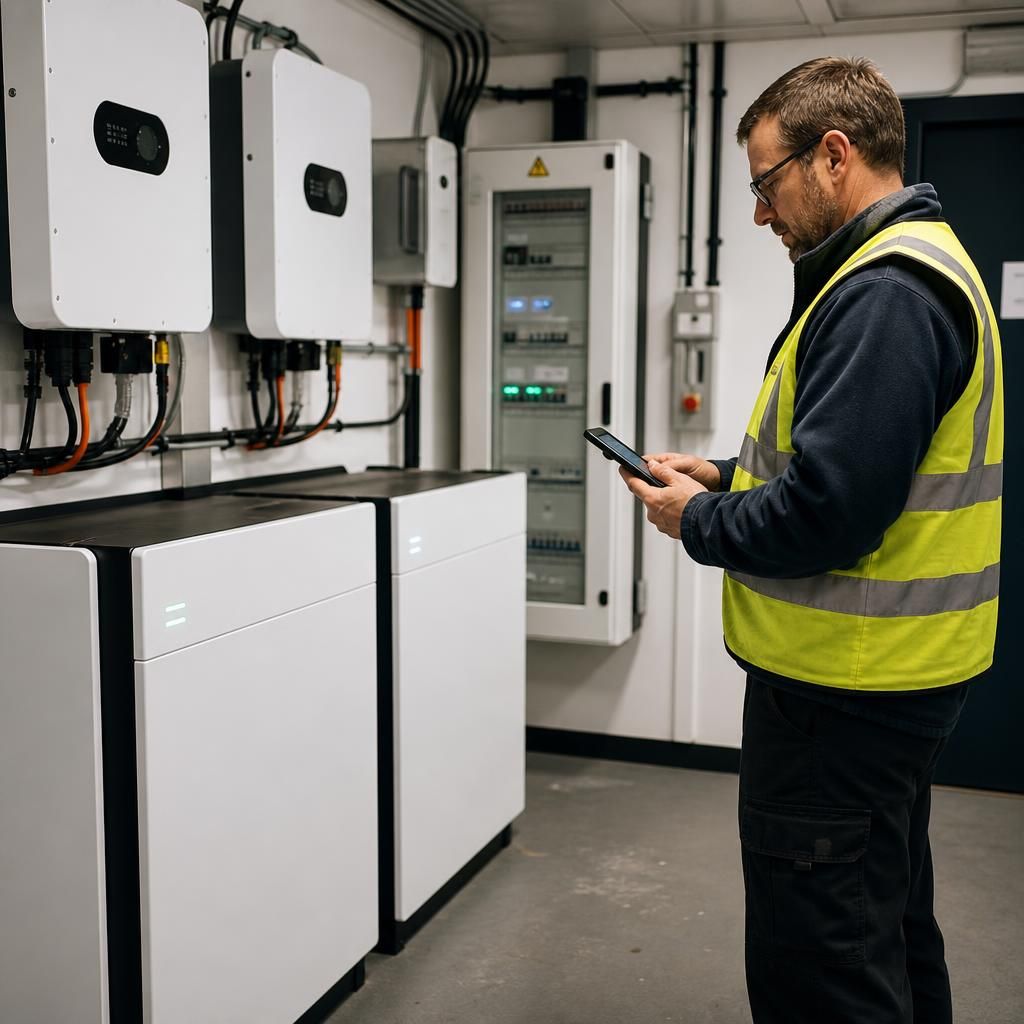
Yes, a commercial battery system can provide backup power during an outage if it includes suitable backup capability and is designed for the building’s essential circuits. The available runtime depends on the battery’s charge and the equipment running, so we size the system around the operations that must stay active.
Commercial battery storage can provide backup power during a mains outage, but only when the installation includes the correct backup and islanding equipment. A standard grid-connected battery normally shuts down when the grid fails. That protects engineers working on the network, but it does not keep the building running. We design the system differently when continuity matters.
Your business may need to keep only certain equipment operating. That could include servers, network equipment, alarm systems, access controls, refrigeration, pumps, emergency lighting or payment terminals. We separate these essential circuits from non-essential loads, so the battery supplies the equipment that matters most instead of trying to carry the whole building.
The battery inverter controls the change from grid supply to stored energy. A suitable automatic changeover arrangement detects the outage and creates a safe, isolated supply for the selected circuits. Some equipment tolerates a short interruption, while sensitive IT equipment may still need a dedicated UPS. We check the transfer requirements for each critical load rather than treating battery backup as a replacement for every other form of protection.
The available backup depends on two separate figures:
- Power output: the inverter must deliver enough kilowatts for the equipment running at the same time. Motors, pumps, compressors and refrigeration can draw more power when they start.
- Stored energy: the battery must hold enough kilowatt-hours to run those loads for the required period. A larger connected load will use the stored energy sooner.
Your system may therefore keep essential operations running while turning off heating, air conditioning, vehicle charging or other large loads. We can set priorities and load limits so the available energy is used sensibly during a prolonged outage.
Backup power is not unlimited. Once the battery is discharged, the protected circuits stop unless another source is available. We calculate likely running time from the essential load rather than quoting a standard duration. The result also depends on the battery’s state of charge when the outage begins and on how much equipment staff use during the event.
Solar panels can sometimes recharge a battery during a daytime outage, but ordinary grid-tied solar does not continue operating after the grid fails. The system needs compatible islanding controls and an inverter that can form a safe local network. We check the solar generation, battery controls and protected circuits together before treating solar as part of the backup plan.
A survey also identifies practical constraints inside the building. We review the incoming supply, phase arrangement, distribution boards, protection equipment, cable routes and the location of the essential circuits. We check whether the proposed battery inverter can support the starting loads and whether the existing switchgear can accommodate the changeover equipment. This work is particularly important where several tenants, workshops or separate areas share one supply.
Some businesses need the changeover to happen automatically, while others can accept a short interruption and a controlled restart. We agree which equipment must remain live and which equipment can restart afterwards. Staff then have a clear operating plan rather than assuming every item in the building has backup.
Before the installation is handed over, we test the backup sequence and confirm which circuits remain supplied. We can also explain the controls, battery reserve settings and any restrictions on heavy loads during an outage. The paperwork records the protected circuits and the system’s operating arrangements, giving the people responsible for the building a usable reference when the mains supply fails.
For critical operations, a battery may form one part of a wider continuity plan. A UPS can protect servers and network equipment from even a brief transfer interruption, while a standby generator can extend the supply when an outage lasts longer than the battery reserve.
We assess how these systems would work together before specifying the changeover controls. That avoids relying on the battery for loads it cannot support and gives staff a clear sequence to follow if the mains supply remains unavailable.