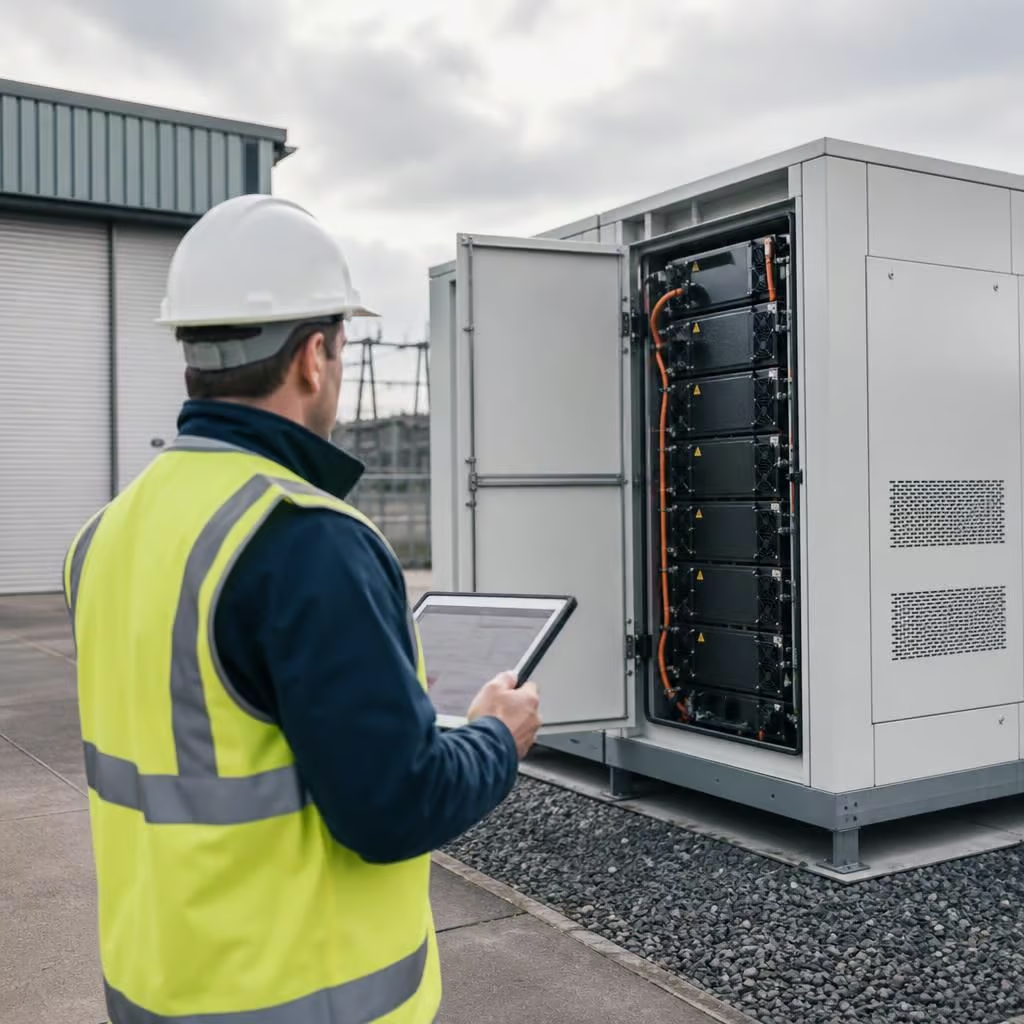
Does commercial battery storage need planning permission?
Not always. Commercial battery storage may be permitted development, but planning permission can be needed depending on its size, location, mounting arrangement and any local restrictions; we check these points before confirming the route for your project.
The deciding issue is how the battery will be used, where it will sit and what changes the installation makes to the site. A battery serving the existing business from inside its premises may be treated differently from a standalone storage facility exporting electricity to the grid.
Planning authorities look at the whole proposal, not just the battery cabinets. They may consider the equipment’s physical appearance, its use, access, noise, fire arrangements, cabling, ventilation and relationship with nearby buildings or homes.
When planning permission may not be needed
If the battery is installed inside an existing commercial building and supports that building’s normal electricity use, the work may not amount to a material change of use. The building’s external appearance may also remain unchanged. In that situation, the installation can sometimes proceed without a full planning application.
That conclusion still needs checking. Permitted development rights can be limited by planning conditions, an Article 4 Direction, the property’s planning history or the building’s use. A battery intended mainly for independent electricity trading or grid export may also be treated differently from one used as part of the site’s existing operations.
Situations that commonly need permission or further consent
- Ground-mounted equipment: cabinets, inverters, transformers, fencing and access tracks can change the appearance and use of the site.
- External alterations: new doors, vents, cooling equipment, cable routes, plant enclosures or a compound may require planning consideration.
- Standalone storage: a facility built primarily to store and export electricity is more likely to require a planning application than an ancillary battery inside an occupied business premises.
- Listed buildings: listed building consent may be needed as well as planning permission. Internal equipment is not automatically exempt just because it cannot be seen from outside.
- Conservation areas and sensitive locations: visual impact, trees, heritage, ecology, flooding, highways and the effect on neighbouring properties can all influence the decision.
- Large or unusual installations: the scale, layout, transformer compound, noise control and connection works may take the proposal beyond a straightforward commercial fit-out.
A planning application is not the only approval that may apply. Building Regulations can cover structural work, fire separation, electrical installations and alterations to the building. The distribution network operator may need to approve the grid connection, particularly where the battery can import or export substantial power. The local fire authority, insurer and landlord may also require specific information before the system is commissioned.
Environmental permitting is a separate question. It depends on the technology, battery chemistry, storage arrangements, site and operational risks. We identify this early rather than treating planning permission as the only consent needed.
What we check before design work begins
Your site may look suitable on a map but still have a restriction in its planning records. We review the proposed location, the building’s current use, previous permissions, external changes and the intended charging and discharge pattern. We also look at the route for cables, inverters, switchgear and any transformer equipment.
If the battery will be near offices, homes or a site boundary, we consider acoustic information and the position of cooling equipment. If it will be outside, we assess screening, fencing, vehicle access, drainage and how the compound will look from neighbouring land or public viewpoints.
For an older, listed or converted building, the construction may matter as much as the battery itself. Fixings, fire compartments, ventilation and cable penetrations need to respect the existing structure. A planning officer may also ask for heritage information or details of how the equipment can be removed in future.
What a planning application may include
Where permission is needed, the application normally needs clear drawings and a description of the proposed use. Depending on the site, supporting information can include:
- site location and block plans;
- equipment layouts, dimensions and external elevations;
- cable, connection and access arrangements;
- noise information for inverters, transformers and cooling systems;
- a fire safety strategy and emergency access details;
- landscaping, screening and lighting proposals;
- heritage, ecology, flood-risk or drainage information where relevant; and
- decommissioning arrangements for the end of the battery’s working life.
The local planning authority decides whether the proposal needs permission and whether an application is acceptable. We can provide the technical information needed for that decision and flag issues that should be referred to a planning consultant or the authority before equipment is ordered.
Getting this check done first avoids designing around a cabinet position that cannot be approved. It also separates planning matters from electrical design, grid approval, building control and fire safety, so each part of the project has the right sign-off.
If the proposed battery appears to fall within permitted development, you may still want a formal record of that position. We can explain when a lawful development certificate may be worth considering, particularly where a landlord, insurer or future purchaser needs written evidence that the installation did not require a planning application.
The certificate only deals with planning. It does not replace electrical approval, building control, fire-safety information or the grid connection process. We keep those decisions separate, so the battery can move forward with the right evidence for each party involved.