
How much maintenance does commercial battery storage need?
Commercial battery storage needs planned inspections, safety checks and performance monitoring rather than daily attention. We check the battery system, connections, ventilation and controls, then review performance so faults or changes can be dealt with before they affect your operations.
Commercial battery storage is maintained through a combination of scheduled site visits, system monitoring and condition checks. The work is not limited to looking at the battery cabinet. We assess the complete installation, including the inverter, electrical protection, cables, controls, ventilation and the way the system is being used.
Your maintenance programme should follow the battery manufacturer’s requirements, the system design and the conditions at your site. A small indoor installation may need a different inspection plan from a larger system in a plant room, warehouse or agricultural building. We agree the scope after reviewing the equipment, location, access arrangements and operating demands.
During a planned visit, our engineers inspect the physical condition of the installation. They look for damage, corrosion, water ingress, dust build-up, loose covers, blocked ventilation and signs of overheating. The battery enclosure and surrounding area must remain clear, dry and accessible. Stored materials, packaging or equipment placed too close to the system can restrict cooling and obstruct safe access.
The electrical inspection covers the connections between the battery, inverter, distribution equipment and the wider building. We check cables, terminals, isolators, protective devices, earthing and enclosures. Thermal damage or a loose connection can affect reliability before it causes an obvious failure, so these checks matter even when the system appears to be operating normally.
The inverter and control equipment need attention as well. We check for alarms, unusual operating temperatures, fan problems and signs that the equipment is struggling to convert or control energy correctly. Where the system includes a separate energy management platform, we check that it is communicating with the battery and receiving accurate information from the building.
Remote monitoring helps identify changes between visits. We review events such as repeated alarms, unexpected shutdowns, abnormal charging or discharge patterns and unexplained changes in energy flows. A battery that stops charging at the expected time, reaches its limits too quickly or is unavailable during scheduled operation may need investigation.
Monitoring does not replace a physical inspection. A dashboard can show an alarm or a change in performance, but it cannot confirm the condition of a cable, enclosure, isolator or ventilation route. If the data indicates a problem, we use it to focus the site visit and reduce unnecessary investigation.
Performance reviews are based on how the battery is meant to support the building. Your system may be used to reduce peak demand, store surplus solar generation, manage time-of-use electricity or provide controlled backup capacity. We compare its actual operating pattern with the agreed settings and the building’s demand. This can show that a control setting needs adjusting, that the building’s usage has changed or that the battery is not being used as intended.
Battery capacity naturally changes over its working life. We look at available capacity, charge and discharge behaviour and any diagnostic information provided by the equipment. A reduction does not automatically mean that the battery has failed. We explain whether the change is within the expected operating condition, needs closer observation or requires further testing.
Safety checks form a separate part of the maintenance visit. We confirm that isolation points remain labelled and accessible, warning notices are present and the installation can be shut down safely. We also review the battery’s ventilation, temperature control and any alarms or detection equipment serving the installation. The site’s staff should know how to report an alarm and who is responsible for isolation if an incident occurs.
Your fire risk assessment and emergency arrangements should take the battery installation into account. We can provide technical information about the equipment, isolation points and maintenance findings for the person responsible for site safety. The building’s fire procedures, access arrangements and other risk controls remain the responsibility of the site operator.
Software and firmware may also form part of maintenance. We check whether updates, configuration changes or manufacturer actions apply to the equipment. These changes should be controlled and recorded because an alteration to charge limits, export settings or operating priorities can affect the way the battery works with the building.
After each visit, the maintenance record should identify the equipment inspected, test results, alarms found, work completed and any recommended follow-up. This gives the facilities manager, landlord or insurer a clear history of the system. It also helps us compare future readings and identify gradual changes rather than treating every visit as a separate fault.
If a fault appears between visits, stop using the affected equipment if it is unsafe to continue and follow the site’s isolation procedure. Do not open battery cabinets or attempt to reset electrical protection without the appropriate competence. Give us the alarm details, what the system was doing when the problem appeared and any information shown on the monitoring platform. That helps us decide what equipment and records are needed for the investigation.
Maintenance costs depend on the size and arrangement of the system, the number of battery cabinets and inverters, access requirements, monitoring provision and the level of reporting needed. We set out the inspection work and any follow-up recommendations before work starts. If testing identifies a repair or replacement part, we explain that separately rather than treating additional work as part of an unspecified visit.
Good maintenance does not mean the battery needs constant attention. It means the installation is checked in a planned way, its operating data is understood and safety or performance changes are dealt with before they become larger problems.
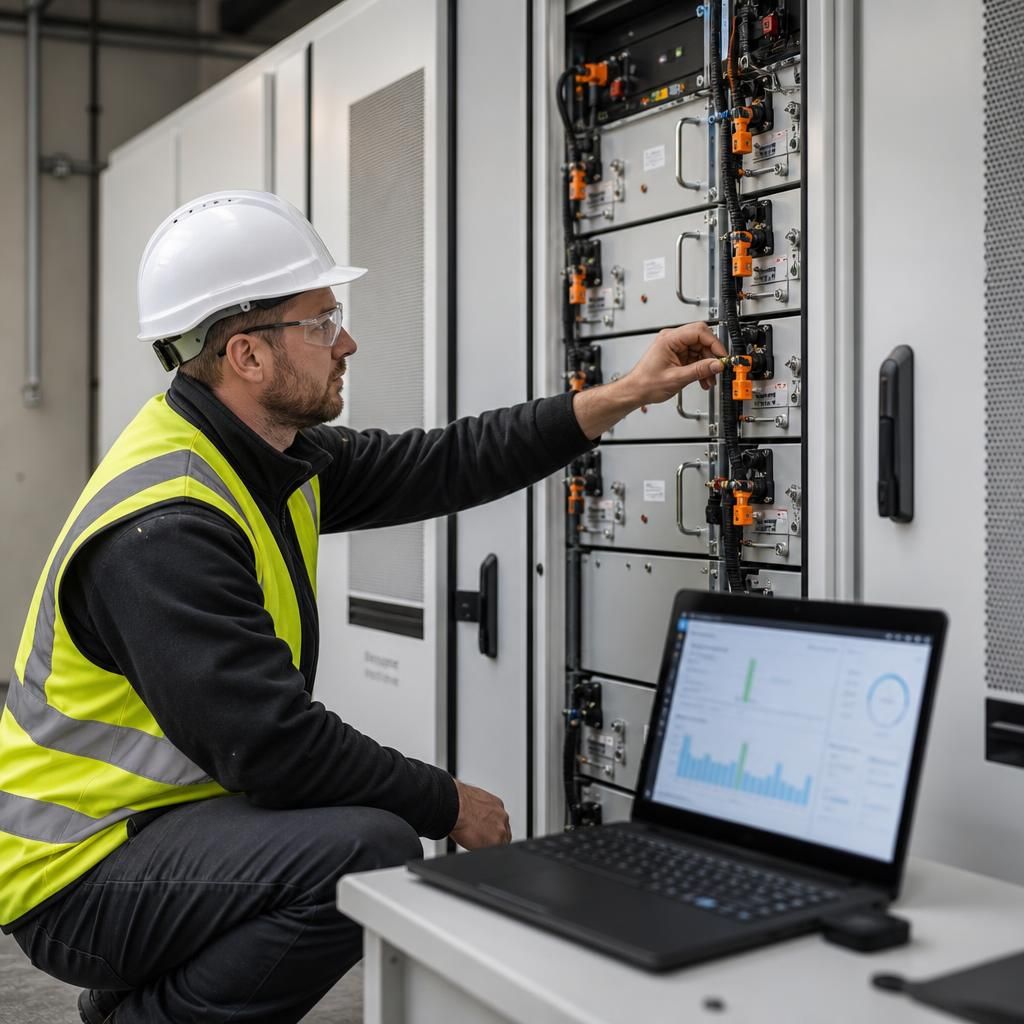
For a commercial site, maintenance must fit around the building’s work. We agree the access arrangements and any planned isolation with the person responsible for the premises before a visit takes place.
That gives staff clear notice of what the battery may not do during inspection, which areas need access and what site procedures apply. We also record the system’s condition before it returns to normal operation, so the facilities manager has a clear handover rather than having to rely on verbal updates.