
Will commercial battery storage work with our building’s existing electrical infrastructure?
Yes, commercial battery storage can often work with an existing electrical system, but suitability depends on the incoming supply, available capacity, switchgear and the building’s demand. We assess those points before recommending a system, then identify any required electrical upgrades or network operator approval.
Existing infrastructure can often support a commercial battery, but the connection must be designed around the building’s real electrical demand. A battery that is suitable on paper may still need changes to the supply arrangement, switchgear, cabling or protection before it can be connected safely.
Your electricity use may rise sharply at certain times because of machinery, refrigeration, pumps, heating, ventilation or vehicle charging. We review those loads rather than sizing the battery from the building’s annual consumption alone. The pattern of demand affects the battery’s power rating, its useful capacity and the current it can draw from or send to the installation.
We start by reviewing available electrical records, recent bills and the intended battery operation. We then inspect the installation and identify how the battery would connect to the existing system. This gives us a practical view of the work involved before we recommend equipment or prepare a quotation.
Our checks normally include:
- the incoming supply, including whether it is single-phase or three-phase;
- the service fuse, main switch and maximum available capacity;
- the main distribution board and any sub-boards serving separate areas;
- cable sizes, routes, containment and the distance between the battery and connection point;
- earthing and bonding arrangements;
- the condition and ratings of circuit breakers, fuses and other protective devices;
- existing solar PV, generators, EV chargers and other equipment that may operate alongside the battery; and
- metering and monitoring requirements for controlling charge, discharge and export.
An older installation is not automatically unsuitable. A commercial building may have sound equipment in some areas and outdated equipment in others. If the main board has no suitable way to accommodate the battery protection, we may recommend a new board or a separate connection panel. If cables or protective devices are undersized, replacing them prevents overheating and nuisance tripping when the battery operates at higher power.
Your available supply may also limit the battery’s charging rate. A larger battery does not necessarily need a larger incoming supply, but charging it quickly can increase the building’s maximum demand. We compare the proposed operating settings with existing loads so the battery does not create a new peak or interrupt essential equipment.
If the site has a three-phase supply, we check how the loads are distributed across the phases. An uneven arrangement can affect the way the battery is connected and controlled. We also consider whether the battery should support the whole installation or only selected circuits. That decision changes the cabling, protection and distribution-board work.
Where the proposed system can export electricity to the grid, the distribution network operator may need technical information and approval before connection. We establish the relevant requirements and include them in the design process. Export limitation may be needed if the site’s permitted capacity is lower than the battery’s possible output. The control equipment must then measure the site’s demand accurately and restrict export as intended.
Existing solar panels can usually be considered as part of the same design, but the inverter arrangement and metering need checking. The same applies to a generator or other local power source. Equipment cannot simply be connected together because each source needs the correct isolation, protection and control method.
Some commercial buildings have no up-to-date drawings or test records. That does not prevent an assessment, but it may mean we need to trace circuits, inspect concealed routes or carry out additional testing. We explain any uncertainty before work starts rather than pricing on assumptions that could change later.
Most preparation work takes place at the distribution equipment and battery connection point. The level of disruption depends on whether boards, cables or the incoming supply need alteration. We plan isolation periods around the building’s operation where possible, and we identify equipment that must remain powered during the work. Critical loads should be discussed at the survey stage because keeping them running may require a different arrangement.
Before commissioning, we test the connection, protective devices, isolation points, monitoring and control settings. We check that the battery responds correctly to the building’s demand and that the installation records reflect the changes made. NICEIC-registered electricians carry out the electrical work and provide the relevant test and handover paperwork for the property’s records.
The result should be a battery that fits the capacity and limitations of the existing installation, rather than one that is chosen in isolation. If the required upgrades make the project impractical, we explain why and set out the alternatives clearly. A site survey and written quotation then show what the building needs before you decide whether to proceed.
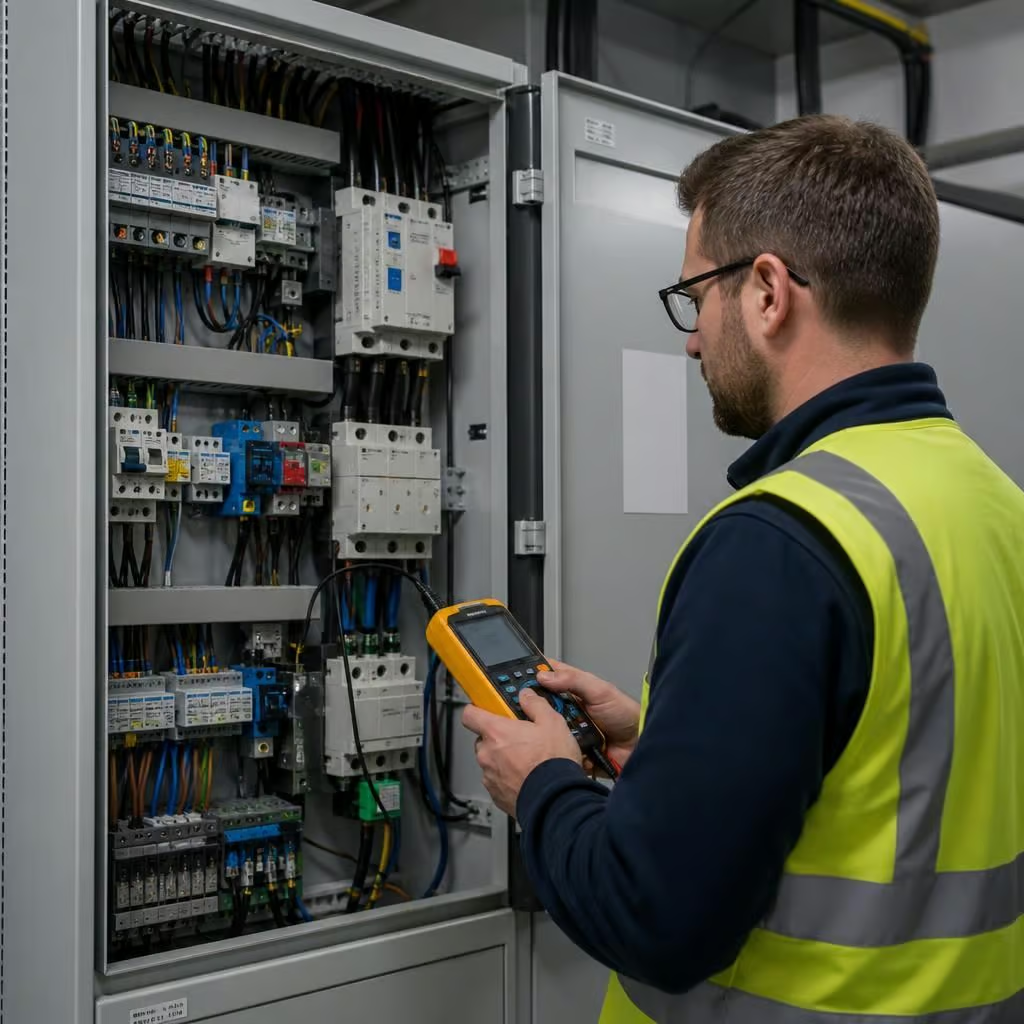
Your switchboard may have enough spare space but still need changes before a battery can be connected. The inverter must work with the site’s voltage, earthing arrangement and protective devices, not simply fit beside the existing equipment.
We check how the proposed battery protection coordinates with the building’s other breakers. That helps prevent a fault in the battery circuit from affecting unrelated equipment. It also shows whether the switchboard needs additional separation, labelling or replacement before commissioning.
The result is a connection designed around the electrical characteristics of the building, not just the battery’s storage capacity.