
Will commercial solar work with an older electrical system?
Yes, commercial solar can often work with an older electrical system, but we first check its condition, capacity, earthing, consumer unit and connection to the incoming supply. If the system needs an upgrade, we include the necessary electrical work in the design so the panels connect safely and meet current requirements.
It can. Many older commercial electrical systems can support solar after targeted improvements, but age alone is not a reliable guide. The important questions are whether the installation is safe, whether the existing equipment can accept the inverter output and whether the electricity network will permit the planned connection.
Age is not the same as failure. A well-maintained installation may need only limited work before the solar system is connected. Another system may look serviceable but contain outdated protection, damaged cabling or equipment that cannot safely handle the additional generation. We assess the condition of the installation rather than assuming that every older building needs a complete replacement.
Older commercial premises often have several electrical changes added over time. Extensions, machinery, office areas and previous refurbishments may each have separate circuits or distribution boards. We trace how those parts are connected, identify any conflicting alterations and establish where the solar inverter can be connected without creating an unsafe load on the existing installation.
The main points we investigate include:
- The incoming supply and whether the building uses a single-phase or three-phase arrangement.
- The condition and rating of distribution boards, switchgear and protective devices.
- The earthing and bonding arrangements, including whether they remain suitable for the proposed equipment.
- The size, route and condition of the cabling between the proposed inverter position and the connection point.
- The effect of existing machinery, refrigeration, heating, lighting and other substantial electrical loads.
- Space for new isolation, protection and metering equipment.
- Any previous electrical work that does not match the present installation records.
Where the existing boards are sound, we may be able to connect the solar system with a defined upgrade to protection, cabling or isolation equipment. That keeps the work focused on the parts that need changing instead of replacing serviceable equipment without a reason.
If a distribution board is obsolete, damaged or too full to accept the new circuits, it may need replacing. A larger commercial installation may also require changes to the main switchgear or submain cabling. We explain what has led to that recommendation, what the work involves and which parts of the building may need to be isolated.
Testing can alter the installation plan. An electrical installation condition report or additional inspection may identify faults that are unrelated to the solar array but still affect safe connection. Examples include poor earthing, inadequate bonding, damaged insulation or circuits with unsuitable protection. We separate essential remedial work from improvements that can be planned for later, so the quotation shows what is required for the solar installation to proceed.
The network connection is a separate consideration from the condition of the building’s wiring. The local network operator may need information about the inverter and the proposed generation capacity before the system is installed. If the available connection capacity is limited, the design may need a different connection arrangement, export control or network work. We account for that process during planning rather than treating approval as an afterthought.
Older sites can also have practical constraints that affect the design. A listed or converted building may have restricted cable routes, while a busy workshop or agricultural building may have equipment that must remain operational. We plan the inverter position, cable routes and isolation points around the way the premises are used. This helps reduce unnecessary disruption and leaves the new equipment accessible for inspection and maintenance.
When the electrical installation needs work, the solar project does not always have to stop. We can sequence the upgrade and the solar installation so that the connection point, protection and generation equipment are ready in the correct order. The quotation sets out the work before it starts, with no surprise charges for items already identified during the survey.
Solar installations are completed by our MCS-certified team. That means we can make the Boiler Upgrade Scheme application? No — MCS certification for solar enables the installation to qualify for the Smart Export Guarantee, subject to the tariff provider’s requirements. We explain the paperwork and the information needed for the completed system rather than leaving the business to work it out afterwards.
The result may be a straightforward solar connection, a partial electrical upgrade or a wider improvement to the site’s distribution equipment. We set that out after inspecting the premises, so the decision is based on the actual installation rather than its age or the appearance of one switchboard.
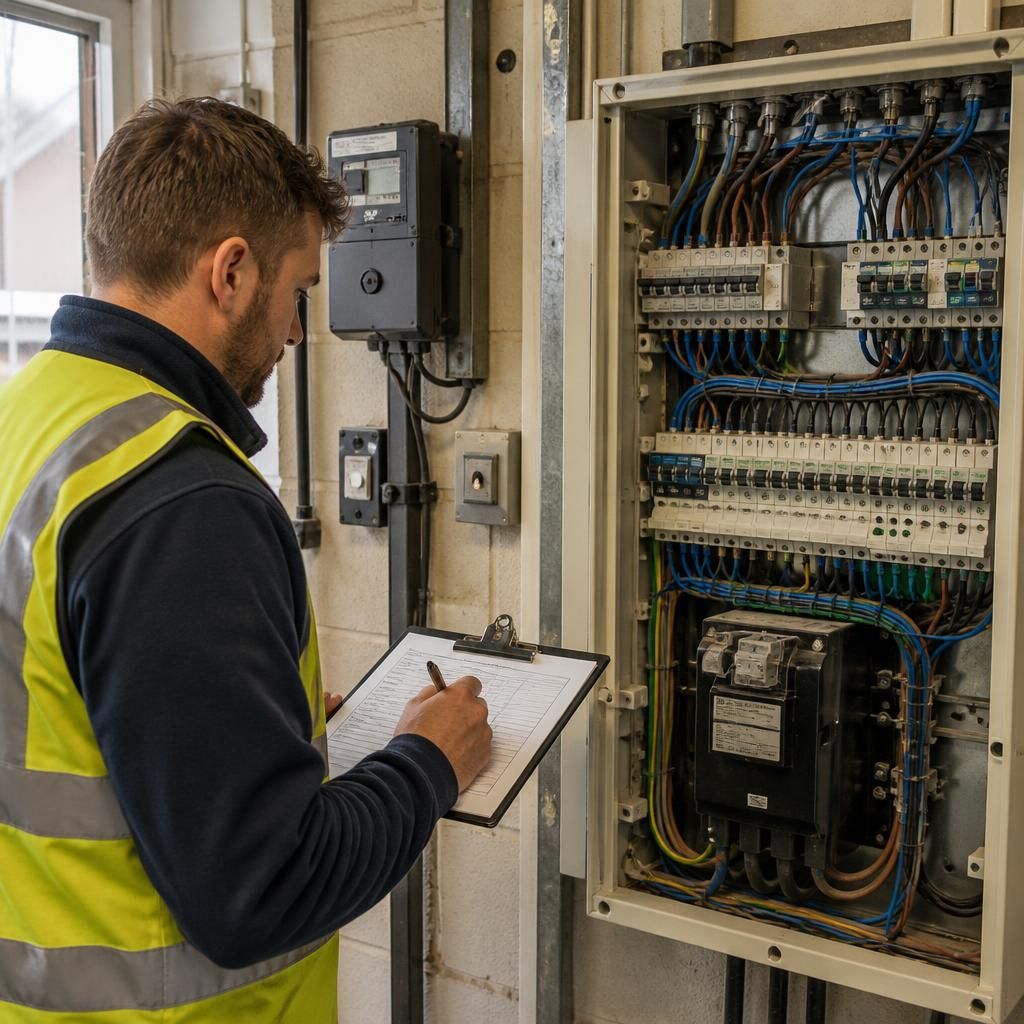
If the site records are incomplete, that does not automatically prevent a solar installation. We trace the relevant circuits, confirm how the distribution equipment is arranged and record the changes needed for the new generation connection.
That gives the business a clear plan before work begins. The quotation separates any remedial electrical work from the solar installation, while updated labels and records help future engineers isolate and maintain the system safely.