
How does electrical capacity affect commercial solar panel cost?
Electrical capacity affects commercial solar panel cost because the existing supply determines how much generation can connect without upgrading switchgear or the grid connection. We assess electricity demand, connection limits and export arrangements so the quotation includes any required electrical work and considers whether battery storage could reduce the need for an upgrade.
Electrical capacity can affect commercial solar panel cost in two separate ways: it can limit the size of the system that can connect to the building, and it can create extra work before the system can operate safely. The final cost depends on the existing supply, the proposed solar output, the building’s electricity demand and how much power the network will accept for export.
The existing supply sets the starting point
Many commercial buildings have a three-phase supply, but that does not automatically mean there is enough capacity for a large solar installation. The available capacity may already be used by machinery, refrigeration, heating, ventilation, lighting, vehicle charging or other plant.
We review the incoming supply, main switchgear, distribution boards, protective devices and metering arrangement. We also look at the building’s electricity demand throughout the day. A site that uses substantial power during daylight may accept more solar without exporting much electricity. A lightly occupied building may send more generation back to the network.
The condition and arrangement of the existing equipment matter as well. An older switchboard may need modification or replacement before it can accommodate new generation equipment. That is a cost of connecting the solar system, even though it is not part of the panels themselves.
Solar output and export capacity are different limits
The panels may be capable of generating more electricity than the site can use at the time. Any surplus normally flows towards the grid, subject to the agreed export capacity. The network operator assesses whether the local infrastructure can accept that export without affecting voltage or other customers.
A building may therefore have enough capacity to use a proposed system behind the meter, but not enough agreed capacity to export all of its possible surplus. In that case, the connection terms can affect the design and the price.
- A standard connection: the existing supply and network conditions can accommodate the proposed generation.
- An export-limited connection: control equipment restricts the power sent to the grid, which can avoid or reduce network reinforcement.
- A network upgrade: the distribution network or the site’s incoming equipment needs work before the proposed export can be accepted.
We establish which position applies before we finalise the system design. The network operator may require an application and technical information before confirming the connection conditions. Its response can alter the allowable system size, the export limit and the work included in the quotation.
Network reinforcement can add a separate cost
If the local network cannot accept the proposed export, the operator may require reinforcement. The work might involve changes to the service, protection equipment or other network assets. The cost is not always known from the panel count alone, and it may sit outside the core installation price.
We separate these connection-related items from the solar equipment and installation work in our quotation. That makes it clearer which costs arise from the site, which come from the proposed generation capacity and which depend on the network operator’s requirements.
A larger system is not automatically the better-value system if connecting it requires expensive reinforcement. We compare the additional generation with the extra electrical work, the building’s daytime demand and the expected amount of export. This can lead to a smaller array, a staged installation or a different export arrangement.
Battery storage can change the design
Where export capacity is restricted, a battery can store some surplus generation for later use. The battery does not create more network capacity, but it can reduce the amount of power that needs to leave the site at any one time.
That may help the design meet an export limit, although the battery adds its own equipment, installation and control costs. Its size should reflect the building’s load profile and operating pattern rather than simply matching the solar array. A battery that is too small may leave significant surplus generation. One that is too large may add cost without being used effectively.
We look at when the building uses electricity, when the solar array is likely to generate it and how much power the site can use directly. For a business with consistent daytime demand, using solar on site may be more relevant than adding storage. For a building with lower daytime demand and greater evening use, storage may form part of the financial comparison.
Electrical upgrades can be needed inside the building
The incoming supply is only one part of the assessment. The route from the meter to the solar inverter may pass through switchgear or distribution equipment that was not designed for generation flowing in the opposite direction.
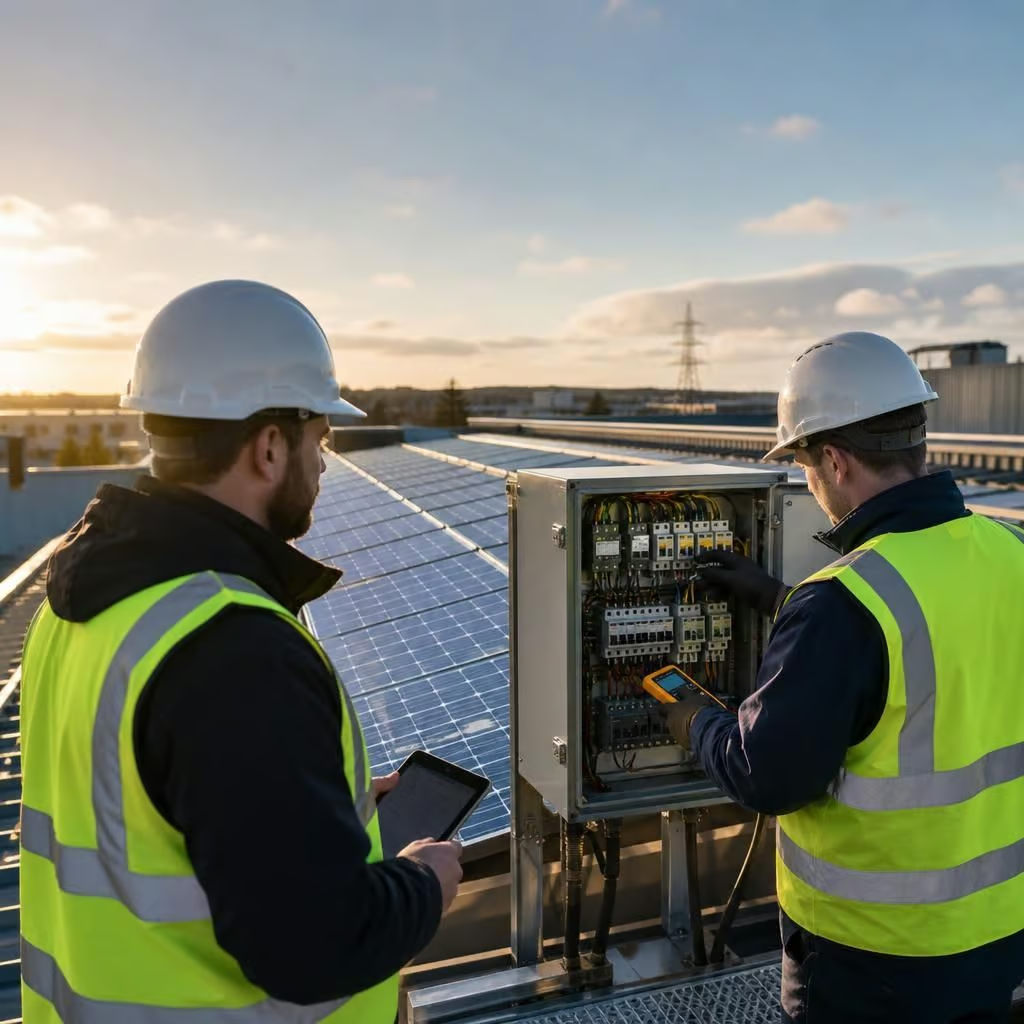
Our electrical survey checks cable capacity, fault protection, isolation, earthing, space for new equipment and the position of the connection point. The work may involve new protective devices, additional cabling, a modified distribution board or changes to the metering arrangement. The building may also need room for monitoring and export-control equipment.
These requirements can affect labour, materials, access and installation time. They are easier to price when we have inspected the equipment and understood the proposed cable route, rather than relying only on the roof area or the number of panels.
Demand can be as important as generation
A commercial solar system is designed around both what the roof can produce and what the business uses. Motors, compressors and other equipment can create high starting currents. Some loads operate continuously, while others run only at set times. Seasonal demand can also change the balance between on-site use and export.
We use available electricity bills, half-hourly data where provided and information about major equipment to test the proposed capacity. If the supply is already close to its operating limits, adding solar may require more electrical work. If demand is high during generation hours, the same array may need less export control and make better use of the existing connection.
What we need before giving a reliable price
An early desktop estimate can use the roof and panel layout, but it cannot confirm the electrical capacity. For a firmer commercial solar panel cost, we normally need:
- the incoming supply type and available phases;
- recent electricity bills or half-hourly consumption data;
- the main fuse, meter and switchboard details;
- the proposed panel capacity and inverter arrangement;
- information about batteries, EV charging or other planned electrical loads; and
- the distribution network operator’s connection requirements, where an application is needed.
We then provide a written quotation showing the solar equipment, electrical alterations, connection work and any identified allowance or exclusion separately. The system is designed around the capacity the site can safely use and export, rather than around the maximum number of panels that will fit on the roof.
Our solar installations are carried out by MCS-certified engineers. That certification supports an application for the Boiler Upgrade Scheme where relevant to an eligible heat-pump project and makes a solar installation eligible for the Smart Export Guarantee, subject to the scheme and supplier requirements. For this page, its practical relevance is that the generation and export arrangements can be considered as part of the wider project rather than treated as an afterthought.
If the business plans to add EV charging, electric heating or machinery, those loads should be included from the start. They can change how much solar the site uses directly and how the connection equipment needs to be arranged.
We include known future demand in the electrical capacity review. This shows whether it makes sense to allow for the extra equipment now or treat it as a separate project. The quotation can then distinguish the cost of the solar system from electrical work linked to the planned expansion.
Discuss your commercial solar panel cost
If you’re planning commercial solar and need to understand the electrical capacity implications, contact us to discuss the site and proposed system. We can review the available information and explain which connection work should be included in the commercial solar panel cost.