
How is commercial solar performance monitored after installation?
Commercial solar performance is monitored through remote system data showing generation, energy use and fault alerts. We use these readings alongside system checks to identify issues, support maintenance and help keep the installation producing as expected.
Commercial solar performance is judged over time, not from a single day’s generation. We set up monitoring around the system design, site electricity use and the way the building operates. That gives the person responsible for the building a clearer view of what the installation is producing, where the electricity is going and whether anything needs attention.
The monitoring portal shows more than total generation. Depending on the installation, it can display:
- electricity generated by the solar array;
- power being used on site;
- electricity exported to the grid;
- grid electricity imported by the building;
- inverter status and fault messages;
- communications between the monitoring equipment and the online portal; and
- battery charging and discharging where storage forms part of the system.
This separates solar generation from energy savings. A building may produce plenty of electricity but still import power when demand is high, when the array is not generating, or when stored energy is unavailable. Looking at generation, import and export together shows how the system is actually supporting the site.
Seasonal changes are expected. Longer, brighter days usually produce more solar electricity than short winter days. Cloud, shading, dirt on the panels and temporary changes in building use also affect the readings. We compare performance with the installation’s design expectations and with its pattern over time, rather than treating a lower winter total as a fault.
The first useful comparison comes from the commissioning record. We record the installed equipment, system settings and meter arrangements when the work is completed. This provides a reference point for later checks. If the site’s operating pattern changes, we can interpret the readings in that context rather than assuming the solar array has developed a problem.
Fault alerts can identify issues that are not visible from the ground. An inverter may report a shutdown, a loss of grid connection or a communications fault. A monitoring portal may also show an unexpected fall in generation. These alerts do not always identify the cause, so we review the information alongside the installation details and site conditions.
A communications fault, for example, may stop data reaching the portal without stopping the panels from generating electricity. An inverter fault may affect generation directly. A sudden change in export readings may point to a meter or configuration issue rather than a problem with the panels. The distinction matters because it determines whether the next step is a remote check, a meter investigation or a visit to the site.
Monitoring does not replace physical inspection. Online data cannot show every problem with panels, cables, isolators or mounting equipment. During an inspection, we can check the inverter, electrical connections and visible parts of the array, then compare those findings with the recorded data. This helps identify issues such as equipment faults, damaged connections or a change in site conditions that affects output.
Soiling and new shading need a practical assessment. A nearby tree, plant growth or construction work can alter the light reaching the array. The monitoring history may show when performance changed, while an inspection can help establish why. Cleaning or other remedial work should follow that evidence rather than an automatic schedule.
Battery storage needs its own checks. The readings should show when the battery charges, when it discharges and whether its settings match the building’s demand. If the battery is regularly full while the site exports electricity, or remains unused despite suitable demand, the operating settings may need reviewing. We also check whether the reported behaviour matches the agreed design and the site’s electricity pattern.
For a landlord, facilities manager or farming business, monitoring records can support regular energy reviews and maintenance decisions. They can show how the installation has performed across different operating periods and provide useful evidence when investigating an unexpected electricity bill. Export readings also help the responsible person check that meter arrangements and export administration remain consistent with the installation.
When the data suggests underperformance, we work through the evidence in a set order. We check the portal connection and inverter messages first. We then compare recent readings with the commissioning information, weather conditions and site demand. If the available information points to an on-site issue, we arrange the appropriate inspection rather than replacing equipment without diagnosis.
The final record should leave the building manager knowing what the system produced, how much electricity the site used directly, what it exported and whether any recorded issue remains unresolved. That makes monitoring useful beyond the installation date: it turns the solar array into a system that can be reviewed, maintained and managed as the building changes.
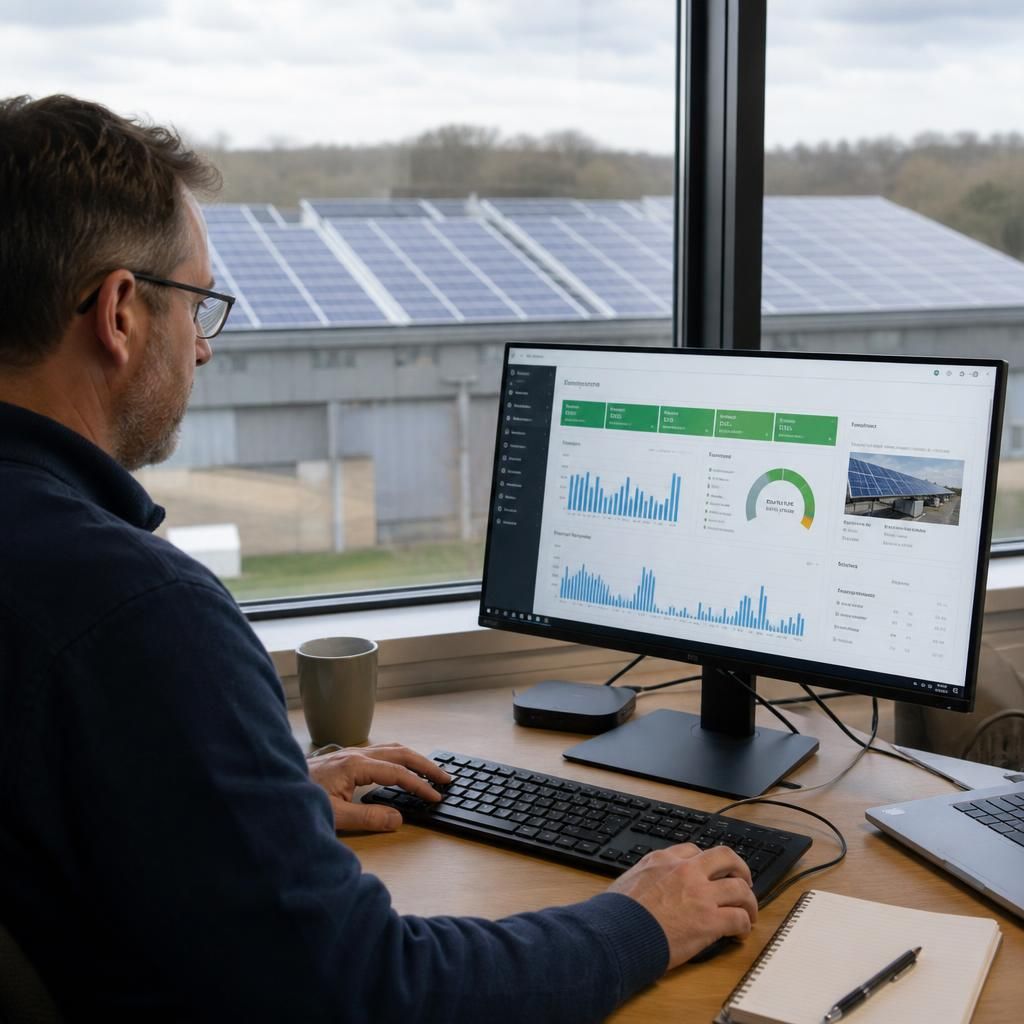
Commercial monitoring should remain usable after the installation team has left. We set up portal access for the people responsible for the building and show them how to find live status, historic graphs and alerts. A facilities manager or landlord can then check the system without waiting for an engineer to interpret every reading.
Staff changes and handovers can otherwise leave an account tied to one person. We record the monitoring arrangement with the installation paperwork and explain who should receive fault notifications. If an alert appears, the recipient can identify whether it concerns generation, the inverter or the data connection, then pass on useful information before a site visit.