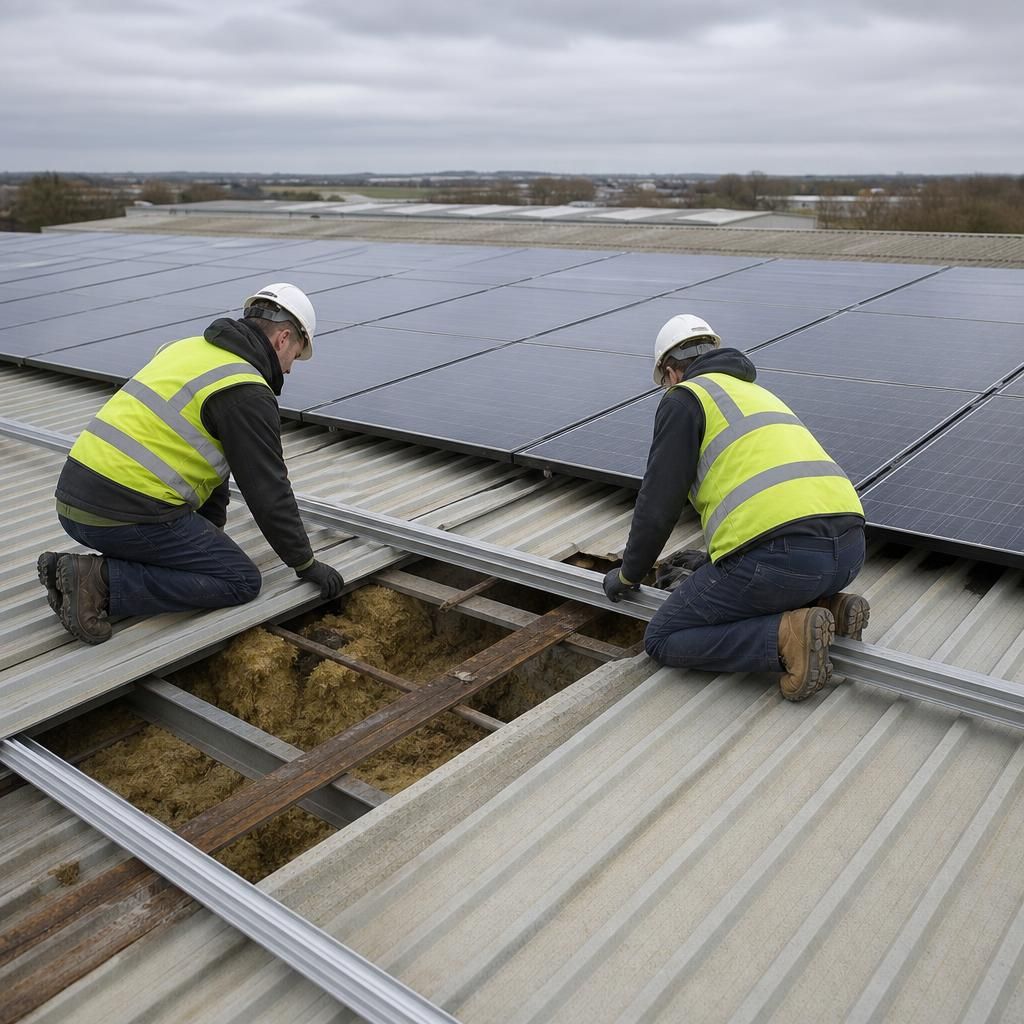
What happens if an industrial roof needs repairs after solar installation?
Roof repairs after solar installation usually require the panels and mounting equipment to be made safe, removed where necessary, and refitted once the roof work is complete. We assess the repair, coordinate the electrical isolation and check the system again before generation resumes.
Roof repairs don’t automatically mean replacing an industrial solar installation. The right approach depends on the defect, the panels affected and the roof system beneath them. We coordinate the electrical and roofing work so the repair does not create a new leak or leave the generating equipment unsafe.
A minor repair may only require access to one section of roof. A wider problem, such as failing roof sheets, damaged insulation or movement around several fixings, may mean temporarily removing a larger panel section. We establish the extent before work starts, rather than taking down more equipment than the repair requires.
- The roof type is identified. Industrial roofs may use profiled metal sheets, composite panels, membrane systems or asbestos cement. Each needs a different method of access and repair.
- The cause of the defect is investigated. Water staining inside the building does not always correspond with the point where water enters the roof. We trace the likely route before disturbing the solar array.
- The panel arrangement is recorded. We note cable routes, mounting positions and which modules belong to each electrical string. That information helps us put everything back correctly.
- The site risks are planned. Fragile roof areas, cranes, forklift routes, production areas and stored goods all affect how the work is carried out.
If the roof contains asbestos cement or another fragile material, the repair requires particular care. We need the relevant survey information before anyone accesses it. The roofing contractor may need specialist controls, and the solar work must be planned around those requirements. A panel installation does not make a fragile roof safe to walk on.
The electrical system needs attention before the roofing contractor begins. Solar modules continue to produce DC electricity in daylight, even when the building supply has been switched off. We use the system’s isolators and safe working procedures to protect people working on the roof. Where the site has an inverter, export equipment or battery storage connected to the solar system, we include those items in the isolation plan.
Removing panels is only part of the job. The mounting rails, clamps, cable clips and roof penetrations must also be handled carefully. Loose cables can chafe against metal sheets, while disturbed seals can allow water into the roof later. We keep track of each affected component and replace anything that has been damaged or is no longer suitable for reuse.
The roofing repair itself should preserve the roof’s ability to shed water. That might involve replacing a damaged sheet, renewing a sealing washer, repairing a membrane or correcting a failed flashing. The solar mounting arrangement must not conceal the defect or put pressure on the repaired area. If the underlying roof has reached the end of its serviceable life, patching beneath the panels may only postpone a larger removal and replacement project.
Roof and solar warranties can also affect the choice of contractor. The building owner should check the roof warranty, the solar installation documents and any conditions imposed by the roof manufacturer. We can provide information about the panel layout and electrical equipment, but the roofing contractor remains responsible for the roofing repair. Agreeing those responsibilities beforehand helps avoid disputes if water enters the building later.
During the work, the site may need a temporary weatherproof arrangement. We discuss this with the roofing team, particularly if the building stores stock, houses machinery or must remain operational. The planned sequence may allow the roof repair to be completed in sections, limiting the area exposed at any one time. The amount of disruption depends on the damage, the roof construction and how many panels obstruct access.
Once the roof is sound, we reinstall the affected equipment in its recorded layout. We check that clamps are positioned correctly, cables are supported, connectors are protected and no part of the solar system bears on the repaired roof surface. The roofing team then confirms that its seals, flashings and coverings are complete.
Before the system is returned to normal operation, we check the electrical connections and protective devices. We look for insulation faults, damaged connectors and changes in string performance caused by the work. The inverter should show the expected operating condition, and the system should be checked for safe generation rather than simply switched back on.
The completed records should show what was removed, what was repaired and which solar components were replaced. Keep the roofing invoice, photographs and electrical test information with the original solar paperwork. If the building changes hands or another repair is needed later, those records reduce the risk of unnecessary removal and help the next contractor understand the installation.
For a planned repair, send us the roof reports, photographs and solar documentation before appointing anyone to work around the array. We can then explain which equipment is likely to be affected, what the roofing contractor needs to know and what testing will be required before generation resumes.
If the repair changes the roof sheets or their profile, the original fixing plan may no longer apply. We check the replacement area before refitting the array, so clamps and penetrations suit the repaired roof rather than forcing the old arrangement into new materials. That can mean adjusting a rail position or leaving a small section clear. The result is a roof repair that remains accessible and a solar installation that does not compromise the new covering.