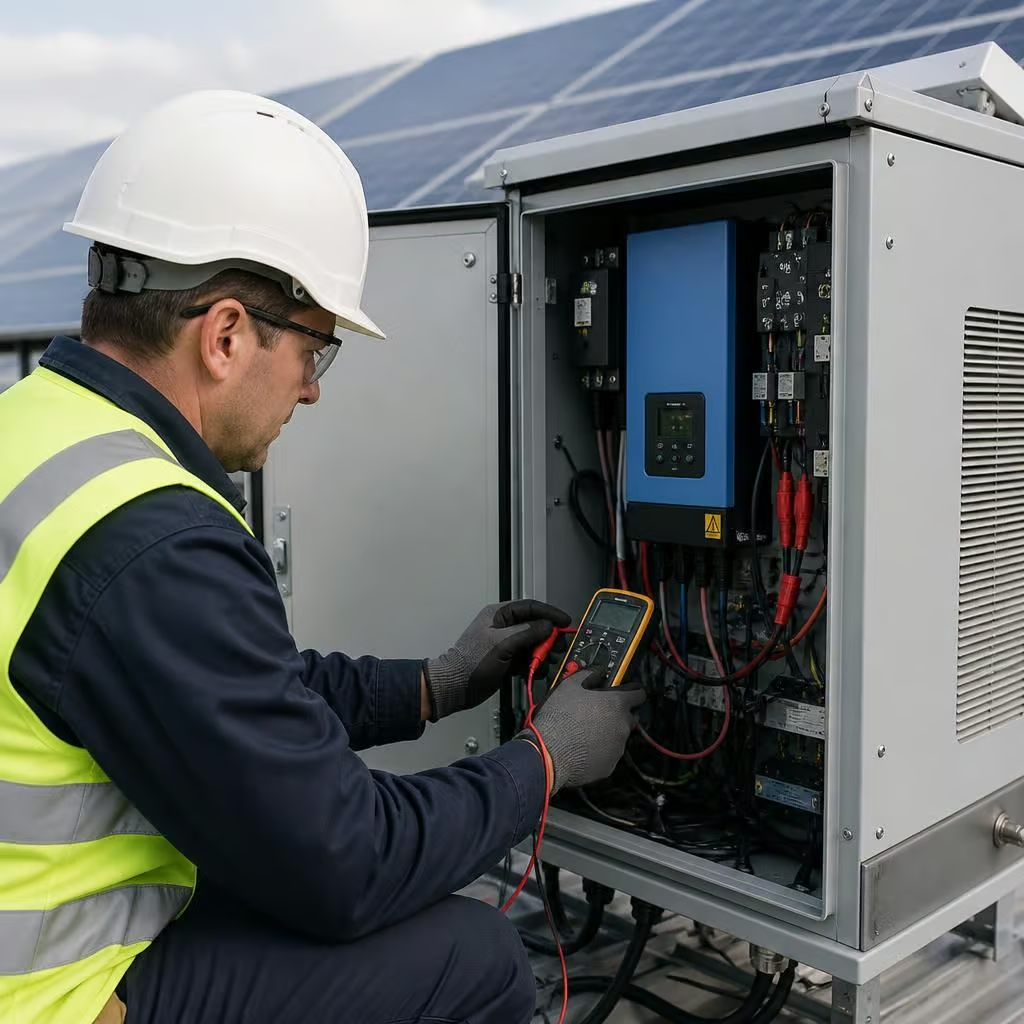
Who handles faults if the industrial solar system stops generating?
If your industrial solar system stops generating, we investigate the fault across the panels, inverter, battery, monitoring equipment and site supply. We then carry out the necessary repair, test the system and explain what caused the failure.
The party responsible for an industrial solar fault depends on the maintenance agreement, the equipment affected and whether the system is still under warranty. In most cases, the installer or named maintenance contractor coordinates the investigation, while the manufacturer deals with a failed inverter, battery or other covered component.
Start with the system records. The site manager should check the monitoring portal, inverter display and any alarm messages, then record when generation stopped. A sudden complete loss of output points to a wider electrical or inverter issue. A gradual reduction may involve a string fault, damaged cable, shading or a problem affecting part of the array.
Do not open the inverter, remove covers or enter a restricted area to investigate. Solar panels can continue producing electricity in daylight, even when the system appears to be switched off. We use the site’s isolation procedure, confirm the relevant supplies and work within the access and safety controls agreed for the premises.
The investigation usually follows the fault path.
- If the monitoring platform has stopped communicating but the array is still producing, we check the communications link, data logger and connection to the site network.
- If the inverter is reporting an alarm, we check its status, associated protection and the DC and AC connections before deciding whether it can be reset safely.
- If only part of the system has stopped, we test the affected strings, isolators, connectors and cabling to locate the loss of generation.
- If the solar system has caused or experienced an electrical protection trip, we investigate the underlying fault rather than repeatedly resetting it.
This separates a solar fault from a problem elsewhere on the premises. A site-wide power failure, damaged distribution board or change to the building’s electrical supply may need the facilities team, the site’s electrical contractor or the electricity network operator. We explain which party needs to act and provide the test findings needed for the next step.
Warranty responsibility is checked against the installed equipment and contract. If a component appears to have failed within its manufacturer warranty, we gather the model, serial number, alarm history and test results. The manufacturer may authorise a replacement, ask for further tests or require an approved engineer to complete the work. We do not treat a warranty decision as confirmation that the whole system is faulty.
Some faults sit outside an equipment warranty. Examples include impact damage, water entering through an unrelated building defect, alterations by another contractor, rodent damage or a failed site network connection. The evidence from the inspection helps the owner decide whether the cost belongs to the maintenance budget, an insurance claim or another contractor.
The repair is planned around the site’s operating risks. Industrial premises may have vehicle movements, production areas, restricted roofs or electrically live equipment nearby. We agree access arrangements, isolation points and any required shutdown before work starts. If replacement parts are needed, the system may remain partly isolated until the correct components arrive; we will explain what continues to operate and what does not.
After the work, we test the affected circuits, confirm that the inverter and protection operate correctly and check that generation data is being recorded again. We provide the relevant findings and test paperwork, including details of parts replaced and any remaining limitation. For systems maintained by more than one contractor, that record gives the site owner a clear handover rather than leaving the next fault to be diagnosed from scratch.
For electrical work on the installation, NICEIC and ECA registration means the work is carried out against recognised electrical standards. The important point for the site owner is a traceable fault report, safe reinstatement and clear identification of any further action still required.
If responsibility isn’t written down, a stopped system can pass between the installer, equipment manufacturer and site contractor. Before handover, ask for one named fault contact and a clear route for escalating warranty issues.
We can record the equipment covered, the limits of the maintenance agreement and the information needed to report a fault. That gives the site manager a defined first step and leaves a clear decision about who investigates, who approves the repair and who pays for work outside warranty.