
What happens if your building’s electricity demand changes after commercial solar installation?
If your building’s electricity demand changes after installation, we reassess how the solar generation, battery storage and export arrangements are being used. We can then advise on energy management, battery changes or further generation, subject to the roof, electrical capacity and available equipment.
A change in electricity demand does not usually make a commercial solar installation unusable. It changes how much generation the building consumes, stores and exports. We compare the new demand pattern with the system’s output, then identify whether changes to controls, battery storage, generation or electrical capacity are justified.
The first step is to understand what has changed and when. A new production line may increase daytime consumption, while reduced occupancy may leave more solar available for export. Extended operating hours, seasonal trading, a change of tenant, new refrigeration equipment or additional electric vehicles can all alter the load profile.
We use the monitoring data alongside meter readings and information about the building’s current equipment. This shows:
- how much solar electricity the building uses directly;
- how much is sent to the battery, where storage is installed;
- how much is exported to the grid;
- when the building imports electricity; and
- whether the change is continuous, seasonal or limited to particular operating periods.
This matters because solar generation and electricity demand do not always occur at the same time. A building may use more electricity overall but still import power in the early morning, evening or winter. Conversely, a business that reduces its daytime demand may export more solar even though the panels are producing exactly as before.
If demand increases, more of the solar generation may be used on site. That can improve the value of existing panels without changing the array. However, higher demand does not automatically mean that more panels are needed. We check the additional equipment’s running times, power requirements and likely overlap with daylight generation before recommending an extension.
New loads also need an electrical assessment. Machinery, rapid vehicle charging, heating equipment and larger refrigeration systems can affect the main intake, distribution boards, cables, protective devices and metering. The existing solar inverter may not have enough spare capacity for a proposed extension, and the network operator may need to approve changes to generation or export limits.
If demand falls, the building may export more electricity. We assess whether the existing export arrangement remains suitable and whether battery charging can move more solar use into later periods. Battery settings may need changing so the system charges when surplus solar is available and discharges when the building needs power.
A lower demand profile can also change the case for adding storage. A battery that suited a high daytime load may not be the right size after a business move, reduced production or a change in occupancy. We look at actual consumption rather than assuming that a larger battery will be useful.
If demand becomes more seasonal, the system may behave differently at different times of year. Solar output is generally higher during the brighter months, while lighting, heating and other building loads may rise during winter. We compare data across representative periods before suggesting changes, rather than basing the decision on a single month.
Some demand changes can be managed through controls instead of new equipment. For example, scheduled battery charging, timed vehicle charging or shifting a flexible process into periods of solar generation may reduce avoidable imports. We only recommend this where the operating requirements allow it. A control strategy must not interfere with production, refrigeration, safety systems or the building’s normal use.
Adding panels is possible only if the roof, mounting arrangement, inverter, cabling and protection can accommodate them. We also check whether the roof still has suitable space, whether shading has changed and whether the distribution board can accept the additional equipment. A larger array may require a new inverter or a revised grid connection, not simply a few extra modules.
Where the change involves new electrical equipment, we plan the work around the building’s use and identify any necessary isolation or disruption before work starts. The quotation sets out the proposed equipment, alterations and associated electrical work, so the business can compare the cost with the energy it expects to use or export.
Export arrangements may need attention when the balance shifts significantly. An MCS-certified installation can support an application for the Smart Export Guarantee, subject to the supplier’s terms and the system meeting the relevant requirements. We explain what information is needed and check that the metering and commissioning records match the installed system.
The right response may be no physical change. If the monitoring shows that the existing array, inverter and battery still suit the revised demand, we can confirm that position and identify what to watch. If the change is likely to continue, we set out the practical options in stages, including any network approval, roof work, electrical alterations and commissioning needed for a safe upgrade.
A new machine can create short demand peaks that a monthly electricity bill won’t show. Before it is connected, we check its starting current, running pattern and connection point against the existing electrical installation.
That review helps identify problems before they affect production, such as an overloaded distribution board, unsuitable protection or a supply that cannot support the added equipment. We then set out the work in stages, so the building can keep using the existing solar system while any necessary electrical changes are planned.
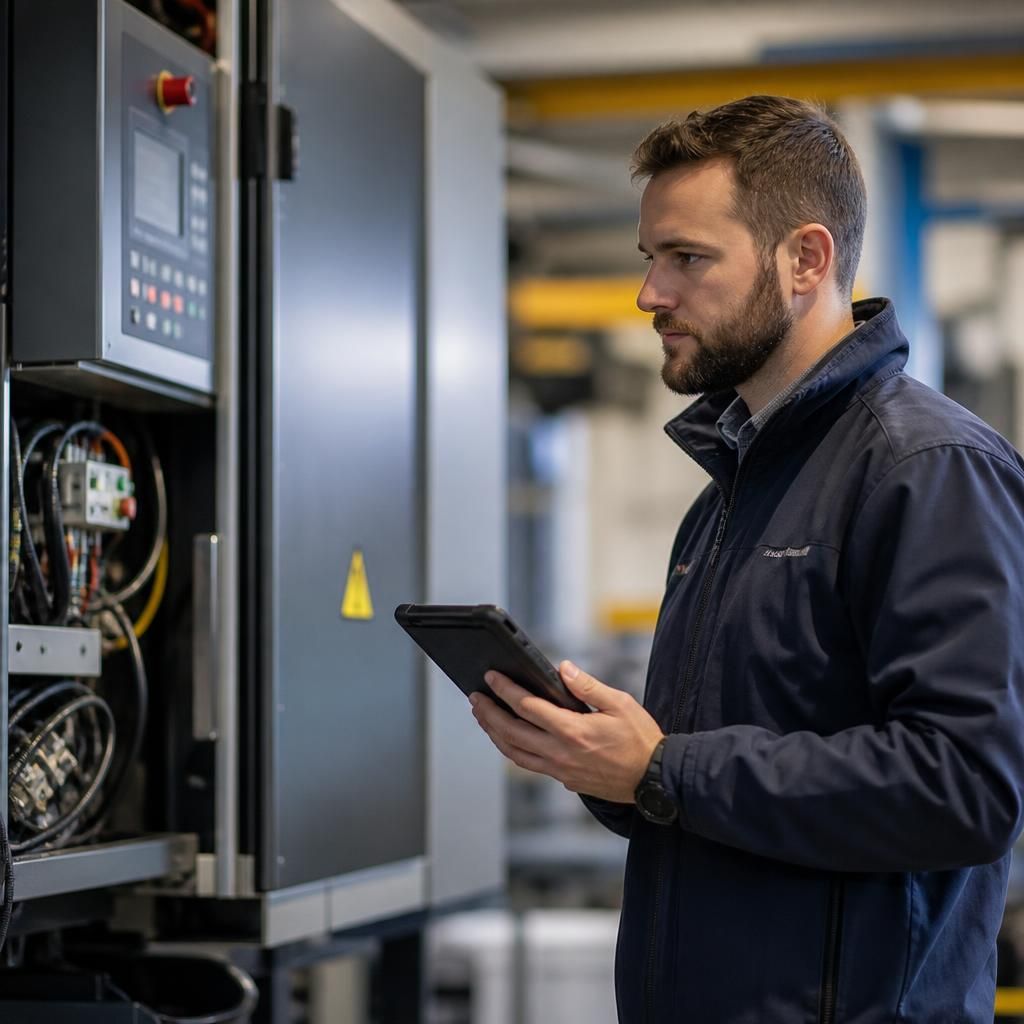
Discuss how changing demand could affect your commercial solar installation
If your building’s electricity demand has changed, talk to us about reviewing the monitoring data, equipment and future plans. We can explain whether the existing installation remains suitable or set out the practical next steps for adapting it.