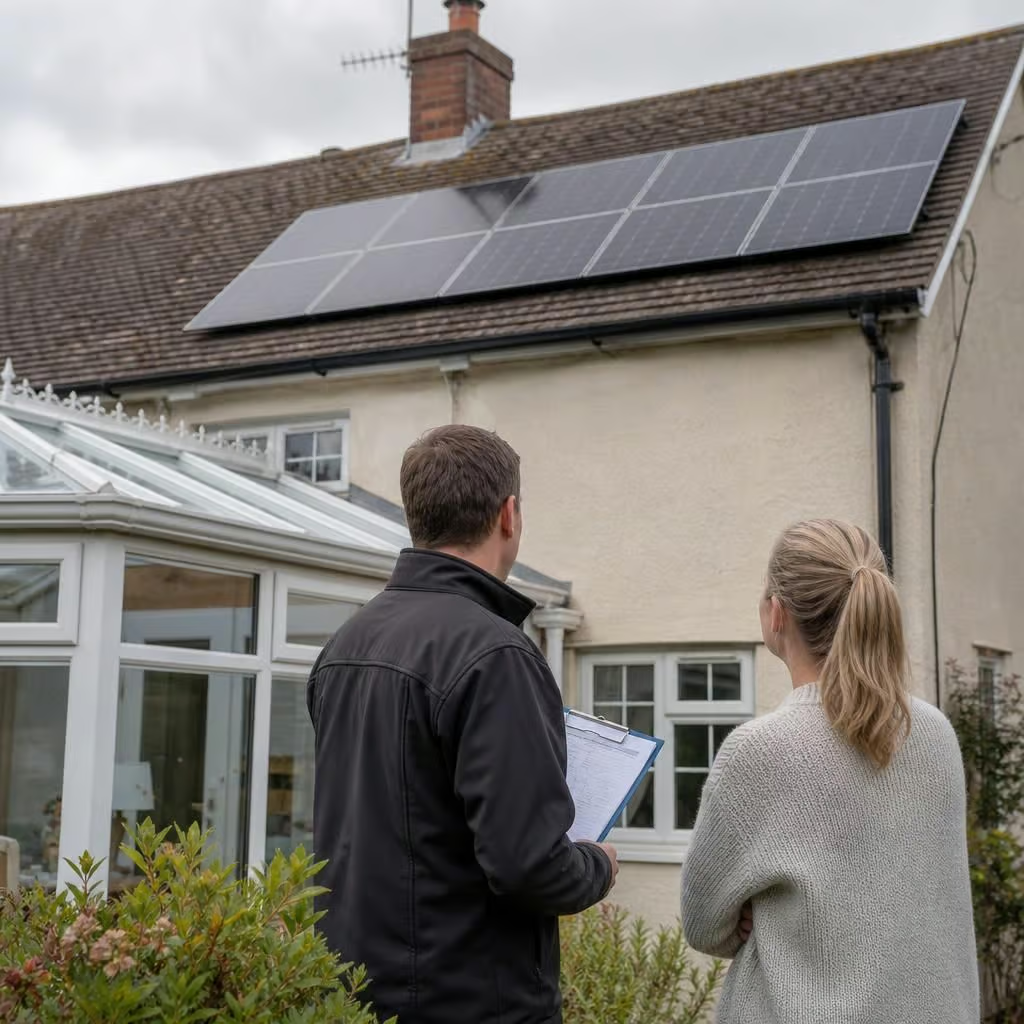
What does home solar panel installation cost?
Home solar panel installation cost depends on the size of the system, the roof, the inverter, whether you add a battery and any electrical work needed. We assess those details first, then provide a written quotation so you can compare the likely cost, generation and savings for your home.
There is no reliable single price for a home solar installation without looking at the property and understanding how you use electricity. The total cost comes from the equipment, the roof structure, the cable route, the electrical work and the commissioning paperwork. A proper quotation should show each part clearly rather than giving you a panel-only price.
What the quotation needs to cover
Solar panels are only one part of the installation. The quotation should identify the panels, inverter, mounting system, isolators, generation meter and monitoring equipment. It should also explain the labour, access arrangements, scaffolding, design work, testing and certification.
If the panels sit on a detached garage, outbuilding or ground-mounted frame, the cable route can add work. A long route may need additional protection, trenching or changes to the consumer unit. We explain those requirements before work starts, so the final figure reflects the installation rather than an assumed standard roof.
How battery storage changes the cost
A battery adds to the initial installation cost, but it changes how the system can be used. Instead of exporting unused generation immediately, the battery can store electricity for later use in the home. That can be useful when most of your electricity demand occurs in the evening.
The right battery size depends on the household’s electricity pattern, not simply on the number of panels. A larger battery is not automatically better value. We use the information from the survey and your electricity use to compare the additional cost with the amount of stored energy you are likely to use.
Installing a battery at the same time as the panels can avoid some duplicated electrical work. Adding one later may still be possible, but we need to check the existing inverter, consumer unit and cable routes first. The quotation should state whether the battery is included, ready for later addition or excluded altogether.
Older homes and unusual roofs
An older or listed property does not automatically rule out solar panels. Roof covering, structural condition, access and planning requirements all affect the work. Slate, stone, pantiles and older roof timbers may need a different fixing approach from a modern tiled roof.
If the roof needs repair or replacement, completing that work before the panels are fitted usually makes more sense. Removing and refitting panels later creates extra cost. We can identify that risk during the assessment, but roofing work itself may need to be priced separately where another specialist is required.
Listed buildings and properties in conservation areas may need additional checks or consent. Those requirements can affect both the design and the timescale. They should be resolved before you commit to equipment or installation work.
Electrical work that may affect the price
Your existing consumer unit may need upgrading if it cannot safely accommodate the generation equipment. Earthing, protective devices and cable capacity also need checking. These are safety requirements, not optional extras, and they should appear as separate items in the quotation.
If you also want an EV charger or electric heating, we can consider the likely combined demand during the design. Planning the electrical arrangement together may prevent unnecessary changes later. The cost still depends on the equipment and cable routes involved, so we keep those items clear rather than folding them into a vague allowance.
Generation, export and payback
The cheapest installation is not always the one that gives the best result. A system that is too small may leave suitable roof space unused. A system that is too large may export more electricity than the household can use, depending on the battery and usage pattern.
We can compare the proposed cost with expected generation, household consumption and export arrangements for the property. That calculation is specific to the roof orientation, shading, occupancy and electricity tariff. It should be treated as an estimate, not a guaranteed saving or fixed payback period.
Our MCS certification means an eligible installation can be registered for the Smart Export Guarantee. That allows you to apply for an export tariff with an electricity supplier. Tariffs and terms change, so we use the current arrangements when discussing the likely value of exported electricity.
What to check when comparing quotations
- Check that the price includes design, access, installation, testing and commissioning.
- Confirm the make and model of the panels, inverter and battery, if included.
- Ask which electrical upgrades are included and which are provisional.
- Check how roof repairs, planning requirements and unusual access are treated.
- Confirm who completes the MCS registration and supplies the certification.
- Look for the VAT treatment and any exclusions in the written quotation.
- Check whether monitoring equipment and handover instructions are included.
We inspect the property before pricing the work and explain the practical choices in plain terms. You receive a written quotation before work starts, with the included equipment and any assumptions set out clearly. That gives you a meaningful figure to compare with the expected use of the system, rather than a headline cost that changes once installation begins.
The electricity you use during the day can affect the value of the installation as much as the panel count. A household that runs appliances, heats water or charges an EV during daylight may use more of its generation directly. If most demand comes after sunset, the quotation should show how the design accounts for that rather than assuming every unit will be used on site.
Ask us to explain the assumptions behind the estimate, including occupancy, shading, electricity use and any planned changes to the home. That makes the quoted cost easier to judge because you can see how the proposed system fits the way the property is actually used.