
How much electricity will my home solar panel system generate?
Your home solar panel system’s output depends on its size, roof orientation, shading and the time of year. We assess those factors before installation, so you have a realistic estimate of the electricity your panels can generate rather than a figure based only on their rated capacity.
The expected output of a home solar panel system is given in kilowatt-hours (kWh) over a year. The figure depends first on the system’s installed capacity, then on how much of the roof can be used and the losses between the panels and your electrical circuits.
A panel’s kilowatt-peak rating describes its maximum rated power under laboratory conditions. It is useful for comparing system sizes, but it is not the amount of electricity the panels will produce every year. Real output changes as daylight levels, panel temperature and household conditions change.
The system size matters. A roof with space for more panels can generate more electricity, provided the electrical design and roof structure are suitable. We look at the usable roof area rather than counting every possible panel position. Roof windows, vents, chimneys, access routes and required clearances can all reduce the final panel count.
Your home may use only part of the electricity as it is generated. Solar production is usually highest during daylight hours, while many households use more electricity in the morning and evening. That means annual generation and electricity taken from the grid are different figures. A home can generate a useful amount of solar power but still import electricity at times when the panels are producing little.
We compare the expected generation with your electricity use. Your daytime habits matter here. Running a dishwasher, washing machine, immersion heater or heat pump while solar power is available can increase the amount used directly in the home. A battery can store some surplus for later, but it does not create additional solar electricity. It also has its own charging and discharge losses.
Not every unit reaches the meter. Electricity passes through cabling, an inverter and, where fitted, a battery before it reaches the appliance or the grid. Each part has a small efficiency loss. We include the effect of the proposed equipment when we prepare the estimate, rather than treating the panel rating as the final usable output.
The estimate also allows for conditions that change during the year. Panels can produce electricity in overcast weather, but at a lower level than in strong sunlight. Very hot panels can also produce less than they would at their test temperature. Dirt, leaves and nearby growth may reduce output if they remain on the panel surface or create shade. We consider these practical issues during the survey and explain when maintenance may be worthwhile.
The number on a quotation is an estimate, not a guarantee. Weather varies from one year to the next, so actual meter readings will not match the model exactly. We show the expected annual generation and how it is likely to be distributed through the year. That gives you a more useful basis for judging the system than a single best-case daily figure.
After installation, the inverter and monitoring system can show how much the panels have generated. You can compare production with household use and see when electricity has been exported or drawn from the grid. A sudden change in the pattern may point to a fault, communication problem or obstruction, although a short period of lower production is not necessarily a defect.
If your property has an older roof, unusual construction or several roof surfaces, we use the survey to test the assumptions behind the estimate. Solid-wall houses, barn conversions and listed buildings often need more careful cable routing and planning checks, but their age alone does not determine solar output. The available roof area and the electrical design matter more.
We prepare the generation estimate as part of the design rather than choosing a panel count from the roof dimensions alone. MCS certification means we can make an eligible Boiler Upgrade Scheme application only for heat pumps, and for solar installations it supports eligibility for the Smart Export Guarantee. We explain how the proposed system, battery and export arrangements affect the electricity you generate and the electricity you buy.
The useful question is therefore not simply how many units the panels can produce. It is how much they are expected to generate at your property, how much your home can use directly, how much a battery can shift to later, and how much may be exported. We set those parts out separately so you can assess the design against your own electricity use.
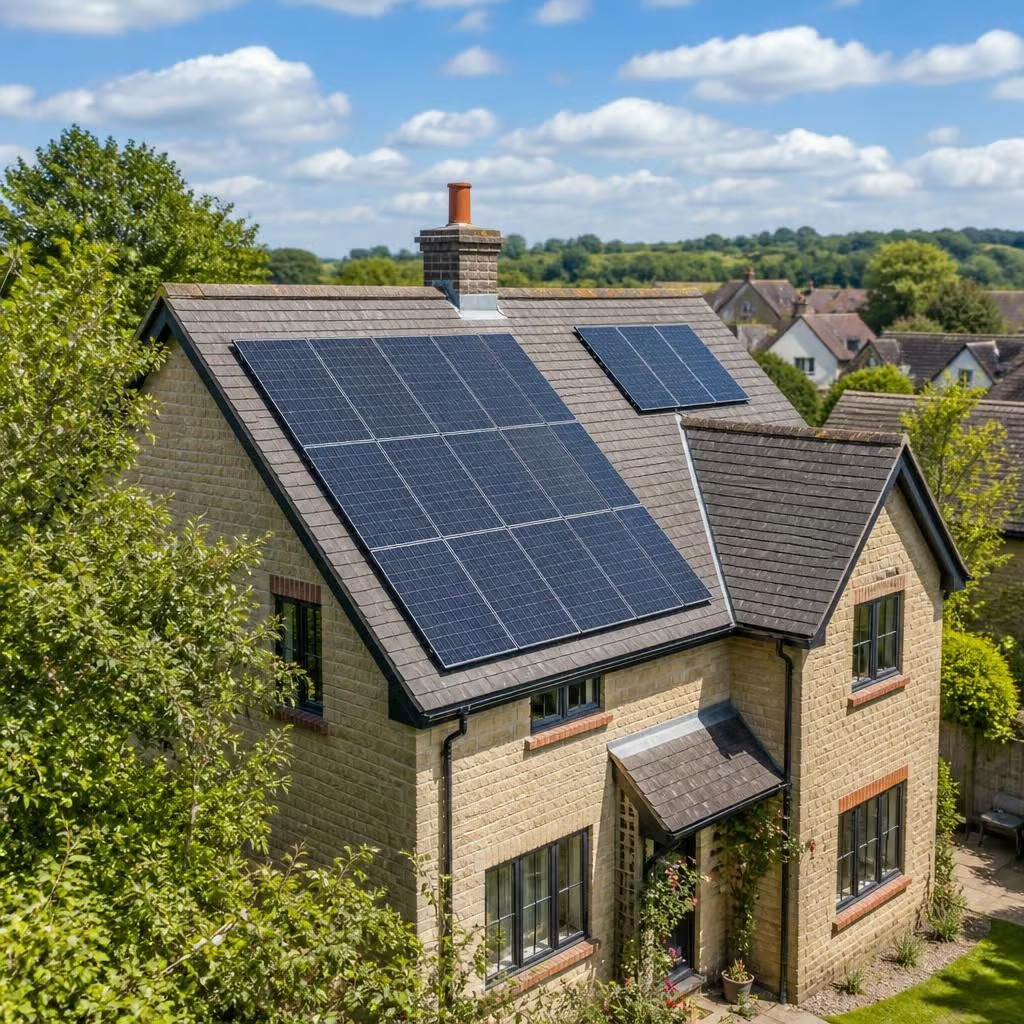
A roof that doesn’t face due south isn’t automatically unsuitable for solar panels. East- and west-facing roof sections can spread generation across the morning and afternoon, which may better match how your household uses electricity.
Nearby trees, buildings and roof features can affect each panel differently as the sun moves. We model the usable roof surfaces and the shading pattern, rather than applying one figure to the whole roof. That gives you a clearer view of which panels will contribute most and how the final layout affects expected generation.