
What happens if my home solar panel system develops a fault?
If your home solar panel system develops a fault, stop using it and don’t open the equipment; we’ll diagnose the panels, inverter, cabling and controls safely. We’ll identify the cause, explain what needs doing and carry out the repair needed to restore the system.
Most solar faults can be traced to a small number of causes, and the repair depends on which part has failed. We assess the system safely, locate the cause, explain the options and provide a written quotation before any chargeable work starts.
A fault warning does not always mean the panels themselves are damaged. The issue may have started with the inverter, a protection device, a connection, monitoring equipment or a related battery system. Weather, water ingress, vermin, ageing components and electrical faults can all affect performance.
Start with the information you already have
Make a note of the warning shown on the inverter or monitoring app, along with when the problem began. A photograph of the display can help us understand the fault before attending. If the system has stopped generating, compare the reading with the usual pattern rather than judging it from one cloudy day.
Keep clear of any damaged equipment. Cracked panels, exposed wiring, scorch marks, a burning smell, water around electrical components or unusual sounds need professional attention. Do not remove covers or attempt to reset equipment repeatedly. Solar circuits can remain electrically live in daylight, even when the house supply has been isolated.
What we check during the assessment
We begin by establishing what the system was doing before the fault appeared. That helps separate a complete shutdown from reduced generation, a monitoring problem or a fault that only occurs under certain conditions.
- The inverter display and stored fault history show whether the system has detected an electrical or internal problem.
- The monitoring connection confirms whether the system is generating but failing to report its figures.
- Protective devices and isolators show whether a circuit has disconnected to protect the installation.
- Cables, connectors and accessible equipment are checked for heat damage, moisture, loose connections or signs of pests.
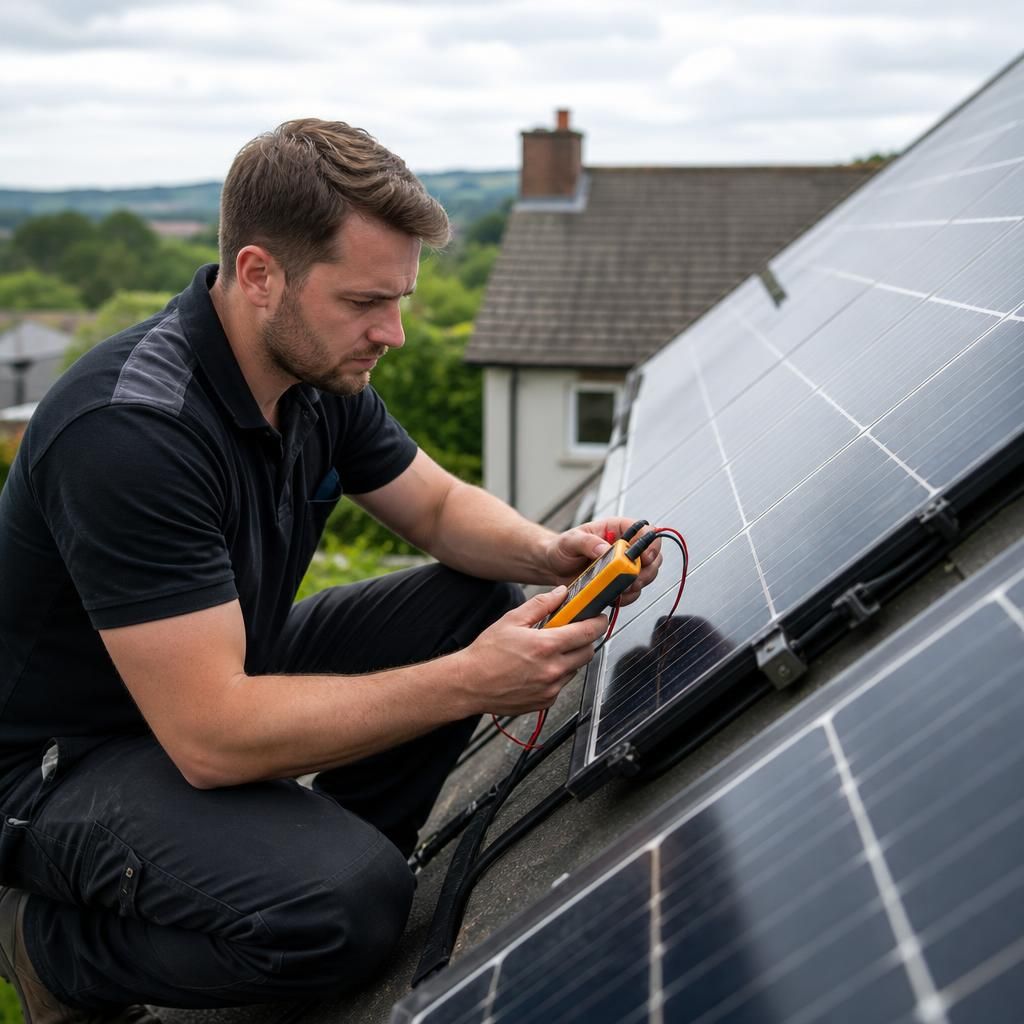
- The roof-mounted equipment is assessed for visible damage without disturbing panels unnecessarily.
- Where a battery is present, we check how it is communicating with the solar system and whether its operating settings are contributing to the fault.
We use test results rather than replacing parts by guesswork. If the cause is not visible, electrical testing helps us determine whether the fault lies within the generation circuit, the household connection or the control equipment.
Common faults and likely remedies
An inverter may shut down because it has developed an internal fault, detected an abnormal electrical condition or reached the end of its service life. In some cases, correcting the underlying wiring or protection issue restores normal operation. In others, the inverter needs repair or replacement.
Generation can also fall because of damaged connectors, cable faults, shading changes or a problem affecting part of the array. Dirt alone is not usually a sufficient explanation for a complete shutdown, so we investigate the electrical readings before recommending cleaning or access equipment.
A monitoring failure can make the system appear faulty when the panels are still producing electricity. If the inverter readings show generation but the app is blank, the repair may involve the communications equipment or its connection rather than the solar array.
Where a battery is installed, a fault may prevent charging, discharging or communication with the inverter. We explain whether the battery can remain safely isolated while the solar generation continues, or whether the wider system needs to stay out of service until the repair is complete.
What happens after we find the cause
You receive a clear explanation of the failed part, the work required and any limitations affecting the repair. If replacement is the sensible option, we explain why rather than treating a new component as the automatic answer. The quotation sets out the expected parts and labour before work begins.
Some repairs involve a connection, protective device or monitoring component and cause little disruption inside the home. A larger repair may require access to the inverter, consumer unit, loft space or roof-mounted equipment. We tell you what access is needed and what will be isolated before starting.
After the work, we test the repaired circuit and confirm that the inverter is operating correctly. We also check that monitoring has resumed where applicable, so you can see whether the system is producing electricity again rather than relying on an unverified display.
When repair is not the right answer
An older system may have obsolete equipment, damaged wiring or several unrelated faults. In that situation, repairing one part may leave the system unreliable or difficult to support. We explain the practical alternatives, which may include replacing a particular control unit or reviewing the wider installation.
Older and rural homes can present additional complications, including long cable routes, outbuildings, exposed roof positions and previous electrical alterations. Our electricians assess those details as part of the fault rather than assuming every installation follows the same layout.
If the system was installed under an MCS-certified scheme, keep its original certificates and commissioning records. They can help establish what equipment was fitted and how it was configured. We can use the available information alongside our testing to plan the repair and explain any effect a proposed change may have on the system documentation or export arrangements.
Once the cause and cost are clear, you can decide whether to proceed with the repair or leave the system safely isolated while considering the alternatives. The aim is to return useful generation without replacing equipment that still has serviceable life.
If your solar system is linked to an export tariff, record the inverter and export meter readings when the fault appears. Note the date and save any fault messages or monitoring screenshots. These records show when generation or reporting changed and help us compare the system’s operation after the repair.
Keep the original commissioning documents with those records. They identify the equipment and settings that were installed, which helps us avoid unnecessary changes when we restore the system.