Is a portable solar generator suitable for home backup?
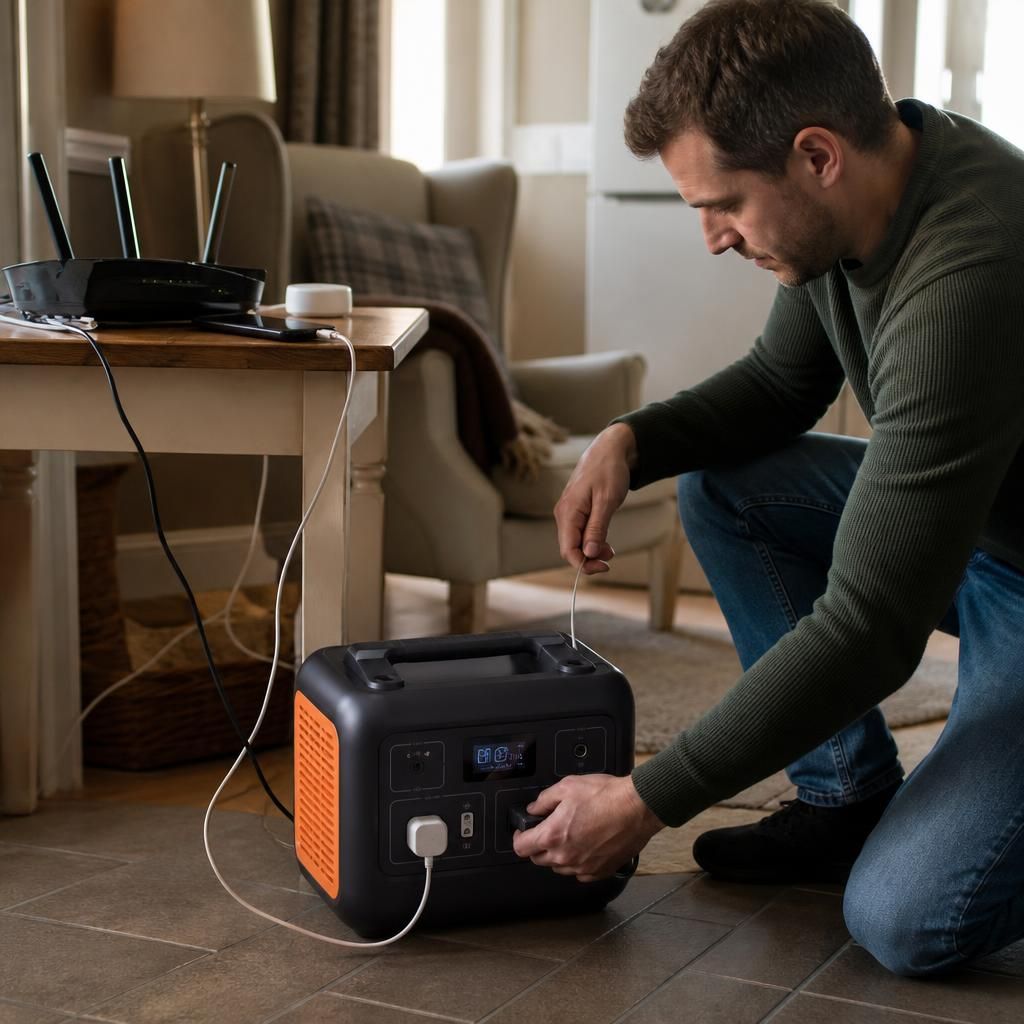
A portable solar generator can suit home backup if you only need to run selected essentials, such as lights, phones, a router or a small appliance. It’s less suitable for whole-home backup or high-demand equipment, so check its battery capacity, power output, runtime and recharging options against what you need to keep running.
It can be suitable if you need temporary power for selected appliances and can manage them individually. It is less suitable if you need automatic, whole-home backup or want to run high-demand heating and cooking equipment.
A portable solar generator is usually a rechargeable battery with an inverter and solar charging input. It does not generate electricity from fuel. You charge it from the mains before an outage, then use its stored energy through standard outlets. Solar panels can extend its usefulness, but recharging depends on daylight, weather, panel position and the unit’s charging limits.
Start with the appliances that matter most. A backup plan might include a fridge freezer, broadband router, lighting, phone chargers, television or a laptop. A boiler may also need electricity for its controls, pump and ignition, even though the heat comes from gas, oil or LPG. That does not mean the portable unit can power the whole heating system. The boiler’s starting demand, connected pumps and control arrangement all need checking.
High-load appliances usually make portable backup impractical. Electric showers, immersion heaters, ovens, kettles, tumble dryers and many fan heaters can use more power than a portable inverter can provide. Heat pumps also need a proper assessment because their compressor and circulation equipment can place a sustained load on the battery. A unit that runs a router and fridge may not run a heat pump or electric cooker.
Read the specifications beyond the headline capacity. The usable battery capacity is lower than the nominal figure shown in some product information. The inverter’s continuous output must cover the appliance while it is running, and its surge rating must cover the brief demand from motors and compressors starting. Fridges, freezers, pumps and some boiler components can all have a higher starting demand than their normal running demand.
Runtime also changes according to the load. Running one small appliance at a time will use less stored energy than running several together. Inverter losses, battery temperature and the unit’s minimum reserve can reduce the energy available at the outlets. Ask for the usable capacity and the manufacturer’s runtime information for the appliances you actually need to support, rather than relying on a general estimate.
How you connect it matters. The simplest arrangement is to plug individual appliances directly into the power station using suitable leads. Keep cables protected from trips, damp and damage, and do not connect extension leads together.
Never feed a portable unit into a wall socket to energise the house. That can put electricity onto circuits that someone believes are isolated, and can damage equipment or endanger people working on the supply. A portable unit can supply selected fixed circuits only where a suitable changeover arrangement has been designed and installed. We can assess the consumer unit, earthing arrangement, cable sizes and intended loads before quoting for that work. Our NICEIC and ECA electrical registration is relevant when a backup system needs fixed-wiring changes rather than simple plug-in use.
A manual changeover arrangement means you choose which circuits receive backup power. It will not necessarily switch over as soon as the mains fails. Some portable units have a backup or UPS mode, but the transfer time may still be too slow for sensitive equipment. Computers, medical devices, alarms and communications equipment may have specific backup requirements, so check the equipment manufacturer’s instructions before relying on a portable power station.
Think about where the unit will be used and stored. A battery power station does not produce combustion fumes like a petrol or diesel generator, but it still needs protection from rain, condensation, excessive heat and physical damage. Keep it on a stable, dry surface with the manufacturer’s clearance around it. Do not cover it while charging or operating, and stop using it if the casing, cable or battery becomes damaged, unusually hot or swollen.
Fan noise can increase when the inverter or charger is working hard. That may be acceptable beside a utility room or office, but less suitable beside a bed. The unit also needs to be accessible when the mains fails, and heavy models are not convenient to move repeatedly. A permanent installation may be more practical if you cannot safely lift the battery or need the backup equipment kept beside the consumer unit.
Solar charging is useful, but it is not instant recovery. The panels must match the power station’s permitted voltage, current and connector type. A portable panel that fits physically may still be electrically unsuitable. During poor weather, the panels may restore energy slowly, while an outage lasting several days may require careful decisions about which appliances run and when the battery is recharged. If you need dependable charging in winter, check whether mains charging remains available and how the system behaves when the battery reaches its reserve level.
For a rural or older property, the backup question often includes more than the appliance wattage. An oil boiler may need its burner, pump and controls supplied together. A well pump, sewage pump, electric gate, refrigeration equipment or water-treatment system may have a high starting demand. We would list those loads, identify what must stay running and check whether a portable unit can start them safely. If it cannot, we would separate the essential circuits from equipment that needs a different backup arrangement.
A portable generator is usually a sensible choice when:
- you need occasional backup rather than automatic protection;
- you only need selected low- or medium-demand appliances;
- you can connect those appliances safely by plug or through a correctly designed changeover system;
- you have somewhere dry and accessible to store and operate the unit; and
- you are prepared to manage the battery and recharge it during a prolonged outage.
A fixed battery system or another permanently designed backup arrangement may suit you better when you need selected circuits to change over automatically, want a longer period of support, or have pumps, heating, medical equipment or other loads that cannot be managed by plugging in one appliance at a time. That decision should follow an electrical assessment rather than the battery capacity alone.
We can work through an appliance list, starting demands, intended connection method and available charging sources with you. The result should be a clear answer about what the portable unit can run, for how long under the proposed load, and which parts of the home need a different arrangement.
A portable solar generator is only suitable when the household can use it as planned. Before relying on it, test the actual appliances you intend to connect, including any motor or compressor that must start. Check that the leads reach safely, the unit remains stable and the battery still has enough charge for the most important load.
Keep a simple backup plan with the appliance order, connection instructions and charging options. That makes a portable unit more useful during an outage and shows where it falls short. If the plan depends on lifting a heavy battery, switching several circuits or keeping essential equipment running without supervision, a fixed backup installation may be the more practical choice.