
Will my solar panel installer handle the necessary electrical certification?
Yes. We complete the electrical testing and certification for your solar PV installation, then provide the relevant paperwork for your records and any required notifications.
Electrical certification is the formal record that the solar installation has been designed, wired, tested and connected safely. The installer should arrange this as part of the work, rather than leaving you to find an electrician afterwards.
The main document for the electrical installation is usually an Electrical Installation Certificate. It records the system design, the equipment installed, the test results and the details of the person or business responsible for the work. It should cover the solar circuit, inverter, isolators, cabling, protective devices and its connection to the consumer unit.
We inspect the existing electrical installation before choosing how to connect the panels. An older consumer unit, limited spare capacity, earthing issue or long cable route can affect the design. This matters particularly in older rural properties, where the wiring may have been altered several times over the years. If the consumer unit needs work, we explain why before including it in the quotation.
The completed system is tested before it is handed over. These tests check matters such as continuity, insulation resistance, polarity, earthing and the operation of protective devices. We also commission the inverter and check that the system is producing electricity as designed.
There are usually several pieces of administration alongside the electrical certificate:
- Building Regulations notification: domestic electrical work that falls within the relevant requirements must be notified through the appropriate route. We explain how this is dealt with for the installation.
- Distribution Network Operator notification: the local electricity network operator needs information about the generation system. The notification route depends on the system design and its connection characteristics. Some systems use a standard notification process, while others need approval before connection.
- Renewable installation certificate: MCS certification records the renewable installation and is important where you want to apply for an available scheme or export electricity under the Smart Export Guarantee.
- Commissioning information: the inverter settings, system details and operating instructions help you and future engineers understand what has been installed.
A battery connected to the solar system may require additional design checks and documentation. The installer needs to account for the battery’s charging and discharge circuits, protection, location and interaction with the inverter. If we install the battery at the same time, we include those parts in the electrical design and handover information.
The certificate does not replace every other approval. Planning restrictions, listed-building requirements, roof structure and any conditions attached to the property remain separate matters. We raise those issues during the survey where they affect the proposed installation, but electrical certification only confirms the electrical work and its compliance with the relevant requirements.
At handover, you should receive copies of the electrical certificate, commissioning information, operating instructions and evidence of the relevant notifications. Keep these with the property records. They may be useful when an electrician works on the system, when you sell the property or when you arrange an export tariff.
Our electrical work is carried out under NICEIC registration, so the testing and certification sit with the team carrying out the installation. That avoids a gap between the solar design, the wiring and the paperwork. If an installer proposes that you arrange the electrical certificate separately, ask who will test the system, which certificate they will issue and who will notify the network operator before agreeing to the work.
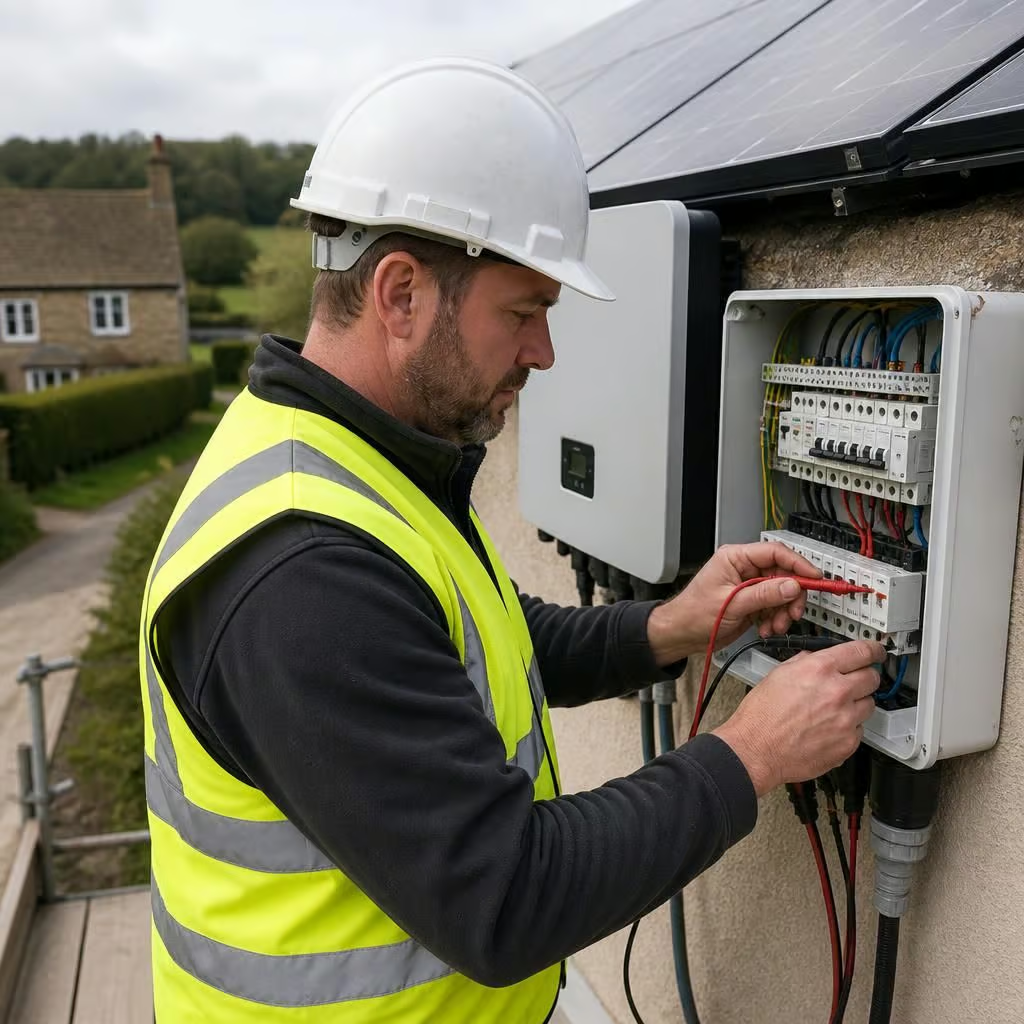
The electrical certificate covers the solar installation completed on the day. It does not automatically cover later changes to the system.
If you add a battery, replace the inverter or alter the connection, we assess the revised arrangement before carrying out the work. That keeps the certification matched to the equipment and wiring actually in place, rather than relying on an old document.