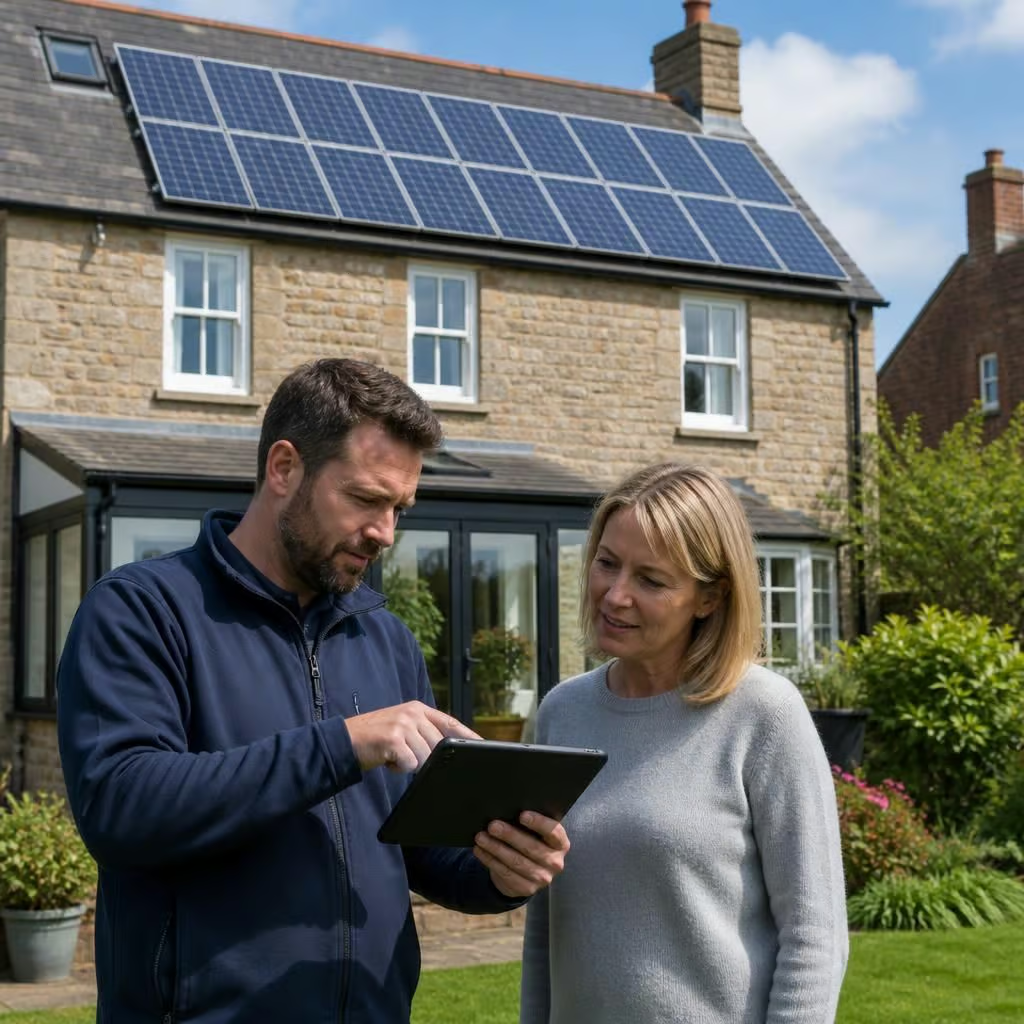
Will my roof solar panels be eligible for the Smart Export Guarantee?
Yes, your roof solar panels can be eligible for the Smart Export Guarantee if they’re installed by an MCS-certified installer and meet the requirements of your chosen SEG supplier. We provide the MCS certificate and commissioning paperwork needed for you to apply and receive payments for electricity exported to the grid.
Eligibility depends on the installation, the meter and the evidence you can provide to an SEG supplier. The panels must form an eligible renewable electricity system, and the installation must meet the scheme’s technical and certification requirements.
The Smart Export Guarantee pays for electricity that your home sends to the grid. It does not pay for every unit your panels generate. Electricity used by appliances in the house is already reducing the amount you buy from your supplier. Only the measured export is considered for SEG payments.
Your export meter must record electricity flowing from the property to the grid. A suitable smart meter usually provides the readings, but the meter must be set up correctly and capable of recording exports. We check the metering arrangement during the design and commissioning process, so the system does not rely on estimated readings.
You apply to an SEG supplier rather than to the installer. Your electricity supplier may offer a tariff, but you can also compare other licensed SEG suppliers. Each supplier sets its own tariff, payment terms and requirements. Check:
- how the supplier calculates export payments;
- whether it accepts the type and size of installation you have;
- how often it takes meter readings;
- when payments are made;
- what happens if you add a battery later; and
- whether it requires you to buy electricity from the same company.
The supplier will normally ask for the installation certificate, details of the generating system, the property’s electricity meter information and proof that you own or are entitled to receive payments for the electricity exported. We make sure the technical paperwork matches the installed system, including the panel capacity, inverter details and commissioning information.
A battery does not automatically prevent SEG participation, but it makes the meter arrangement and tariff rules more important. Solar electricity used in the house or stored in the battery is not exported at that point. Electricity discharged from the battery can later pass to the grid, so the supplier needs a reliable way to distinguish eligible renewable exports from electricity imported from the grid and stored for later use. We review the battery controls and export settings before the system goes live.
Your roof type does not decide SEG eligibility by itself. A system on an older house, barn conversion or solid-wall property can still qualify if the electrical design, structural work, metering and certification meet the scheme’s requirements. Listed-building restrictions, planning conditions or a restricted grid connection may affect what we can install, but they are separate from the export payment rules.
We also check the connection requirements before installation. Larger systems or properties with unusual supplies may need approval from the distribution network operator. If the approved export limit is lower than the system’s possible output, we can configure the equipment to respect that limit. This protects the connection and avoids a system that cannot operate as intended.
Once the panels have been commissioned, we give you the documents needed for the supplier application and explain which meter reading to submit. The supplier then decides whether to accept the application and confirms the tariff. Payments usually begin only after that account is set up, so applying promptly avoids unnecessary delay.
SEG rates and supplier conditions change, so we do not present a tariff estimate before checking the current market. We can instead use the proposed panel orientation, battery size, household demand and likely export profile to help you compare how much electricity you may export. That gives you a more useful basis for choosing a system than assuming every generated unit will be paid for.
If you are considering solar with battery storage, ask us to check the export meter, inverter settings and paperwork as one design. That keeps the system ready for the application and makes clear which electricity is used in the home, stored for later or sent to the grid.
Moving home does not automatically transfer an SEG account to the next occupier. The person receiving payments must be able to show they own the system or have the right to receive its export income. Keep the installation certificate, commissioning record and purchase documents with the property paperwork. If ownership changes, tell the SEG supplier and confirm what evidence the new account holder needs.