
Does the installer explain how each solar panel type performs in shade?
Yes. We compare how common panel types perform in partial shade, then assess trees, chimneys and roof layout to show what each option could produce on your home. Where shade is unavoidable, we also explain how the system design can limit its effect rather than choosing panels on efficiency alone.
Panel material affects shaded performance, but it does not decide the result on its own. The shade pattern, panel layout and electrical design usually matter just as much. We explain those factors together, so the expected output reflects the roof rather than a panel’s headline efficiency.
Monocrystalline panels usually produce more power from a given roof area. That can help when a chimney or dormer limits the usable space. In partial shade, though, a shaded section can reduce the output of other panels connected in the same electrical string. The effect depends on where the shade falls and how the system is wired.
Polycrystalline panels work on the same basic principle, but they have generally been used where roof space is less restricted. Their performance in shade is not automatically better or worse than monocrystalline panels. A carefully designed polycrystalline system can outperform a poorly arranged monocrystalline one if the electrical layout suits the roof more closely.
Thin-film panels have different cell construction and can respond more evenly in some low-light conditions. That does not make them immune to shade. They often need more roof area for the same installed capacity, so the available space, roof shape and mounting options become important. We would compare the usable output from the whole roof, not just the panel type in isolation.
Small, moving shadows need a different assessment from permanent shade. A chimney may shade one or two panels for part of the day. A tree can cast a longer shadow that moves across several rows as the sun changes position. A nearby building may affect the roof during a particular season or at a particular time. We consider the direction, height and position of each obstruction, rather than labelling the roof simply as “shaded”.
Panel-level electronics can change the effect of local shading. A conventional string connects several panels together, so a shaded panel can restrict the current through that part of the array. Bypass diodes within the panel help limit the loss, but they do not create extra sunlight or remove the shaded area.
Depending on the roof and the proposed layout, we may assess designs using different electrical arrangements, including separate string controls or panel-level equipment. These approaches can help panels operate more independently when shade affects only part of the array. They also add equipment and cost, so we consider whether the expected improvement justifies it for that roof.
The survey looks at shade across the year. A roof that appears clear in summer may receive shade from a low winter sun. Deciduous trees also change the pattern between seasons. We look at the roof orientation, pitch, obstructions and usable panel areas, then discuss how those details affect the likely generation at different times of day.
Your daily electricity use matters too. If shade reduces generation mainly in the morning, the effect may be different from afternoon shade, depending on when the home uses electricity. A battery can alter when generated electricity is used, but it cannot recover energy that the panels never produced. We therefore keep the generation estimate separate from any battery forecast.
Efficiency figures need careful interpretation. A panel with a higher laboratory efficiency may be the better choice where roof space is tight. It is not automatically the best choice for a roof with chimneys, trees or several orientations. We compare the usable area, shading pattern, electrical design and expected generation together.
For an older house, barn conversion or roof with several obstructions, the practical result may be a smaller array arranged around the shade rather than the maximum number of panels. That can reduce avoidable losses and make the system easier to understand. If a roof has substantial permanent shade, we will explain the limitation rather than present an optimistic output estimate.
The quotation and design should show the assumptions behind the calculation, including the roof areas used, the obstructions considered and any equipment included to manage partial shade. You can then compare the likely result with the installation cost and your electricity use, instead of choosing a panel solely because its name or efficiency figure sounds better.
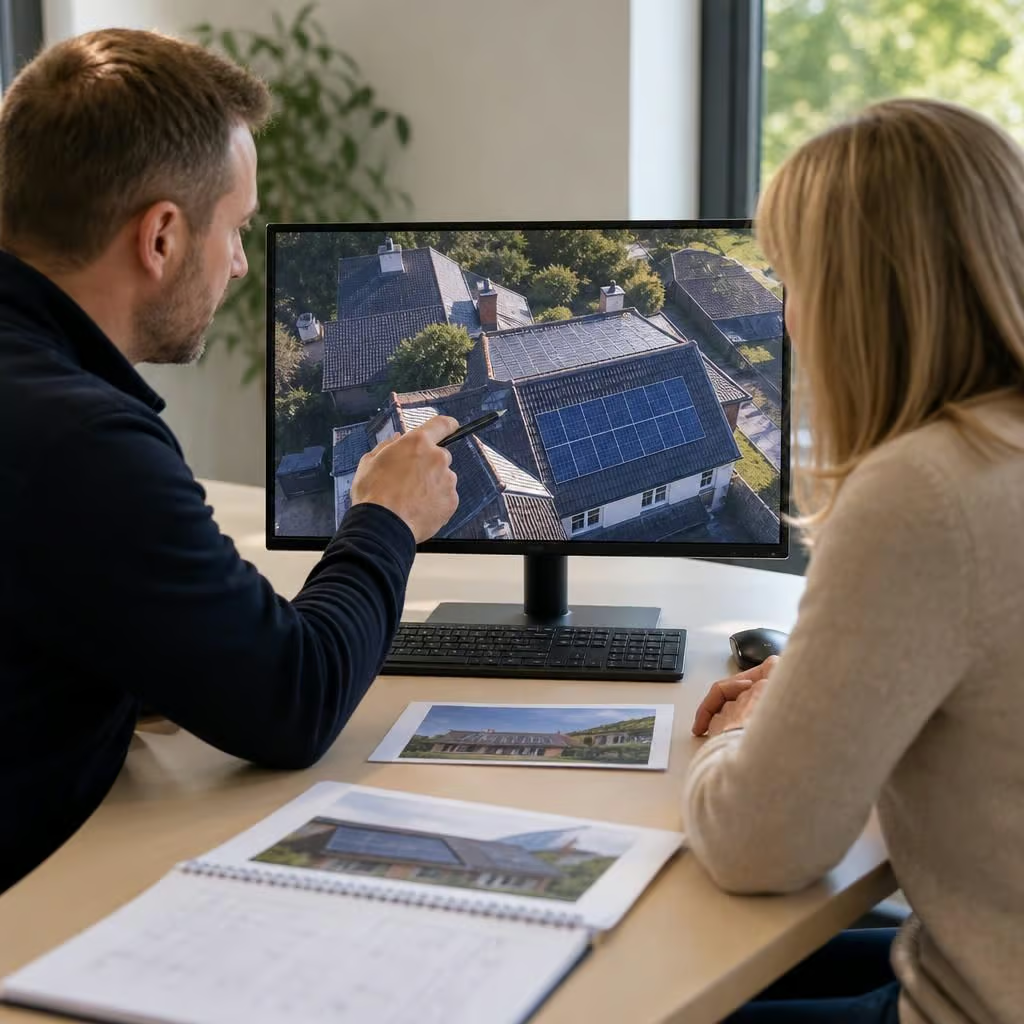
Shade is a roof-design issue, not simply a panel-material issue. If a dormer affects one roof plane, we compare that area with clearer sections and show the likely generation from each.
That gives you a practical choice: use the shaded area with separate electrical control, leave it out, or install fewer panels. We explain the added equipment and cost alongside the expected improvement, so the panel type does not make the decision for you.