
Do domestic wind turbines need planning permission?
A domestic wind turbine may fall under permitted development in England, but only if it meets strict limits on height, location and equipment; otherwise, you need planning permission before work starts. Listed buildings, conservation areas and other site constraints can remove permitted development rights, so we check the property and local planning rules before recommending a turbine.
The important distinction is between permitted development rights and prior approval. A small domestic turbine may qualify under permitted development in England, but you may still need the council to review its siting and appearance before work begins.
The rules differ depending on whether the turbine stands on a mast in the garden or is fixed to the house.
A stand-alone turbine will generally need to meet all of these limits to use the permitted development route:
- Only one stand-alone turbine can be installed within the property’s curtilage.
- The total height, including the blades, must not exceed 11.1 metres.
- The lowest part of the blades must be at least 5 metres above the ground.
- The turbine must be at least its total height away from any boundary.
- The swept area of the blades must not exceed 3.5 square metres.
That boundary rule can have a significant effect on rural properties. A large garden or field may appear suitable, but a turbine’s height can require it to stand further from the edge than expected. The position of neighbouring homes, public rights of way and nearby roads can also affect the planning assessment.
A building-mounted turbine has a narrower permitted development route. The house normally needs to be detached and surrounded by other detached houses. The turbine must not project more than 2 metres above the highest part of the roof, excluding the chimney, and its blades must be no more than 1 metre long. Only one building-mounted turbine is normally allowed.
Building-mounted turbines are also restricted on listed buildings and in conservation areas. Fixing a turbine to an older roof can create structural, noise and vibration issues even where the planning limits appear to be met. A structural check is therefore sensible before treating the permitted development route as suitable.
Prior approval is not the same as full planning permission. Where the permitted development rules apply, the council can still need to consider the turbine’s siting and appearance. We would prepare the information needed for that discussion around the proposed mast or roof position, its dimensions and its relationship with nearby properties. The council may consult neighbours before deciding whether further approval is needed.
Permitted development rights may not apply on designated land. This can include conservation areas, National Parks, Areas of Outstanding Natural Beauty and World Heritage Sites, depending on the type of installation and the precise planning restriction. An Article 4 direction can also remove permitted development rights in a particular area. Local restrictions can change, so the current position needs checking with the relevant planning authority.
A listed building brings an additional layer of control. Listed building consent may be needed for work affecting the building or its setting, and permitted development rights do not remove that requirement. Scheduled monuments and their settings can require separate consent as well.
Meeting the permitted development limits does not remove every other obligation. The installation may still need to comply with building regulations, electrical requirements and the electricity network operator’s process if it will connect to the grid. A private road, lease, mortgage condition or covenant can also restrict what may be installed, even though those are not planning matters.
Before ordering equipment, we would look at the proposed turbine type, the total height, the blade clearance, the boundary distances and the character of the surrounding area. On an older or listed property, we would also consider the roof or ground conditions and whether the turbine is likely to create an unacceptable visual or structural impact. If the proposal falls outside the permitted development limits, the council may require a full planning application rather than a simpler prior approval submission.
For a definite answer, the local planning authority needs the property’s address and a properly scaled proposal. A written planning check before purchasing the turbine can prevent a costly change of position or an installation that cannot lawfully remain.
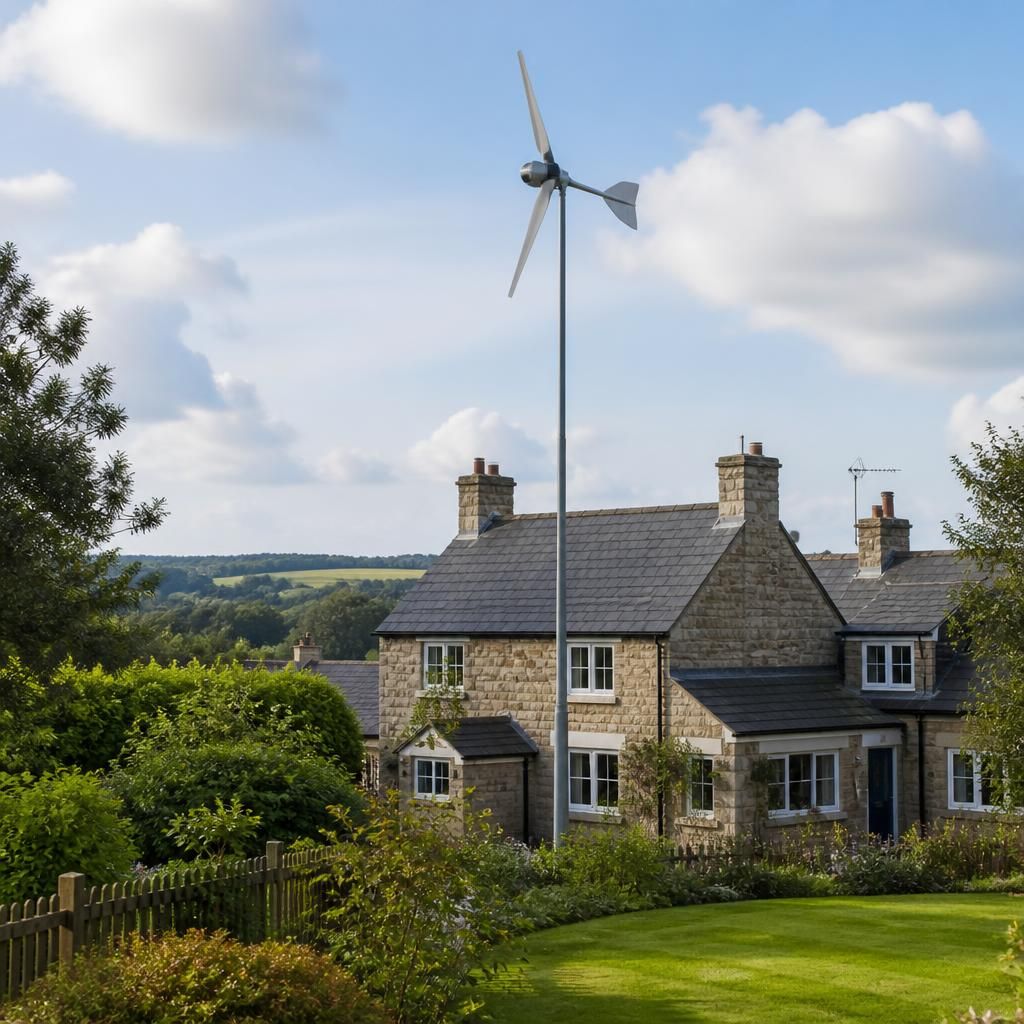
The turbine’s expected electricity output does not decide whether it needs planning permission. The council looks at the physical installation: its height, blade size, position and effect on the property and surroundings.
That means a modest generation estimate cannot make an unsuitable site acceptable. Before equipment is ordered, we separate the planning check from the performance assessment, so the proposed turbine is judged on both its legal position and whether the site can produce useful electricity.