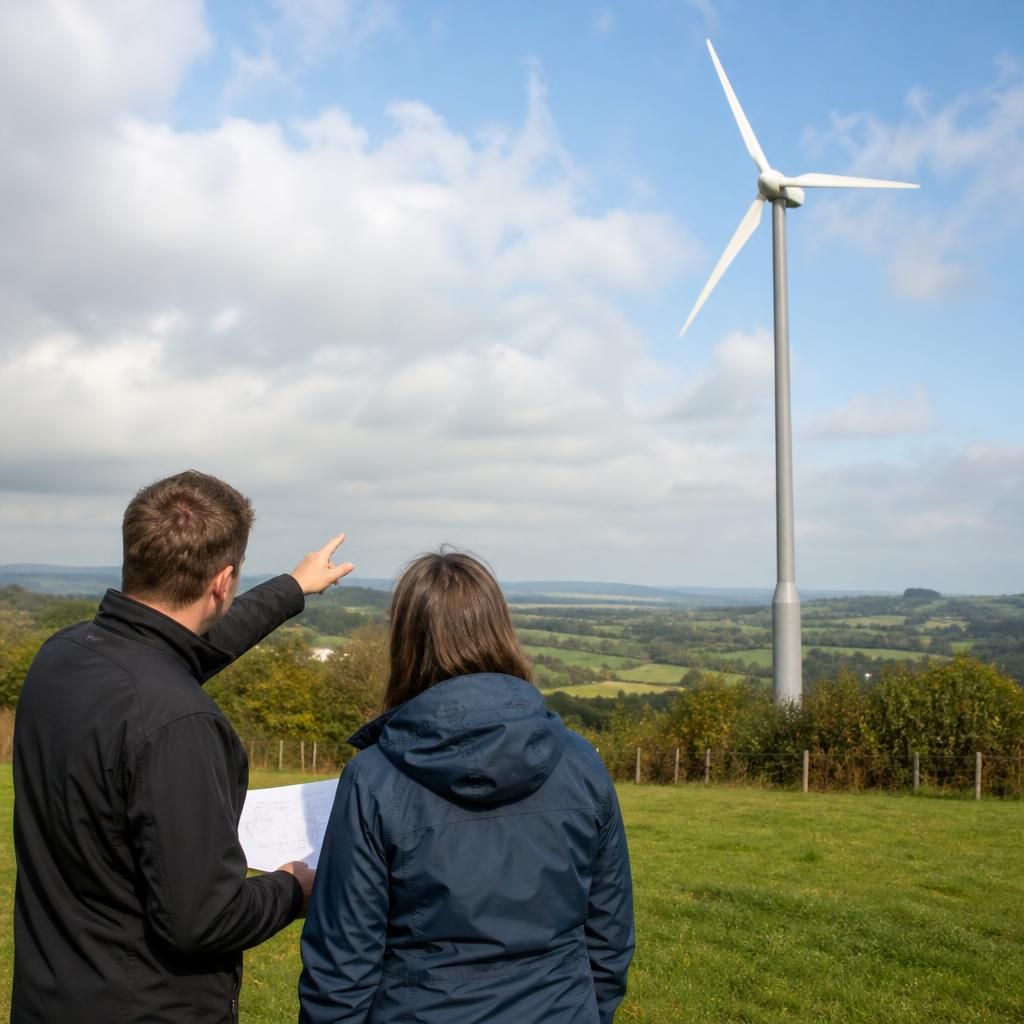
How much does a domestic wind turbine cost?
Domestic wind turbine cost varies widely because the turbine size, tower, access, ground conditions, electrical connection and planning requirements all affect the installation. We assess the site and expected generation before giving you a written quotation, so you can compare the capital cost with the electricity the turbine may produce.
A domestic wind turbine is priced as a complete electrical and civil engineering project, not simply by the turbine itself. The final cost depends on the turbine capacity, tower, foundations, cabling, controls, access to the site and the work needed to connect it to the property.
The turbine and tower usually form only part of the installation. A freestanding system may need groundworks for the foundation, lifting equipment, underground cables and a suitable location for the inverter and control equipment. A building-mounted turbine can involve structural checks, specialist fixings and more complex cable routes. A lower purchase price does not necessarily mean a lower overall installation cost.
Your site also affects whether a turbine is worth considering at all. A rural position with open exposure may have a better wind resource than a sheltered garden, but nearby trees, buildings, hills and turbulent airflow can reduce generation. We look at the proposed position, access, cable route and available wind information before treating the turbine size as a cost decision.
Planning requirements can affect both the design and the budget. The tower height, distance from boundaries, visibility, conservation constraints and the property’s location may all matter. Listed buildings and properties in sensitive areas need particular care. We identify the planning position early, so you know whether professional drawings, additional information or changes to the proposal may be needed.
Electrical connection costs depend on how the generated electricity will be used. A system that supplies the house directly may need an inverter, protection equipment and changes to the consumer unit. If surplus electricity is exported, the connection and metering arrangements need to be considered. A battery may store more of the generation for use later, but it adds equipment and installation cost rather than making the turbine cheaper.
We separate the main elements in the quotation so you can see what you are paying for:
- the turbine, tower and control equipment;
- foundations, groundworks and lifting equipment;
- the inverter, protection and electrical connection;
- cabling between the turbine and the property;
- planning-related work where it is required;
- testing, commissioning and handover information; and
- any battery, export connection or remedial electrical work included in the design.
Access is an easy cost to overlook. A narrow lane, soft ground, steep field or limited space for lifting equipment can change the installation method. Long cable runs can also increase excavation and electrical work. We check these practical details rather than pricing the turbine in isolation.
Small roof-mounted turbines need a different assessment from freestanding towers. The roof and building must withstand the loads and vibration, while nearby rooflines and trees can create disturbed airflow. A unit that looks inexpensive on paper may generate less electricity than expected if the position is unsuitable. We explain that risk before you commit to equipment.
The useful financial comparison is not the turbine’s purchase price alone. We work from the expected generation at the proposed site, the electricity you use during the day, any export arrangement and the cost of future maintenance. This gives you a property-specific view of running costs and payback rather than relying on a headline estimate that may not match your home.
Wind generation also varies with the weather, so a turbine should not be sized on the assumption that it will replace all other electricity supplies. Your existing heating, hot water, battery and electrical demand affect how much of the generation you can use directly. If the system is being considered alongside other renewable equipment, we can assess how the technologies would work together.
We carry out the site assessment first, then provide a written quotation that shows the proposed equipment, installation work and any known exclusions. You can then compare the total project cost with the expected use of the electricity and decide whether a domestic turbine is suitable for the property.
The installation price is only part of the financial picture. A turbine also needs planned inspection and maintenance, and its control equipment or inverter may eventually need repair or replacement.
We include those future considerations when we assess the project, alongside expected generation and electricity use. That gives you a more realistic view of the turbine’s total cost before you decide whether the investment makes sense for your property.