
How long does a renewable energy installation take?
Installation times vary by technology and property: solar panels and batteries usually take less time than an air source heat pump, which may need radiator, pipework and electrical upgrades. We confirm the work involved and the expected timetable after surveying the property, including any planning, grid or grant requirements.
There is no single standard timescale for a renewable energy installation. Solar panels and battery storage usually involve less preparation than an air source heat pump, while the property, roof, electrical system, heating system and any external approvals can change the schedule. We give a clearer programme after the survey, rather than relying on a national average.
The work usually has four stages:
- Survey and design: We assess the proposed equipment locations, cable routes, access, roof condition and available electrical capacity. For a heat pump, we also calculate heat loss and review the radiators, hot water cylinder, controls and pipework.
- Quotation and approvals: The written quotation sets out the equipment, preparation work, assumptions and expected sequence. Some installations also need a grid connection application, planning check, building control notification or grant paperwork.
- Installation: The time on site depends on the system and the amount of preparation needed. We explain what will be installed on each day, including any scaffold, electrical work, plumbing changes and commissioning.
- Testing and handover: We test the system, set the controls, explain how to use it and complete the relevant certification. Solar and battery installations also need the monitoring and export arrangements set up correctly.
Solar panels can be relatively straightforward when the roof is sound, access is suitable and the consumer unit can accept the new circuit. The installation includes mounting the panels, running cables to the inverter, connecting the system and completing electrical tests. A complicated roof, long cable route, scaffold requirements or an electrical upgrade can add preparation before the panels are fitted.
An older property may need more investigation than a modern house. We look for slate or fragile roof coverings, limited loft access, unusual construction and routes that avoid visible disruption. If the roof needs repair, that work should normally happen before the panels are installed. This prevents the system having to be removed later.
Battery storage may be installed alongside solar panels or added to an existing system. The survey checks the battery location, ventilation, cable route, consumer unit and the way electricity is imported and exported. A retrofit can be shorter when the existing installation is suitable, but an older inverter, consumer unit or inadequate cable route may require extra work.
The battery settings also need to match the way the home uses electricity. We can discuss charging from solar, using stored electricity in the evening and any export arrangement that applies to the installation. The system is not complete until it has been tested and the monitoring app or controls are working as intended.
Air source heat pumps usually take longer to plan and install because they affect the whole heating system, not just one appliance. We calculate the heat requirement for the rooms, check whether radiators are large enough, assess the pipework and decide where the outdoor unit, hot water cylinder and controls can go.
Some homes need radiator replacements, pipework alterations, a new cylinder or changes to the electrical supply. In a solid-wall house, barn conversion or listed building, we also need to consider how equipment and pipework can be installed without compromising the building. These decisions are made before the installation programme is confirmed.
If the existing heating uses oil or LPG, the changeover needs careful planning. We explain which parts of the old system will be removed, retained or isolated, and how the new controls will operate. A heat pump installation can involve plumbing, electrical work and several rooms, so the disruption is usually greater than for a simple panel or battery installation.
External factors can change the planned date. Grid approval, planning requirements, grant administration, scaffold access, equipment availability and unsuitable weather can all affect the sequence. We identify these dependencies in the quotation where they apply. A property that needs a consumer unit upgrade or roof repairs will not follow the same programme as a ready-to-install system.
Grant and certification paperwork is part of the completion process, not an afterthought. For an eligible heat pump installation, our MCS certification allows us to make a Boiler Upgrade Scheme application on the homeowner’s behalf. MCS certification also makes an eligible solar or battery installation capable of applying for the Smart Export Guarantee. The paperwork and system details must be correct before these arrangements can be completed.
Before work starts, ask for the expected sequence rather than only a single installation date. The useful questions are:
- What preparation must happen before the main installation?
- Which parts of the work depend on planning, grid approval or grant administration?
- Will the home have periods without heating, hot water or electricity?
- Are scaffold, radiator changes, roof repairs or consumer unit work included?
- When will testing, certification, monitoring and user training take place?
That gives you a realistic view of the whole job, including the work before and after the equipment is fitted. We provide the likely schedule once we understand the property and the system being considered, and we explain any assumptions that could affect it.
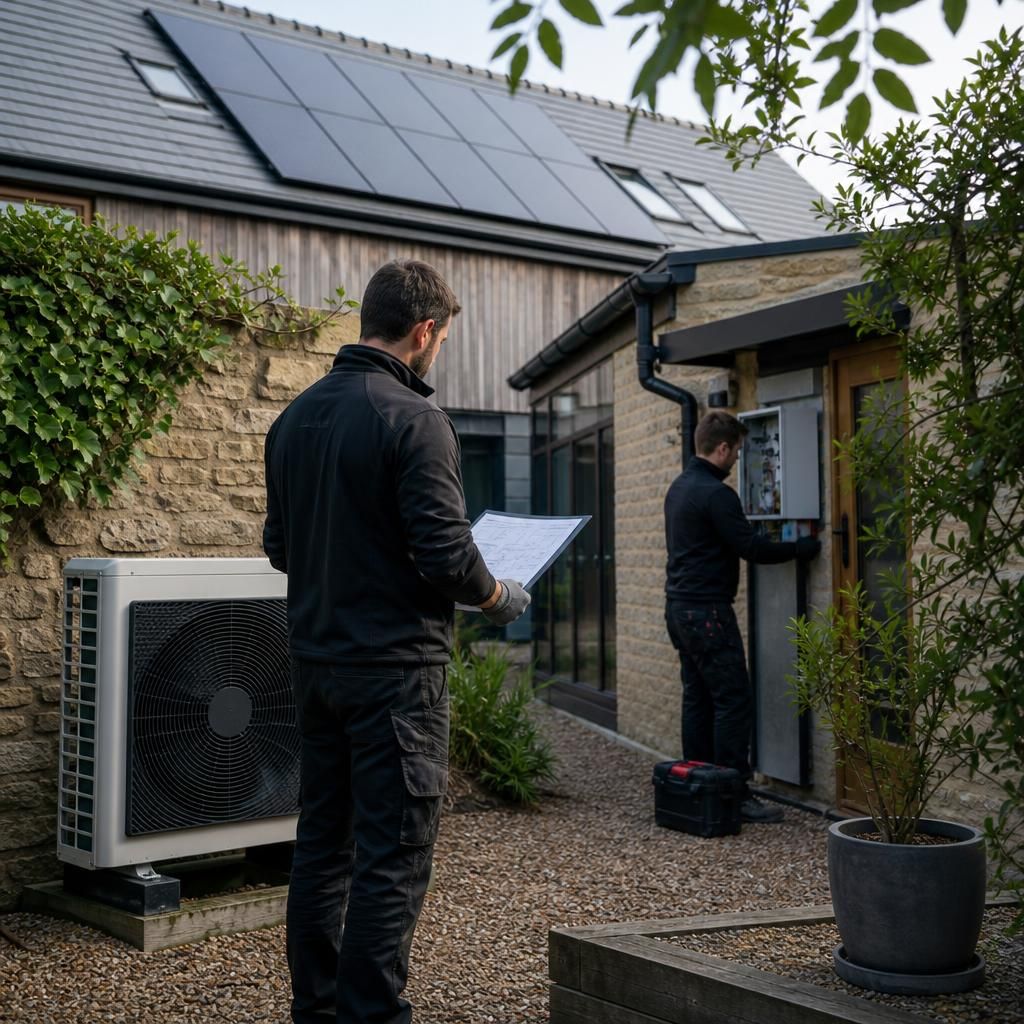
The most useful timescale is a sequence, not a single date. Your installation may depend on roof repairs, scaffold, an electrical upgrade or changes to radiators and pipework before the main equipment can be fitted.
We separate those stages in the programme, so you can see what happens first and which work affects heating, hot water or electricity. That makes it easier to plan around the installation and prevents preparation work being mistaken for delay.