Can renewable energy storage keep essential appliances running during a power cut?
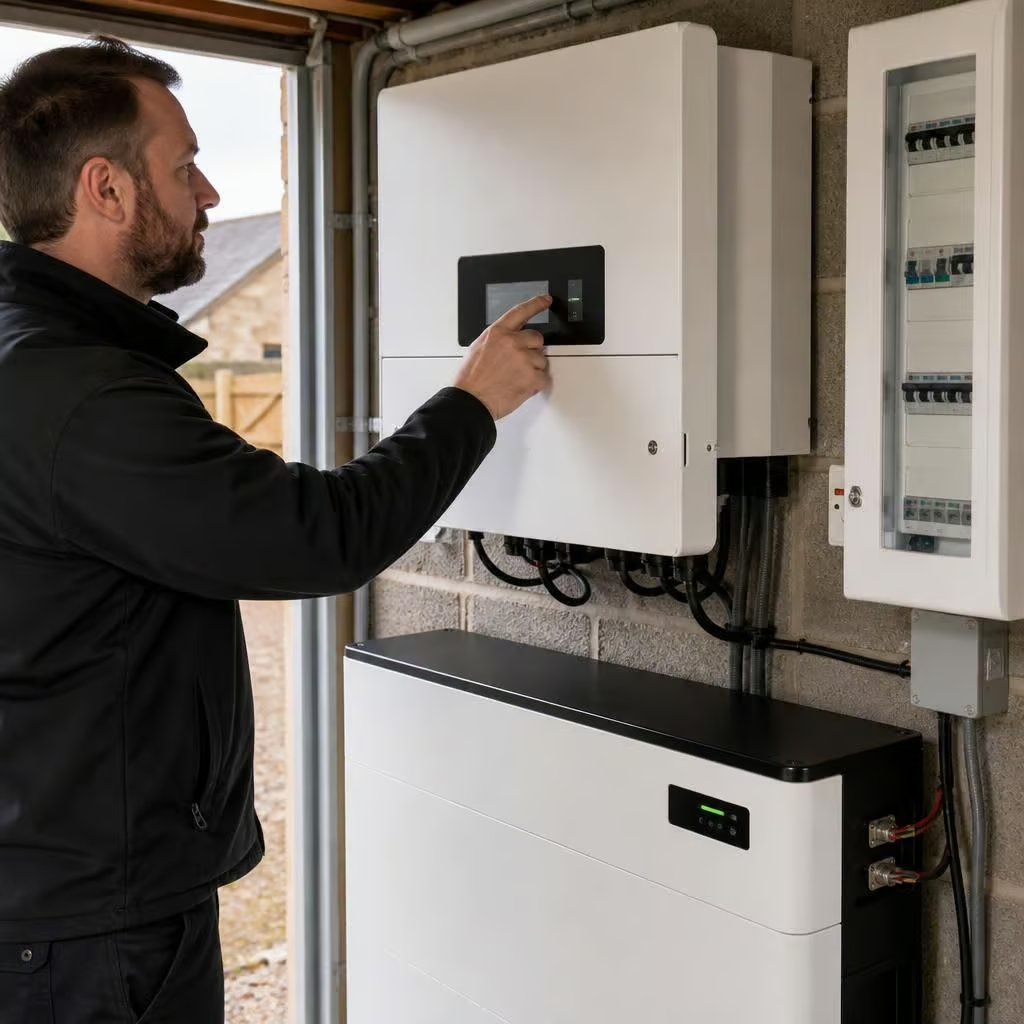
Yes, a battery system designed with backup capability can keep selected essential appliances running during a power cut, provided the installation can safely isolate the home from the grid. We assess the appliances you need, the battery capacity and the backup arrangement, as an ordinary grid-connected battery does not automatically provide power during an outage.
The deciding factor is how the battery, inverter and consumer unit are configured together. A battery with a backup output can supply a separate group of circuits, but it will not automatically keep every appliance in the house operating.
What normally stays on backup
Most households choose circuits for refrigeration, selected lighting, internet equipment, phone charging and heating controls. A gas or oil boiler may continue to run if its electrical supply, programmer and circulation pump are connected to the backed-up circuits. The fuel supply still needs to be available.
High-demand appliances usually remain outside the backup arrangement. Electric showers, ovens, immersion heaters, tumble dryers, large heat pumps and EV chargers can use more power than a domestic battery and inverter can provide comfortably. Starting currents matter too: a fridge compressor may briefly draw more power when it starts than it uses once running.
We separate essential circuits from larger loads during the design. That prevents one appliance from using the available energy before the fridge, lighting or communications equipment needs it.
How the changeover works
A backup-capable inverter detects the loss of the grid and separates the backed-up circuits from the electricity network. This isolation is essential. It stops stored energy from being sent into cables that network engineers may believe are dead.
The changeover may cause a short interruption. Ordinary lights and appliances usually restart, but sensitive equipment may need its own uninterruptible power supply if even a brief break would cause a problem. We can discuss that requirement where the home includes medical equipment, security systems or other devices that must not reset.
When the grid returns, the system reconnects in a controlled way and resumes its normal charging and energy-management settings. We test the changeover as part of the installation, rather than leaving you to discover how it behaves during a real outage.
How long the battery lasts
Runtime depends on the battery’s usable capacity and the demand from the circuits connected to it. A lightly loaded system may keep essential equipment operating for much longer than one supplying cooking, heating or high-powered appliances.
The starting charge, battery reserve setting, temperature, battery age and length of the outage all affect the result. We work through the appliances you actually need to run and explain the likely priorities. The battery can then retain a reserve for an outage instead of using all its stored energy during normal evening consumption.
Solar panels can extend the period of backup in daylight, but only when the solar and battery equipment is designed to operate in an islanded installation. A standard solar inverter normally stops producing electricity when the grid is absent. A compatible backup system can create a safe local supply and manage solar generation, although cloudy weather and household demand still limit how much energy is available.
What happens in an existing home
The suitability of the existing electrical installation matters as much as the battery itself. We inspect the consumer unit, earthing arrangement, cable routes, main supply and the proposed backed-up circuits before recommending an approach.
Some homes need a dedicated backup consumer unit or additional switching equipment. Older installations may need electrical work before the battery can be connected safely. This is particularly important where several generations of wiring or later extensions have been added over time.
An existing solar array may be compatible, but its inverter and control equipment need checking. Replacing or adding equipment can affect monitoring, export arrangements and how the panels behave during an outage. We assess the full system rather than assuming that any battery can be connected to any solar installation.
What the installation includes
We begin by mapping the circuits and recording the loads that matter to you. The design then sets out which appliances remain powered, how the battery is controlled and what happens when its charge is low.
Before work starts, we provide a written quotation covering the battery, inverter, backup switching, cabling and any consumer-unit changes required. The work is completed by our NICEIC and ECA electrical team, with testing and operating instructions provided when the system is handed over.
Backup is therefore a design choice, not an automatic feature of every battery installation. If keeping a small number of essential appliances running matters to you, ask for the backed-up circuits and expected operating limits to be written into the design before choosing the equipment.
Rural properties may have extra essential loads
A power cut can affect more than the fridge and lights. If your home uses a borehole pump, sewage treatment plant, electric gate or security system, those items may also need consideration.
Some have a high starting current or operate automatically, so they cannot simply be added to a backed-up circuit without checking the inverter capacity and control arrangements. We include them in the load assessment and explain which equipment can run, which needs a priority setting and which may need another form of backup.
That gives you a practical plan for the whole property, rather than discovering during an outage that an essential pump or gate was never included.