
Can renewable energy storage work in an off-grid property?
Yes, renewable energy storage can work well in an off-grid property, provided the battery, renewable generation and backup arrangements are sized around the home’s actual demand. We assess seasonal energy use, essential appliances and available generation before recommending a system, so you know when stored energy will cover the property and when a generator or other backup may still be needed.
Yes. An off-grid property can use renewable energy storage, but the battery must form part of a complete electricity system. It needs enough generation, inverter capacity and backup to match the way the property is occupied.
A battery stores electricity made by solar panels or another generator. It does not create energy by itself. During daylight, generation supplies the home and charges the battery. Later, the battery supplies the property when generation falls. The system then needs a planned way to cover periods when the battery is low and renewable generation is limited.
What the system needs to account for
Your electricity use may be quite different from a grid-connected home. Pumps, refrigeration, lighting, cooking, water heating, workshop equipment and broadband can all affect the design. Starting loads matter too. A well pump or compressor may briefly need much more power than its normal running load.
We look at both energy use and peak demand. Battery capacity determines how long the stored energy can last. The inverter determines how much power the system can deliver at once. A battery with plenty of stored energy may still be unable to run several high-load appliances together if the inverter is too small.
We also separate essential and non-essential circuits. Lighting, refrigeration, heating controls, water pumps and communications may need priority. Large loads such as an electric shower, immersion heater, electric cooker or EV charger may need timed operation or a separate control strategy. That prevents one appliance from exhausting the battery needed for essential services.
Solar generation changes with the seasons
Solar panels can produce useful electricity on an off-grid property, but their output changes with daylight, weather, roof orientation and shading. A battery can move daytime generation into the evening. It cannot remove the seasonal difference between summer and winter.
Winter usually brings shorter days and greater demand for lighting and heating. The design therefore needs to consider the least productive periods, not just a clear summer day. We review the roof, shading and likely generation across the year before recommending the battery capacity. Adding more battery storage without enough generation to charge it will not solve a winter shortfall.
Some properties use a generator as a secondary source during prolonged poor weather. That can recharge the batteries or supply selected loads, depending on the equipment and control system. An existing generator is not automatically compatible. We check its output, starting behaviour, fuel arrangement and connection method before including it in the design.
Older and rural properties need a practical assessment
An older home may have oil or LPG heating, electric immersion heating, a private water supply or outbuildings with separate electrical demands. Those details can make a significant difference to the system size. A property using oil for space heating may have a different electrical profile from one using an electrically driven heat pump.
We ask how the home is occupied and which equipment must keep running. A permanently occupied house needs a different reserve from a holiday property or a building visited at weekends. We also consider future changes, such as an EV charger, workshop machinery or a change from fossil-fuel heating to an electrically powered system.
The survey covers the generation area, cable routes, equipment position, consumer unit, earthing and the location of essential circuits. Batteries need a suitable, accessible position with the clearances and protection required by the equipment. The inverter, battery and control equipment must work together as an off-grid installation rather than as ordinary grid-connected solar equipment.
Off-grid equipment is not the same as a grid-tied battery
A standard battery added to a grid-connected solar installation is not automatically suitable for a property with no mains supply. An off-grid system needs an inverter that can establish and manage the property’s electrical supply. It also needs controls that balance generation, battery charging and household demand.
When generation is low, the controls may need to limit certain loads, start a generator or disconnect non-essential circuits. Those decisions should be made during design. They should not be left to an inverter shutting down unexpectedly because the battery has reached its minimum reserve.
The system also needs a sensible reserve. Keeping the battery completely full or empty is not normally the aim; the operating limits are set by the equipment and the way the property is used. We discuss how much stored energy should remain available for essential loads and how the system behaves when that reserve is reached.
What installation involves
Once the electricity demand and generation have been assessed, we specify the panels, battery, inverter, protection and control equipment as one system. We plan the cable routes and identify any consumer unit changes before work starts. If the existing electrical installation needs upgrading, that forms part of the design rather than being discovered after the battery arrives.
On installation day, the work may include mounting the battery and inverter, connecting the generation, wiring the selected circuits and configuring the controls. We test the system under different operating conditions, including battery charging, household demand and the changeover to backup generation where one is included. We then explain the monitoring display, operating limits and what to do if an alarm appears.
Installation disruption depends on the equipment position and cable routes. A nearby plant room or suitable outbuilding may simplify the work. A long route between the panels, battery and house can require more access and preparation. We set out the proposed work in the quotation so you can understand what will happen before deciding.
How to judge whether it is worthwhile
For an off-grid property, the comparison is not only between a battery and buying electricity from the grid. It may include generator fuel, generator servicing, fuel storage, noise, manual intervention and the value of keeping essential equipment running. The battery’s cost, usable capacity, expected operating pattern and future replacement also belong in the calculation.
We work through those factors using the property’s actual loads rather than quoting a universal saving. If the electricity demand is too high for the available roof area or the proposed battery would not cover winter use, we explain that before installation. The right outcome may involve reducing peak loads, changing the order in which appliances run, increasing generation, retaining a generator or deciding that storage is not suitable yet.
A well-designed system can make an off-grid home more independent and reduce generator use, but it cannot make unlimited electricity available in every season. The important question is whether the generation, storage, backup and household demand work together. Our survey is intended to show how that would operate at your property before you commit to the equipment.
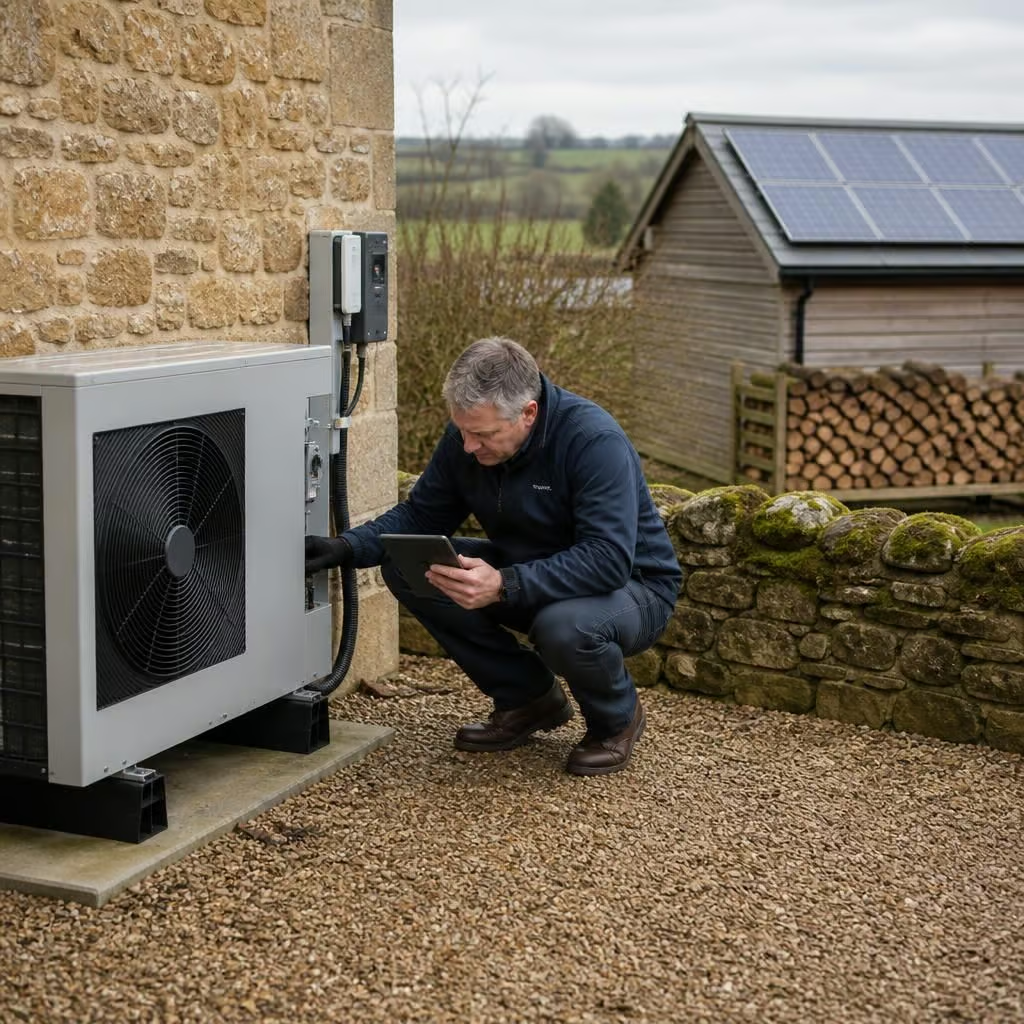
Changing from oil or LPG heating to a heat pump changes the electricity demand of an off-grid home. The system must support the heat pump alongside lighting, refrigeration, water pumping and other essential equipment, including during the darker months.
We model the proposed heating system against the property’s generation and storage capacity before any work is agreed. That may show a need for additional panels, a larger inverter, revised circuit priorities or retained generator backup. It may also show that changing the heating system first would not be practical. You receive a design based on how the whole property will operate, rather than adding a battery to an electrical system that cannot support the intended load.