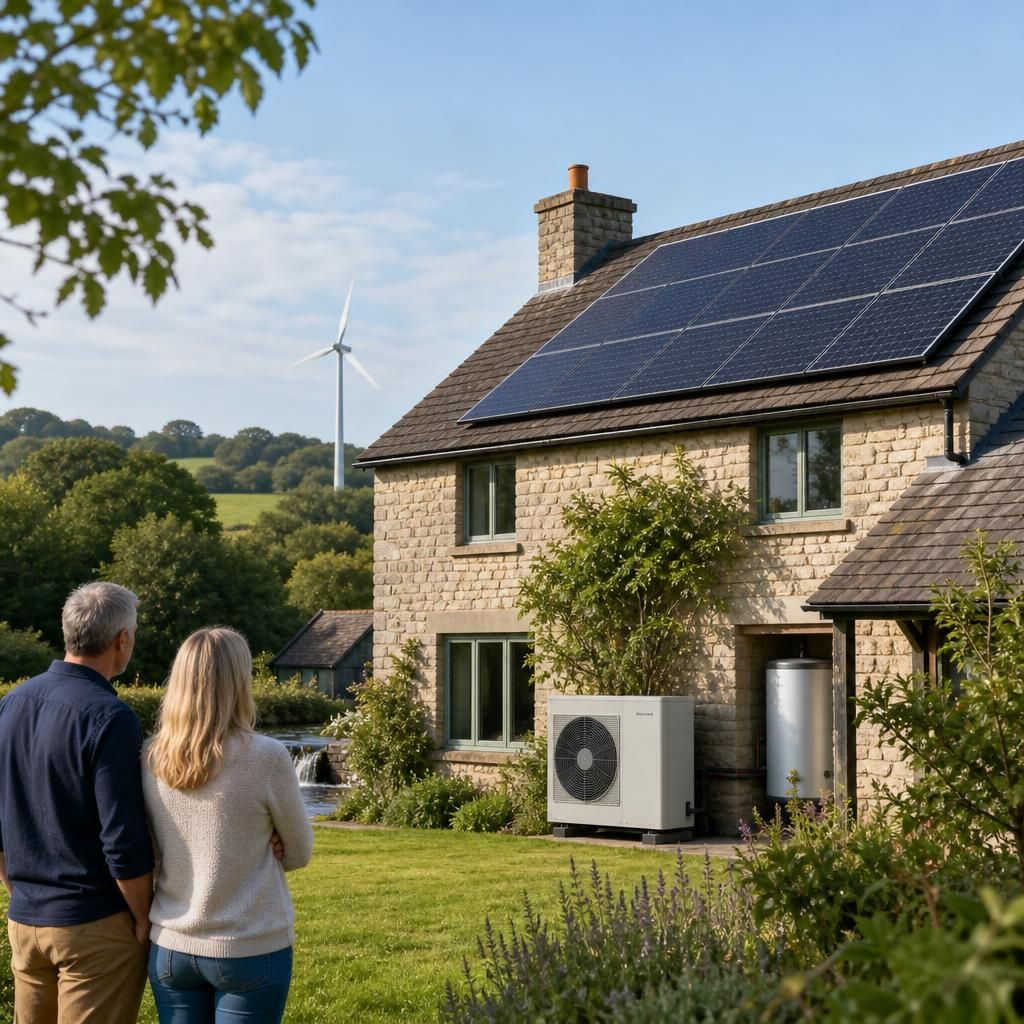
What are the main types of renewable energy for homes?
The main renewable energy options for homes are solar panels, air source heat pumps, biomass heating, small wind turbines and micro-hydropower systems. The right choice depends on your property, available space, existing heating system and how much electricity or heat you use.
For most homes, the realistic starting points are solar electricity and an air source heat pump. The other options can work well, but they depend much more on the site, the building and the available fuel or natural resource.
The right choice depends on what you want the system to do. Solar panels generate electricity. A heat pump or biomass boiler provides space heating and hot water. Wind and hydropower generate electricity, but only where the property has suitable conditions. A battery can store electricity generated by solar panels, although it does not generate energy itself.
Solar photovoltaic panels
Solar photovoltaic, or PV, panels convert daylight into electricity for the home. They can reduce the amount of electricity you buy from the grid, particularly when appliances run during daylight hours. A battery can store some surplus generation for later use, such as in the evening.
A suitable roof usually has enough unshaded space, a sound covering and a route for cables to the consumer unit. Roof direction matters, but shading, roof pitch, panel layout and your pattern of electricity use matter too. A smaller roof can still be useful if the available area is well positioned.
Solar PV does not normally provide heat directly. If your main concern is an oil, LPG or gas heating bill, panels may support a wider change to electric heating, but they do not replace the boiler by themselves. We look at the electrical installation, roof, consumer unit and likely cable routes before confirming what will fit.
Your export arrangements also need checking. An MCS-certified installation allows the export tariff application to be made through the relevant process, so the system can be assessed for both on-site use and electricity sent to the grid. We can also consider battery storage where using more of the generated electricity at home makes sense.
Air source heat pumps
An air source heat pump takes low-temperature heat from outside air and raises it to a useful temperature for heating and hot water. It runs on electricity and usually supplies heat through radiators, underfloor heating or a combination of both.
Heat pumps work differently from boilers. They generally run for longer periods at lower flow temperatures rather than producing a short, very hot burst of heat. The radiators may therefore need to be larger, the pipework may need alteration and the controls need to be set up properly.
An older house is not automatically unsuitable. Solid-wall properties, barn conversions and homes off the gas grid need a careful assessment of insulation, heat loss, radiator output, hot water demand and the position of the outdoor unit. Listed buildings and properties in sensitive locations may also need planning advice before work starts.
The outdoor unit needs a suitable location with adequate airflow and acceptable noise levels. We also check the route for refrigerant or heating pipework, the cylinder position and the electrical supply. If the existing consumer unit or cabling cannot support the equipment, that work needs to form part of the plan rather than being discovered during installation.
An air source heat pump can replace an oil or LPG boiler in some properties, but the design must be based on the actual building. We will explain where radiator changes, insulation work or a different hot water arrangement are needed. An MCS-certified installation allows us to make a Boiler Upgrade Scheme grant application on your behalf when the property and system meet the current requirements.
Biomass heating
Biomass systems burn a renewable fuel, usually wood pellets, logs or wood chips, to heat water for radiators and hot water. They can suit a rural property with space for fuel storage, a suitable flue and a reliable local fuel supply.
The practical requirements are greater than for a conventional boiler. You need somewhere dry to store fuel, enough access for deliveries and room around the boiler for cleaning and maintenance. The flue must discharge safely and comply with the relevant requirements. Ash also needs periodic removal.
Fuel quality affects performance, servicing and emissions. Pellets and logs are not interchangeable, so the boiler and storage arrangement must match the fuel you intend to use. A biomass system can be a poor fit where there is little storage space, difficult delivery access or no dependable fuel source.
Planning requirements can depend on the building, the flue and the location. Listed homes, conservation areas and properties close to neighbours need particular care. A survey should establish the flue route, fuel storage, boiler position and access before you compare installation prices.
Small-scale wind turbines
A small wind turbine generates electricity when wind turns its blades. It needs a consistently windy site, not simply a property that feels exposed on occasional windy days. Nearby buildings, trees and uneven ground can create turbulence and reduce useful generation.
A mast-mounted turbine normally needs more land and planning consideration than a roof-mounted unit. The structure, foundations, access for installation and distance from neighbouring properties all matter. Local planning rules can restrict height, position and appearance, particularly in protected landscapes or near listed buildings.
Maintenance access is another important consideration. Bearings, blades, electrical equipment and the mast require inspection, and repairs may involve specialist access equipment. A wind survey and a realistic assessment of the annual wind resource should come before any decision. Without that evidence, the turbine may produce much less electricity than expected.
Hydropower
Hydropower uses flowing or falling water to turn a turbine and generate electricity. It can provide steady generation where a property has a suitable stream, river or mill leat with enough flow and usable height difference.
The available output depends on the water flow and the head, which is the vertical drop through the system. Both can change during the year. A site that looks promising in winter may produce far less during dry periods, so measurements across relevant seasons are important.
Hydropower projects can involve an intake, screening, pipework, turbine house, electrical controls and an outflow. They may also require permissions relating to water abstraction, fish passage, ecology, flood risk and construction. Existing weirs or mill structures do not remove the need for proper assessment.
Hydropower can be worthwhile for the right rural property, but it is rarely a straightforward domestic installation. The civil works and environmental checks may be more significant than the electrical equipment. A site survey needs to establish what is physically possible before any financial assessment is meaningful.
How the options compare
- Solar PV: usually the simplest renewable generation option where the roof and electrical installation are suitable. Generation varies with daylight and weather.
- Air source heat pump: replaces or reduces reliance on a combustion heating system, but depends on correct heat-loss calculations, heat emitters, controls and electrical capacity.
- Biomass: provides heat using stored fuel and can suit rural properties with space, access and a dependable supply chain.
- Small wind: can generate useful electricity on a genuinely windy site, but planning, turbulence, access and maintenance need careful consideration.
- Hydropower: can offer consistent generation where the water resource is suitable, although permissions and construction work can be substantial.
Your existing heating system also affects the decision. A home heated by oil or LPG may have a strong case for investigating a heat pump, but the survey must include radiators, insulation, hot water and the electrical supply. A home with a suitable roof may benefit from solar PV first, with battery storage considered separately. A farm or rural property may have land, water or fuel storage that changes the options.
We assess the property rather than recommending a technology in isolation. That includes the building fabric, roof or land, heating demand, consumer unit, pipework, planning constraints, access and the way you use energy. The resulting quotation should explain the equipment, preparation work, likely disruption, permissions and what happens to the existing heating system.
Renewable energy is not automatically the right answer for every home. A clear survey may show that a smaller installation, staged work or no installation at present is the sensible route. That information is more useful than choosing a system before its site requirements and running pattern have been checked.
Your first choice may not need to be your only renewable technology. Solar electricity can be considered alongside a future heat pump, battery or EV charger, but the order of work affects the electrical design and available space.
If you expect your energy use to change, tell us before we prepare the specification. We can then consider the consumer unit, cable routes, roof space and likely demand together, rather than sizing one installation without regard to the next.