What maintenance does the renewable energy system need after installation?
After installation, renewable energy systems need routine monitoring, visual and electrical checks, and servicing where the technology requires it. We use the system’s performance data and manufacturer guidance to identify faults early and keep solar panels, batteries or heat pumps working efficiently.
Most renewable energy systems need little day-to-day attention, but they still need sensible checks, performance monitoring and servicing when the equipment or manufacturer requires it. Maintenance helps identify reduced output, control faults, blocked airflow and electrical problems before they affect the whole system.
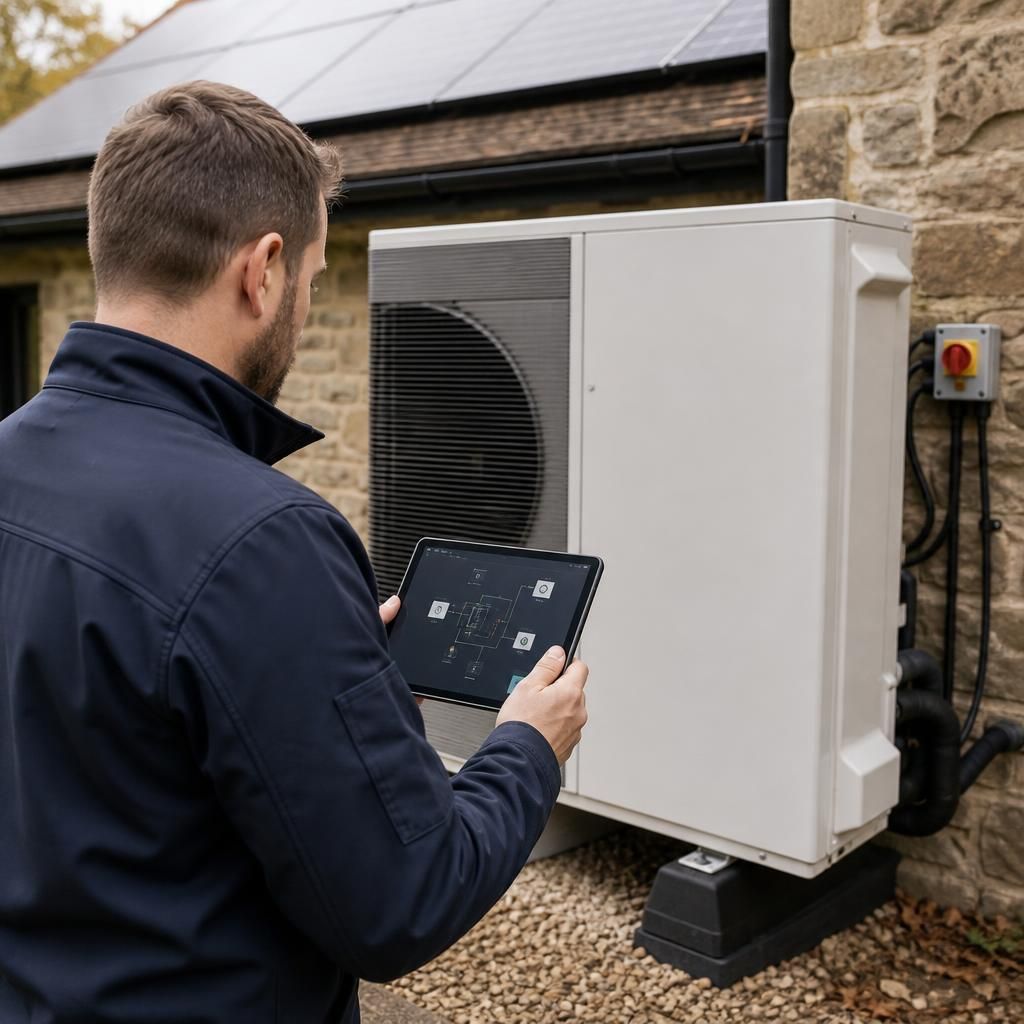
Your monitoring app may show the first sign of a problem. A drop in solar generation, an unexpected battery charge pattern or a heat pump fault code gives us useful information before we visit. We compare the system’s current behaviour with its normal operation, then check the equipment rather than treating the app reading as a diagnosis.
Solar panels need occasional visual checks. Dirt, leaves, moss, bird mess, new shading and damage can all affect generation. We inspect the panels, mounting system, cables and isolators, along with the inverter and its fault indicators. We also check whether the system is exporting or charging the battery as intended. Panels normally clean themselves to some extent in the rain, so cleaning is not automatically required. We recommend it when the site conditions make a material difference to output or inspection.
Do not climb onto a roof or remove electrical covers to inspect a solar installation. You can look for obvious changes from ground level and report an inverter warning, damaged panel or loose-looking cable. We carry out the electrical checks and investigate faults safely.
A home battery needs checks beyond its state-of-charge display. We inspect the battery unit, connections, isolation equipment, ventilation and control settings. We review warning messages and charging behaviour, including whether the battery is responding correctly to solar generation, household demand and the agreed export arrangement. Firmware and system settings can change over time, so we check them when the equipment or fault history makes that relevant.
Keep the area around a battery clear and dry, and do not store boxes or combustible materials against it. If the unit shows a warning, becomes unusually hot, smells of burning or appears damaged, stop using it if the manufacturer’s instructions allow that and contact us. Do not open the battery housing.
An air source heat pump needs regular attention to airflow and water-side components. Leaves, snow, plant growth and other obstructions around the outdoor unit can restrict the air it needs. We check the fan, coil, condensate route, pipework insulation and the unit’s operating condition. Inside, we inspect filters, controls, the hot-water cylinder and the heating circuit. We also check for pressure loss, leaks or air in the system where those issues apply.
Your heat pump may need more attention after changes to the heating system. New radiators, altered controls, a room being used differently or a change in hot-water settings can affect how the system runs. We check the controls and temperatures against the way you use the property, rather than assuming the original settings remain suitable.
Servicing is different from a repair. A service follows the equipment’s maintenance requirements and checks that the system is operating safely and correctly. A repair deals with a fault, damaged part or loss of performance. We explain any defect we find and provide a written quotation before chargeable work starts, so planned maintenance does not turn into unpriced additional work.
Maintenance does not always happen at the same interval for every installation. The correct programme depends on the technology, manufacturer instructions, site conditions, system design and warranty terms. We use the commissioning information and equipment instructions to identify what needs checking and when. Some systems need a scheduled professional service; others mainly need monitoring, visual checks and attention when performance changes.
Keep the installation records with the property paperwork. The commissioning certificate, electrical test results, equipment details, warranty documents, monitoring access and any maintenance reports help us understand the system quickly. They also show what has been checked if another engineer needs to investigate a fault later.
If the system produces less energy than expected, the battery stops following its normal schedule, the heat pump displays a fault or the equipment makes an unfamiliar noise, contact us with the display message and any monitoring information. We can then decide whether the issue needs a site visit, a service or a repair.
If your solar panels, battery and heat pump share controls, one setting can affect the whole system. A charging schedule may compete with hot-water heating, or a communication fault may look like reduced solar output.
During maintenance, we review how the equipment works together rather than checking each unit in isolation. We compare the system’s settings with how you use the home, then correct control issues and explain any changes. This helps separate a software or configuration problem from a fault in the equipment itself.