
Should I choose solar panels or an air source heat pump?
Solar panels are usually the better first choice if you want to generate electricity and reduce grid purchases, while an air source heat pump is the stronger choice when you’re replacing oil, LPG or an ageing heating system. We assess the home, insulation, radiators, heat loss and roof before recommending one, or explaining how both could work together.
Solar panels and air source heat pumps solve different parts of your energy use. Solar panels generate electricity from daylight. An air source heat pump uses electricity to provide space heating and hot water. The better first step depends on whether your main concern is electricity use, heating equipment, or the condition of the property around it.
Solar panels are usually the simpler starting point. They can reduce the amount of electricity you buy from the grid, particularly when your home uses power during daylight hours. A battery can store surplus generation for later, although that adds cost and should be assessed against your daily electricity pattern rather than assumed to be necessary.
Your roof needs enough suitable space, a practical orientation and limited shading. Chimneys, trees and neighbouring buildings can reduce generation. We assess the roof, cable route, consumer unit and meter arrangements before recommending a system. That prevents a panel layout from being designed without allowing for the electrical work it needs.
Solar panels generally cause less disruption than a heating replacement. The installation involves working at roof level, mounting the panels, running cables and connecting the system to the electrical installation. The consumer unit may need changes if it is older or does not have enough capacity. We explain any required electrical work in the quotation before installation starts.
An air source heat pump is the larger change, but it can replace an oil, LPG or gas boiler. It extracts heat from outdoor air and transfers it into water for radiators, underfloor heating and hot water. It works at a lower water temperature than many boilers, so the heat emitters and controls need to be assessed as part of the design.
Your existing radiators may be suitable, especially if they are already generously sized, but that cannot be assumed from the boiler rating. We check room heat loss, radiator output, pipework, insulation, hot-water requirements and the proposed outdoor unit position. If some radiators or pipework need changing, we include that in the plan rather than leaving it as a problem for installation day.
Older homes need a more careful assessment. Solid walls, draughts, high ceilings and extensions can increase heat loss. A listed building or barn conversion may also restrict the outdoor unit position or cable routes. These factors do not automatically rule out a heat pump, but they affect its size, running pattern and the work needed to make the system perform properly.
Heat pump installation is more disruptive than solar installation because it changes the heating system inside the property. We may need to alter radiators, pipework, controls and the hot-water cylinder, as well as install the external unit. The final plan depends on the existing system and the access available, so we survey before confirming the work.
Running costs need to be compared with the whole property, not with a headline efficiency figure. Solar output changes with daylight, roof orientation and shading. A heat pump’s electricity use changes with the heat loss of the building, the water temperature it needs and how the heating controls are used. We use the survey findings and available energy information to compare the likely benefits for your home.
If your current heating runs on oil or LPG, a heat pump may remove the need for fuel deliveries and on-site combustion. The comparison should include the cost of replacing or maintaining the existing heating system, not only the purchase price of the heat pump. If your boiler is still reliable and your main electricity demand is high, solar panels may make more sense as the first project.
If you choose solar first, the panels can later supply some of the electricity used by a heat pump. That does not make the heat pump free to run: solar generation is lower in winter, when heating demand is highest. A battery can shift some daytime generation into the evening, but our assessment considers its additional cost, usable capacity and the way your household consumes electricity.
If you choose a heat pump first, we can assess whether the roof and electrical installation are ready for later solar and battery work. Planning both stages together can avoid duplicated cable routes or an undersized consumer unit. It does not always mean installing everything at once.
Grants and export payments can affect the comparison. Eligibility depends on the property, the equipment and the scheme rules in force when the work is arranged. Our MCS-certified renewable energy team can make a Boiler Upgrade Scheme application on your behalf when the heat pump and property meet the requirements. MCS certification also makes an eligible solar installation suitable for the Smart Export Guarantee. We confirm the current position rather than building an outdated figure into the calculation.
There are practical differences after installation. Solar panels need monitoring so that faults, reduced output or inverter problems are noticed. A heat pump needs controls set for steady, lower-temperature heating rather than short, high-temperature boiler cycles. We explain the controls and leave you with the relevant system information when the work is complete.
- Choose solar first if the roof is suitable and reducing purchased electricity is your immediate priority.
- Choose a heat pump first if replacing oil, LPG or gas heating is the main reason for changing the system and the property can support low-temperature heating.
- Consider both if you have suitable roof space, a heating system ready for electrification and a reason to reduce both household electricity purchases and fossil-fuel use.
We can assess the roof, electrical installation, insulation, radiators, pipework and existing heating together. You then receive a comparison based on the work your property actually needs, including any upgrades that would otherwise appear later as additional cost.
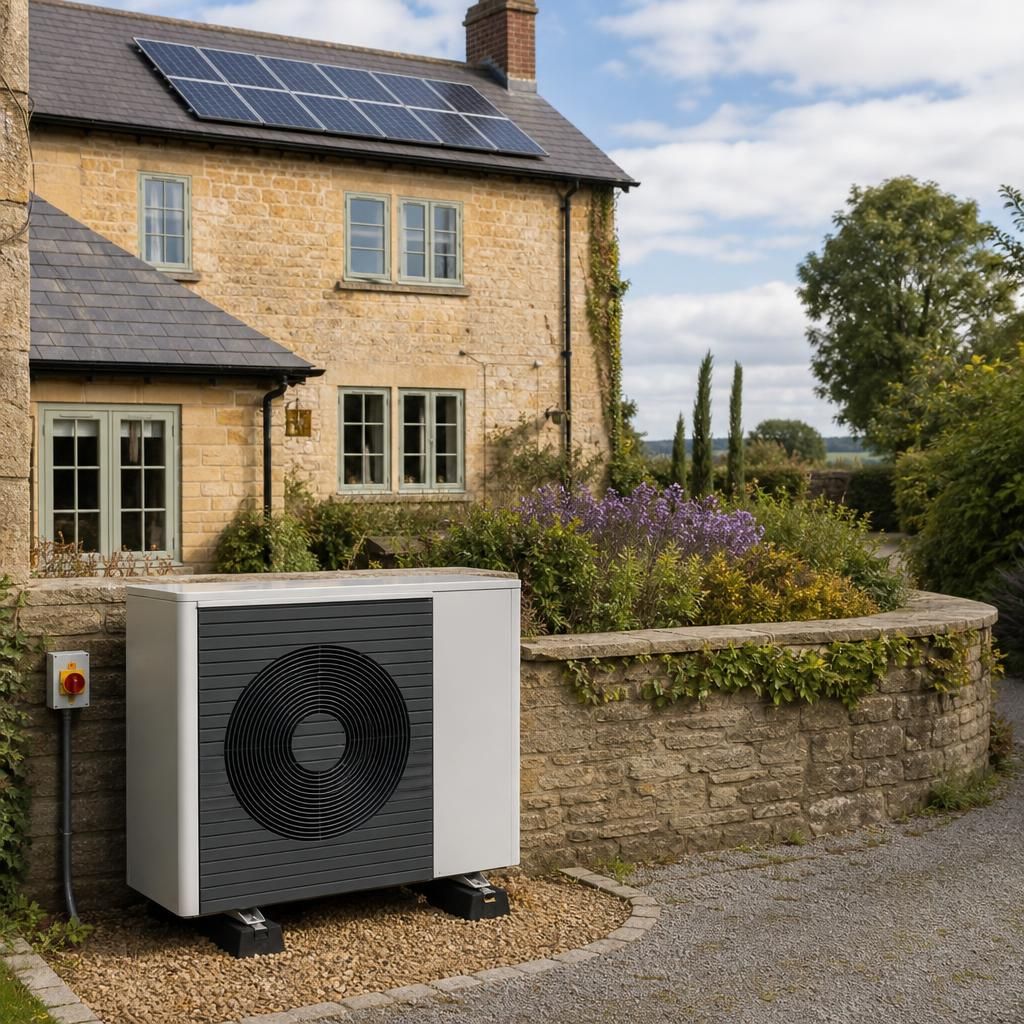
The equipment price alone won’t tell you which option suits your home. A solar quotation should show the panel layout, inverter, access arrangements, cable route and any consumer unit work. A heat pump quotation should show the outdoor unit, cylinder, controls, radiator or pipework changes and commissioning.
That distinction matters in an older property. Solar may need limited changes beyond the electrical installation, while a heat pump can involve several parts of the heating system. We set out the required work separately, so you can compare the two choices without leaving essential upgrades out of the calculation.