Is my home suitable for solar battery storage?
Many homes are suitable for solar battery storage, but the right system depends on your electricity use, solar generation, available space and existing electrical installation. We assess those factors and confirm whether a battery will work well for your home before recommending its capacity and location.
A suitable home needs more than a spare wall. The battery must work with the existing electrical installation, have a safe location and match the way the household uses electricity. Solar generation, shading, roof space and the condition of the consumer unit all affect the recommendation.
The age of the property does not rule battery storage out. Older houses, barn conversions and solid-wall homes can often accommodate a battery. The important points are the condition of the wiring, the available installation space and any restrictions affecting the building. An off-gas-grid home is not automatically unsuitable, because battery storage is linked to electricity use rather than the type of heating fuel.
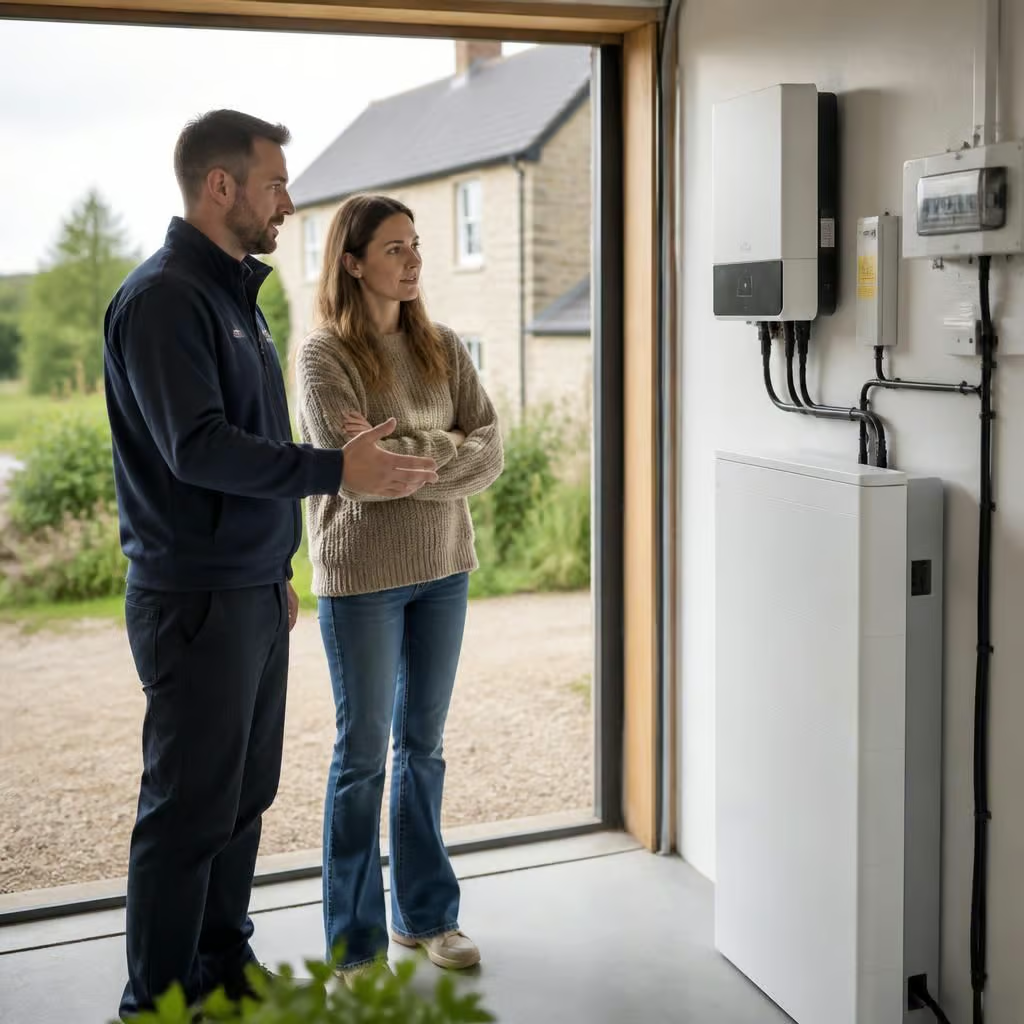
There needs to be a practical place for the battery. We look for a location that is dry, secure, accessible for inspection and suitable for the manufacturer’s installation requirements. That might be a garage, utility area, plant room or another appropriate part of the property. The battery must not obstruct a route, compromise access to equipment or sit where heat, damp or accidental impact could create a problem.
A garage can be suitable, but we still check temperature, moisture, clearance and protection from vehicles or stored items. A loft may have enough physical space but still be unsuitable if access is difficult, the environment is too hot or cold, or the equipment cannot be reached safely. We assess the actual location rather than assuming that an empty corner will work.
Your electrical installation may need work before storage is added. A survey checks the consumer unit, earthing, cable routes, protective devices and the available capacity for the proposed equipment. Older installations may need an upgrade before the battery can be connected. That work is identified in advance, so the quotation reflects the electrical preparation rather than leaving it as an unexpected issue during installation.
If the property already has solar panels, we check how the panels connect to the existing inverter and whether the battery can be added to that system. Some installations can accept a battery without replacing the solar equipment. Others need a different inverter arrangement or replacement equipment. The age, specification and condition of the existing system matter more than the fact that it already has panels.
Solar panels are helpful, but they are not the only factor. A battery can store surplus solar electricity for later use, but the benefit depends on when the home generates electricity and when it uses it. We consider daytime demand, evening consumption, electric heating, an EV charger and other significant loads before recommending capacity.
A large battery is not automatically the right battery. If the solar array is small or the household uses little electricity, extra capacity may sit unused. If the home has high evening demand, a smaller battery may not cover the period between solar generation and the next day. We use the property’s generation and consumption pattern to set out what the proposed capacity is intended to do.
A home without solar panels may still be able to use battery storage, but the financial case is different. The battery may charge from the grid and supply electricity later, depending on the tariff and operating settings. We explain that distinction before recommending equipment, rather than presenting storage as a guaranteed way to reduce bills.
Listed buildings and properties in protected areas need additional care. The battery itself may be easier to place than solar panels, but the proposed position, external equipment and cable routes can still be relevant. We identify practical planning or building restrictions for the installation and explain where another approval may be needed. We also take care around historic fabric, exposed beams and difficult cable routes.
Rural properties can have longer cable runs, outbuildings, separate meter arrangements or older supplies. These do not automatically prevent installation, but they can change where the battery belongs and how the system connects. We check the relationship between the house, garage, barn or plant room before finalising the design.
A battery may not be suitable if there is no safe installation location or if the electrical system needs work that the property cannot accommodate. It may also be a poor fit where solar output is very limited, household electricity use is low or the expected operating pattern does not justify the equipment. In those circumstances, we say so and explain what would need to change for storage to become worthwhile.
Our assessment covers:
- the proposed battery location, access, ventilation, protection and environmental conditions;
- the consumer unit, earthing, protective devices and cable routes;
- the existing solar panels, inverter and available system information;
- roof orientation, shading and likely solar generation where new panels are planned;
- household electricity use, including heating, hot water and vehicle charging;
- planning, listed-building and conservation-area considerations;
- metering, export arrangements and any required grid-network notification.
When solar panels are part of the same project, our MCS-certified installation can support an application for the Smart Export Guarantee, subject to the scheme’s current requirements. We explain the relevant paperwork and system arrangements alongside the design.
The result is a recommendation based on the building, the electrical installation and the way the household uses power. If the property needs a consumer unit upgrade, a different battery position or additional solar work, those points are set out before work starts. If the survey shows that storage is not appropriate, you receive that answer rather than a system chosen simply because space is available.
If you’re considering a battery to keep the lights on during a power cut, check that requirement at the outset. A standard solar battery usually stores electricity for use while the grid is available; it does not automatically provide backup power.
We establish whether you want lower grid use, backup for selected circuits or whole-home backup. Where backup is suitable, we specify the necessary changeover equipment, essential-circuit wiring and battery capability before quoting. That means the system is designed around what you need to keep running, rather than assuming every appliance will work during an outage.