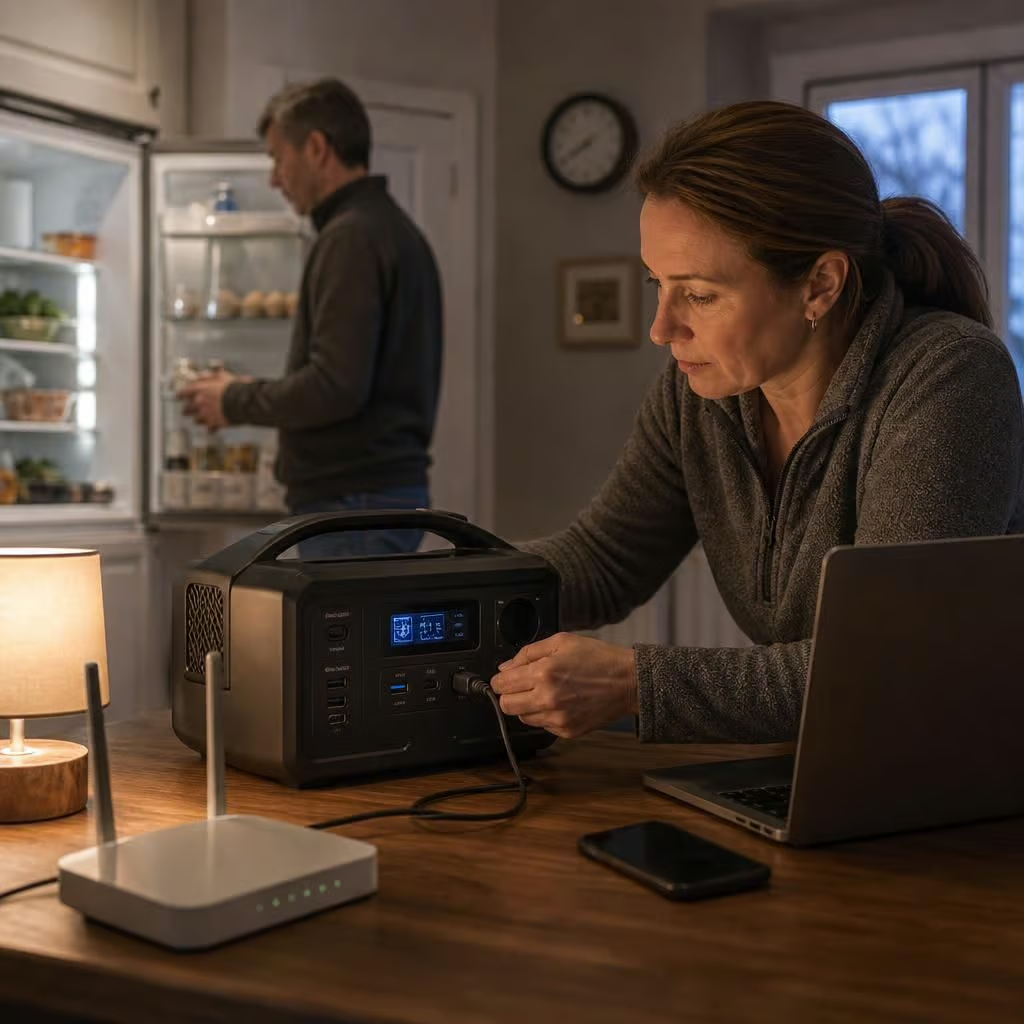
Are portable solar generators suitable for powering a home during a power cut?
A portable solar generator can keep selected essential appliances running during a power cut, but it usually cannot power an entire home or replace a permanently installed battery backup. Check its continuous output, surge capacity, battery capacity and safe connection method against the appliances you need.
For most homes, a portable solar generator is suitable for selected essentials rather than the whole house. It can run items such as lights, phones, a router, television or a small fridge, provided its battery capacity and power output are sufficient. It is less suitable for high-demand equipment such as electric showers, ovens, immersion heaters, large pumps or heat pumps.
A portable solar generator is a rechargeable battery with an inverter and, usually, an input for solar panels. The battery stores energy before or during the power cut. The inverter then changes that stored energy into the type of electricity used by ordinary appliances.
Start with the appliances that matter most. A fridge-freezer, medical equipment, heating controls, lighting and communications equipment may be more important than every circuit in the house. Write down the running power of each item and add the starting demand of anything with a motor or compressor. A fridge may draw more power briefly when its compressor starts than it uses once running.
The generator needs two separate ratings:
- Battery capacity: measured in watt-hours or kilowatt-hours. This indicates how much energy the unit stores.
- Inverter output: measured in watts. This indicates how much power the unit can provide at one time.
A unit may have enough stored energy for a long period but still fail to start an appliance if its inverter cannot handle the appliance’s starting demand. The reverse can also happen: a powerful inverter may run several items, but the battery may empty quickly.
Runtime depends on the actual load. A rough calculation divides the usable battery capacity by the combined appliance load, then allows for inverter losses and the battery reserve. In practice, a fridge cycling on and off uses less energy than its maximum running figure suggests. A heater or kettle draws heavily for as long as it is switched on. The manufacturer’s runtime information is therefore a guide, not a guarantee for every home.
Solar input can extend the runtime, but it does not make the system unlimited. Cloud, shade, the panel position and the generator’s maximum solar input all affect how much energy reaches the battery. A portable panel may help maintain low-power equipment, yet it may not replace the energy used by several large appliances. If the battery is intended for use inside the home, follow the manufacturer’s instructions for panel placement, cables and charging.
The safest arrangement is often to power appliances directly. You can connect suitable equipment to the generator’s outlets using the correct leads, keeping the load within the inverter rating. This is simple for lamps, chargers, a router and some portable appliances. Keep cables protected from damage and avoid overloading extension leads or multiway adaptors.
Do not connect a portable generator to a wall socket to feed the house. That can send electricity back into the installation and the wider network, creating a serious danger for anyone working on the supply. It can also damage the generator and the home’s wiring.
Connecting selected fixed circuits requires a proper changeover arrangement. An electrician can assess the consumer unit, identify essential circuits and install equipment that prevents the generator and the mains supply being connected at the same time. The generator must also be suitable for that connection, with the correct earthing and protection arrangements. A portable unit with ordinary socket outlets is not automatically suitable for a fixed household connection.
This matters particularly with heating. Gas, oil or LPG boilers may use relatively little electrical power for their controls, pump and ignition, but they still need the correct supply and may not operate if another part of the system is unavailable. A heat pump normally places a much larger demand on the electrical supply. A small portable generator should not be assumed to run one simply because it can power lights and a television.
Solar panels already fitted to a home usually stop producing electricity when the grid fails. That shutdown prevents the panels from energising the network while engineers may be working on it. A battery-backed solar installation needs equipment designed to separate the property from the grid and form a safe backup supply. A portable solar generator is different: it normally powers connected appliances independently and does not automatically make the home’s existing solar system work during an outage.
Suitability comes down to four checks:
- Which appliances must continue running?
- What are their running and starting loads?
- How long must the battery last without useful solar input?
- Will the generator supply appliances directly or connect to selected household circuits?
If the need is occasional backup for a few small appliances, a portable unit may be a practical choice. If the requirement includes central heating, refrigeration, pumps and several rooms of lighting, a larger battery system or a properly designed backup installation may be more appropriate. We can check the intended loads, the proposed connection method and the existing electrical installation before you buy equipment. That gives you a system that matches the appliances you actually need during a power cut, rather than a battery that looks powerful on paper but cannot start or run them safely.
A portable solar generator does not normally switch your home over automatically when the mains fails. Someone must connect the appliances, or operate the approved changeover equipment, and check that they have restarted correctly.
That makes it useful for occasional backup, but less suitable where equipment must keep running without interruption. If a power cut could affect medical equipment, heating controls or security systems, discuss the required changeover time and backup arrangement with a qualified electrician before choosing the generator.