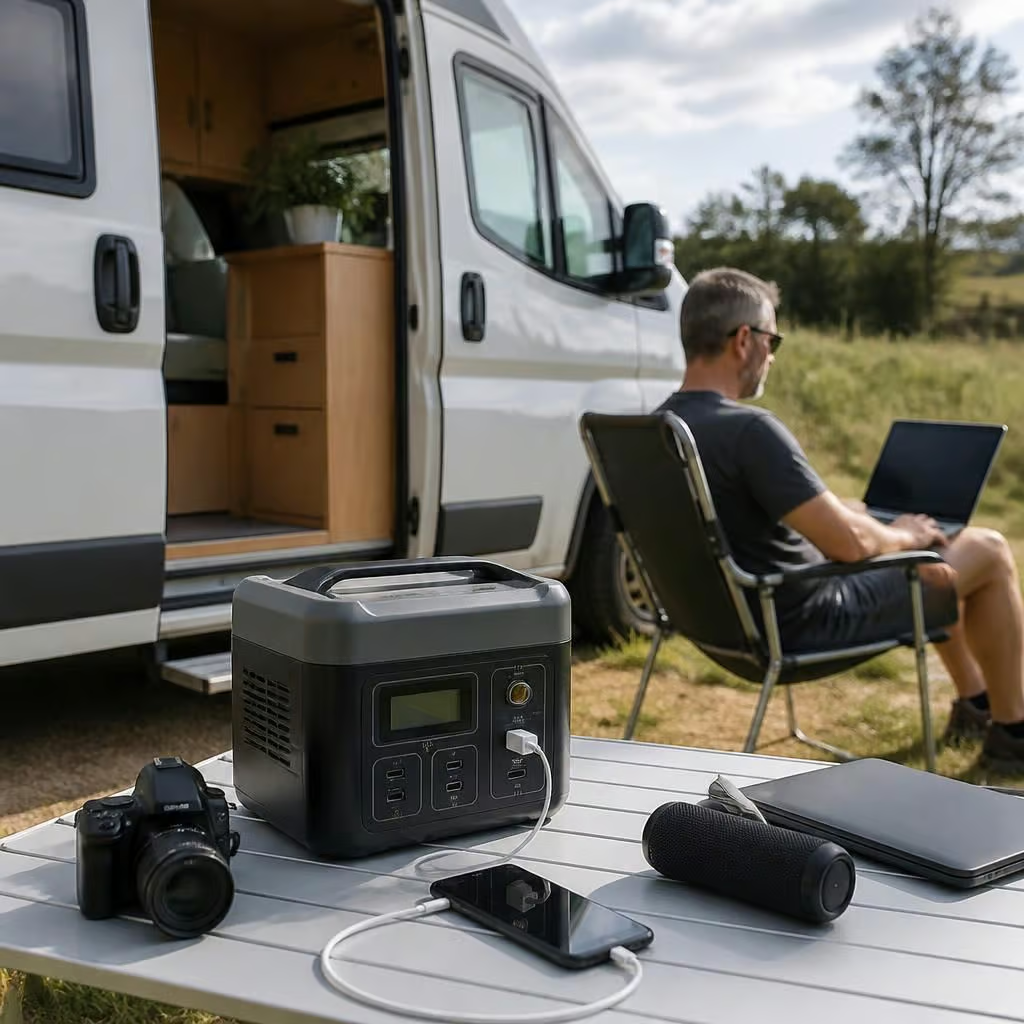
Can I use a portable solar generator in an RV?
Yes, a portable solar generator can power many RV essentials, including phones, lights, laptops and small appliances, provided its battery capacity and output are sufficient. It can recharge from solar panels while you travel or stay off-grid, but check the wattage carefully before connecting higher-demand equipment such as a microwave, heater or air-conditioning unit.
The important distinction is how you connect the power station to the RV. Plugging individual appliances into its outlets is usually straightforward. Feeding power into the vehicle’s fixed sockets or consumer unit needs much more care.
Start with the equipment you actually use. Make a list of the appliances you want to run and note their wattage. A phone charger, LED lighting, laptop or small television places a modest load on the battery. A kettle, microwave, hairdryer, induction hob, air-conditioning unit or electric heater uses much more power and may also create a short starting surge.
The inverter must cope with the highest load that may run at once. Its continuous rating matters when an appliance stays on, while its surge rating matters when a motor or compressor starts. A refrigerator, for example, may draw more briefly when its compressor starts than it does once running. If the inverter cannot handle that demand, it may shut down or report an overload.
Battery size affects running time. The battery capacity tells you how much stored energy is available, but the figure on the specification is not the same as the energy delivered to every appliance. The inverter uses some energy, and the battery management system may reserve part of the charge.
As a simple planning method, add the wattage of each appliance and multiply it by the number of hours you expect to use it. Treat appliances that cycle on and off, such as a fridge, separately from those that run continuously. This gives you a working estimate rather than a guaranteed runtime. Cold temperatures, an ageing battery, high inverter loads and charging losses can all reduce the usable time.
Most RV owners use more than one charging method. Mains charging is useful at home or on a campsite. Solar input can replace some of the energy used during the day, but the result depends on the panel area, shading, roof position, weather and the power station’s solar charge limit. A panel in partial shade can produce considerably less than its label suggests.
Some systems can also charge from the vehicle while driving. Check the power station instructions and the RV’s electrical system before connecting this type of charger. The alternator, leisure battery, starter battery and charging cable all need to be protected correctly. A suitable charging arrangement should not leave the vehicle unable to start.
Using the built-in outlets is different from connecting to the RV sockets. The simplest arrangement is to plug selected appliances directly into the portable unit. This keeps the power station separate from the vehicle’s fixed wiring and makes its limits clear.
Connecting it to the RV’s mains inlet can be unsafe if the arrangement creates two supplies at once. Never connect a portable power station to a campsite hookup while also feeding that hookup from another source. Never make a lead with two plugs, and never back-feed a campsite connection or a domestic socket. The fixed installation needs suitable isolation so that shore power, inverter power and any other supply cannot become connected together.
The correct neutral and earth arrangement also depends on the inverter and the RV installation. Some portable units use a floating output, while others bond neutral to earth internally. An RCD may not operate as expected if the arrangement is unsuitable. The instructions for the power station and the RV’s electrical system should be checked together, not separately.
High-load appliances are usually the first compromise. A portable unit may run lights, electronics and small kitchen equipment comfortably, but electric heating can drain the battery quickly. Running a kettle and microwave together may exceed the inverter rating even if each appliance works on its own. An air-conditioning unit can present both a large running load and a high starting demand.
Gas cooking and heating may reduce electrical demand, although they still require proper ventilation and safe operation. A power station should not be used as a reason to operate fuel-burning appliances inside an enclosed vehicle without the required ventilation and carbon monoxide protection.
Keep the unit dry, cool and secure. Place it where air can circulate around the casing and cooling vents. Do not cover it with bedding or clothing, leave it in direct sun, or use it where condensation or splashing can reach the sockets. Secure it before travelling so that it cannot become a heavy loose object during braking.
Keep cables away from walkways, hot surfaces and doors that can crush them. Use the correct connectors and cable sizes supplied or specified by the manufacturer. Inspect plugs, leads and adapters for heat damage, loose pins or discolouration, and stop using any part that becomes unusually hot.
Lithium batteries need protection against overcharging, excessive discharge and unsuitable temperatures. The battery management system provides some protection, but it does not make damaged equipment safe. Follow the charging instructions, store the unit at the temperature stated by the manufacturer and do not use it after impact, swelling or water ingress.
Consider what happens when the battery is empty. A solar generator is a stored-energy system, not an unlimited supply. If several days of poor weather are likely, decide which equipment is essential and reserve capacity for it. Keep a separate way to charge phones and maintain communication, and do not rely on one portable unit for every safety-critical function.
If the plan involves the RV’s fixed sockets, consumer unit, shore-power inlet or a permanently mounted battery and solar system, use a qualified person familiar with vehicle electrical work. A portable unit that is safe as a standalone appliance can become hazardous when connected into fixed wiring. The installation should be checked for isolation, earthing, RCD protection, cable capacity and compatibility with the charging equipment.
For occasional camping, direct connection to a few appliances is normally the least complicated approach. For regular off-grid travel, list the appliances, measure their real use where possible, allow for charging conditions and have the fixed installation assessed before choosing how the power station will connect.
An RV may use both 12-volt circuits and mains appliances, and a portable solar generator may not suit them in the same way. USB devices can often use the power station’s USB outlets directly, while a mains appliance needs the inverter’s AC socket.
Take care with the RV’s 12-volt system. Don’t connect a generator’s DC output to the vehicle wiring simply because the plugs appear compatible. The voltage, polarity, charging controls and protection must all match. For occasional use, powering individual devices from the generator is usually clearer than trying to charge or supply the whole 12-volt circuit.