
Does a solar battery backup system need regular maintenance?
Solar battery backup systems need little routine maintenance, but regular checks help confirm the battery, wiring, ventilation and backup function remain safe and reliable. We inspect the installation, review system warnings and check performance so we can identify faults before they affect your stored energy.
Most solar battery backup systems do not need frequent servicing, but they should not be left completely unchecked. The right maintenance interval depends on the battery, inverter, installation conditions and the manufacturer’s instructions.
A well-maintained system should continue to charge, discharge and provide backup as designed. Regular checks also help identify reduced capacity, damaged cables, overheating or control faults before they affect the rest of the installation.
What you can check yourself
Your monitoring app or inverter display may show charge levels, energy flows and fault messages. A change in the system’s usual behaviour is worth noting, particularly if the battery:
- stops charging from the solar panels;
- does not discharge when the home needs electricity;
- shows repeated warnings or loses its connection to the monitoring app;
- provides less usable energy than expected; or
- does not operate the designated backup circuits during a test or power cut.
Keep the area around the equipment clear. Do not store boxes, cleaning products or other items against the battery or inverter. Dust, moisture and restricted airflow can affect electrical equipment, especially in a garage, utility room or outbuilding.
Do not remove covers or attempt to tighten electrical connections. A battery stores significant energy even when the solar panels are not producing electricity. If you notice a burning smell, unusual noise, swelling, leaking, heat damage or repeated shutdowns, keep away from the equipment and arrange a professional inspection.
What professional maintenance covers
When the system has developed a fault or is due for a planned inspection, we review its operating history and compare the readings with the installation design. That helps us distinguish a software warning from a charging problem, a battery issue or a fault elsewhere in the electrical system.
- We examine the battery casing and mounting for physical damage or movement.
- We assess the condition of accessible cables, isolators and terminations.
- We check that the installation remains dry, clean and suitably ventilated.
- We review inverter readings, stored fault codes and system communications.
- We check the settings that control charging, discharge and backup operation.
- We test the relevant protection and confirm that the intended circuits are supplied correctly.
- We record any recommendation for repair, replacement or further investigation.
The work is not limited to the battery itself. The inverter, consumer unit, protection devices, backup changeover equipment and wiring all affect how the system behaves. A battery can appear healthy while a separate connection or control fault prevents the home from using its stored energy.
How often should it be checked?
There is no single service interval that applies to every installation. Some manufacturers specify particular inspections, firmware requirements or checks for the battery and inverter. Site conditions also matter. Equipment in a clean, dry indoor location may need a different approach from equipment in a dusty plant room, garage or agricultural building.
We use the manufacturer’s maintenance requirements alongside the system’s history and condition. A check is also sensible after electrical alterations, a major fault, water ingress, building work or a change to the circuits supplied by the backup system.
Firmware and monitoring updates can matter because they affect charging controls, fault reporting and compatibility between the battery and inverter. We check that any update is appropriate for the installed equipment rather than changing settings without understanding the system’s design.
Does maintenance protect battery life?
Maintenance cannot prevent normal battery ageing, but it can identify conditions that place unnecessary strain on the equipment. Incorrect settings, poor ventilation, repeated faults or a failing inverter may reduce usable performance or cause avoidable shutdowns.
We look at the battery’s measured performance rather than relying only on its age. If capacity has fallen, we explain whether the cause appears to be normal degradation, a configuration issue or a component fault. That gives you information for deciding whether repair, replacement or continued use makes sense.
What happens if a warning appears?
A single notification does not always mean the battery needs replacing. Some warnings relate to communication, temperature, the grid supply or a temporary operating condition. Repeated warnings, a sudden loss of output or an unusual smell needs more attention.
Keep a note of the message, the time it appeared and what the system was doing. A photograph of the display or app can help us identify the problem before visiting. We then test the relevant parts and explain the work required before carrying it out.
For a new installation, we explain the monitoring display, isolation points, backup circuits and basic checks when the system is commissioned. You should know which appliances are supported during a power cut and which signs mean you should stop using the system. That information is as important as the physical inspection.
In practice, maintenance means sensible monitoring, keeping the equipment area clear and arranging a qualified inspection when the system’s behaviour changes or the manufacturer calls for one. It is not usually a frequent service, but it is an important part of keeping a battery backup installation safe and useful.
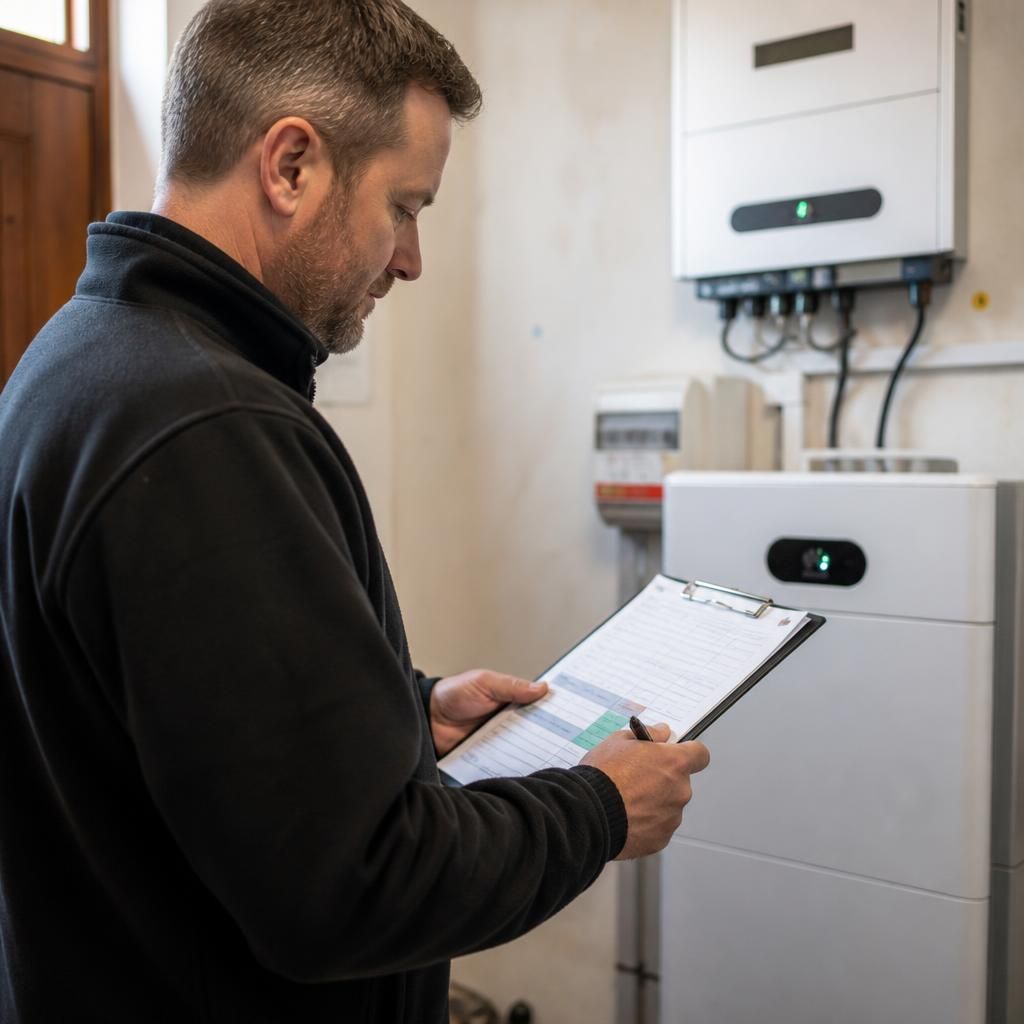
A short record of the system’s behaviour makes future maintenance more useful. Keep the installation details, warning messages, unusual charge or discharge patterns and any work carried out together. Include photographs of error screens where possible.
When we inspect the battery, those notes help us compare current readings with its normal operation. That can narrow the fault more quickly and show whether the issue is new, recurring or linked to a recent change in the home’s electrical system.