What does a solar battery backup system cost to install?
The cost of installing a solar battery backup system depends on the battery capacity, whether it needs to support selected circuits during a power cut, and how much electrical work your home requires. We assess the existing solar PV system, consumer unit and backup requirements before providing a written quotation for the complete installation.
There isn’t a reliable single price for a solar battery backup system. The installed cost depends mainly on the amount of stored energy, the equipment already in the property and how much of the home you want to keep running during a power cut. A battery for evening use is a simpler installation than a battery system that safely supplies selected circuits when the grid fails.
The battery capacity is the first cost factor. A smaller battery may suit a home with modest evening electricity use. A larger system may be more appropriate if you have high electricity demand, an air source heat pump, an electric vehicle or several appliances that run after sunset. Increasing capacity adds equipment cost, but the largest battery is not automatically the best financial choice. We look at when electricity is used, how much solar energy is currently exported and whether the battery can be charged economically from the grid.
Backup capability costs more than ordinary solar storage. A standard battery can store surplus solar and discharge it later while the grid is available. It may not continue operating during a power cut. Backup operation needs compatible control equipment, safe isolation from the grid and a clear decision about which circuits remain live. Many households choose the fridge, lighting, internet equipment, heating controls and selected sockets rather than the whole property. Electric showers, immersion heaters, cookers and vehicle chargers can require more power than a domestic battery can provide.
That distinction matters when you compare quotations. Ask whether the price covers genuine backup operation or only battery storage. Check which circuits will work during an outage, whether the system can start without the grid and what happens when the battery is empty. A system that supplies selected circuits can be more practical and less expensive than rewiring the entire consumer unit for backup.
Your existing solar installation can change the price considerably. If the current inverter can work with the proposed battery, the installation may need less new equipment. If it cannot, we may need to replace it or use an additional battery inverter. We also check the panel arrangement, cable routes, protective devices and the age and condition of the existing consumer unit. Older solar systems can need remedial electrical work before a battery is added.
A property with no solar panels may still be suitable for a battery, particularly if the battery can charge from the grid at a lower tariff and discharge during periods of higher use. The financial case depends on the tariff, your consumption pattern and the battery’s usable capacity. We work through those assumptions rather than presenting a headline saving that may not apply to your home.
The electrical work is part of the installed cost. The final price may include:
- the battery and its control equipment;
- a compatible inverter, if the existing unit cannot be used;
- backup changeover and isolation equipment;
- new cable runs between the battery, inverter and consumer unit;
- consumer unit upgrades or additional protective devices;
- mounting equipment and commissioning;
- monitoring setup and connection to the manufacturer’s app; and
- testing, certification and handover information.
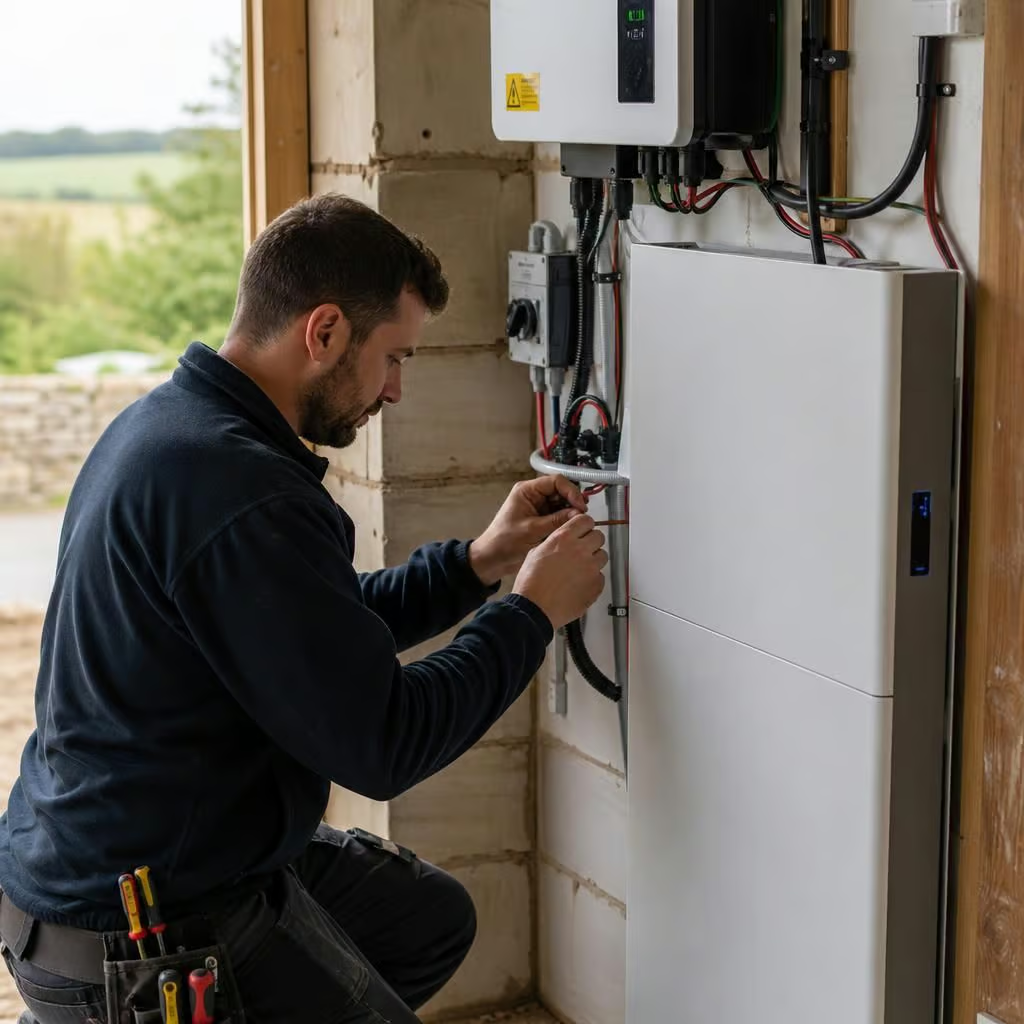
The installation position also affects the labour involved. A battery mounted close to the consumer unit and inverter usually needs less cable and fewer alterations than one in a detached garage, outbuilding or plant room. We consider ventilation, protection from weather, access for future inspection and the manufacturer’s requirements. A rural property may have longer cable routes or separate buildings, while an older home may need electrical improvements before the battery can be connected safely.
The quote should separate essential work from optional capacity. You should be able to see the battery model and usable capacity, inverter details, backup equipment, included circuits and any work required to the existing installation. It should also explain what is excluded, such as remedial work discovered during testing or changes needed to a third-party solar system. This makes two quotations easier to compare than looking at the battery size alone.
For a solar and battery installation, MCS certification also matters if you want the installation to qualify for the Smart Export Guarantee. We design the system around the property’s generation, use and export rather than treating the battery as a separate box added to the wall.
The right question is not simply “How much is a battery?” It is whether the proposed system will store enough of your surplus generation, meet the loads you care about during a power cut and make sensible use of the available tariff. We assess the existing solar equipment, consumer unit, cable routes and household demand before recommending a capacity. You then have a clear installed price and can decide whether the additional backup equipment is worthwhile for your home.
A battery’s storage capacity and its power rating affect different parts of the price. Capacity determines how much electricity it can hold, while the power rating determines how many appliances it can run at once.
If you want backup for a freezer, lighting and heating controls, the required output may be modest. Starting a pump or running several appliances together can need more. We compare those demands with the inverter’s rating, so the quotation reflects the equipment your home can use rather than battery capacity alone.